
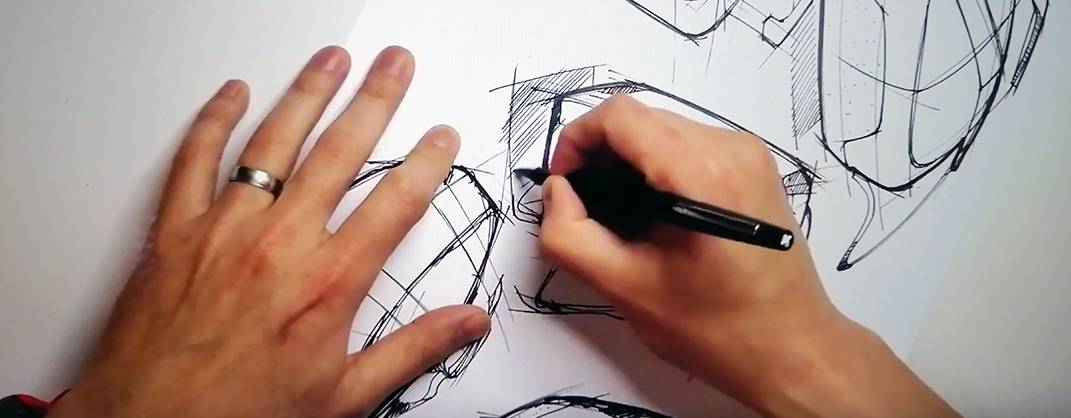
The Importance Of Product Design
Product design is the cornerstone of successful manufacturing. In fact, product molds represent nearly 40% of the entire molding industry, underscoring just how critical the design phase is to a product’s ultimate success. However, bringing a concept to life requires adherence to strict engineering rules and highly specialized expertise. It demands professionals.
Backed by decades of manufacturing excellence, the FMS Design Team transforms your concepts into market-ready realities. We don’t just design; we optimize your products for scalability, cost-efficiency, and premium quality.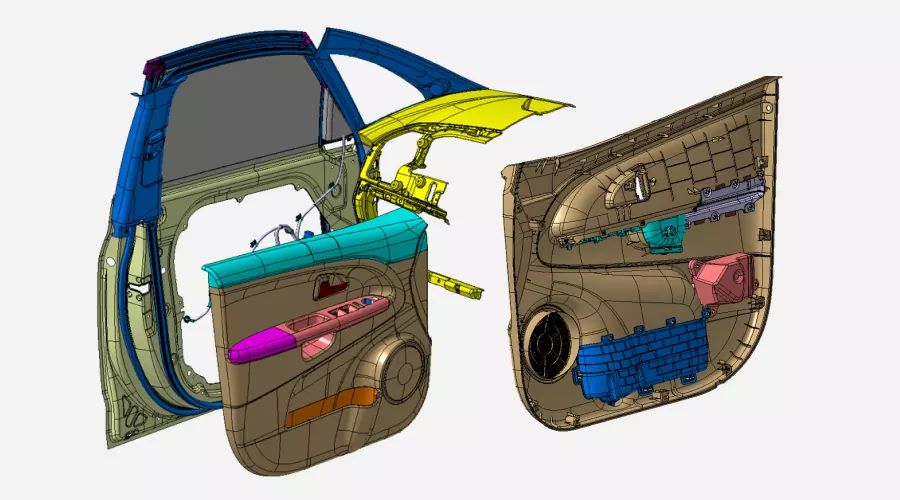
Seamless Collaborative Design
We have broken down geographic barriers with our advanced Internet-enabled Collaborative Design system. Distance is no longer a factor. You can review designs, analyze structures, and assemble virtual prototypes alongside our engineers in real time.  It feels exactly like having an in-house design department right next door—a seamless partnership that consistently earns the highest satisfaction ratings from our global clients.
Why Choose FMS for Product Design?
At FMS, we bridge the gap between innovative concept and flawless production. Here is how our unique design advantages accelerate your success:
• Design Built for Manufacturing (DFM): Backed by extensive expertise in molding simulation analysis and advanced mold design, our team ensures your products are optimized for production from day one—minimizing errors and reducing time-to-market.
• Strategic Global Hub Advantage: Located at the absolute epicenter of the world’s mold-making and molding industry, we have direct access to cutting-edge techniques and top-tier manufacturers. This keeps our designs at the forefront of global innovation.
• Premium Quality, Competitive Edge: We deliver professional, efficient, and high-integrity design services that meet strict Western quality standards—offering you premium engineering expertise at a highly competitive price point.
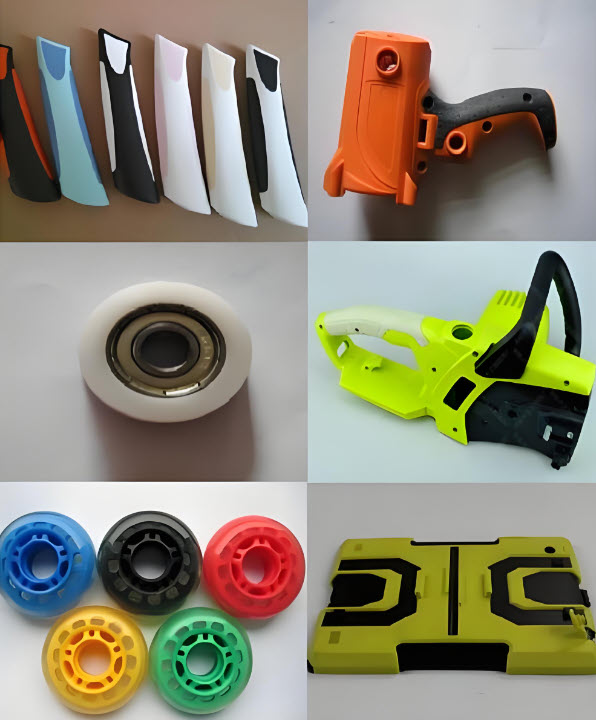
Elevate Your Product with High-Impact Design
Great design shouldn’t cost more. We transform standard product concepts into eye-catching, market-ready products that consumers actually want to buy—without driving up production costs.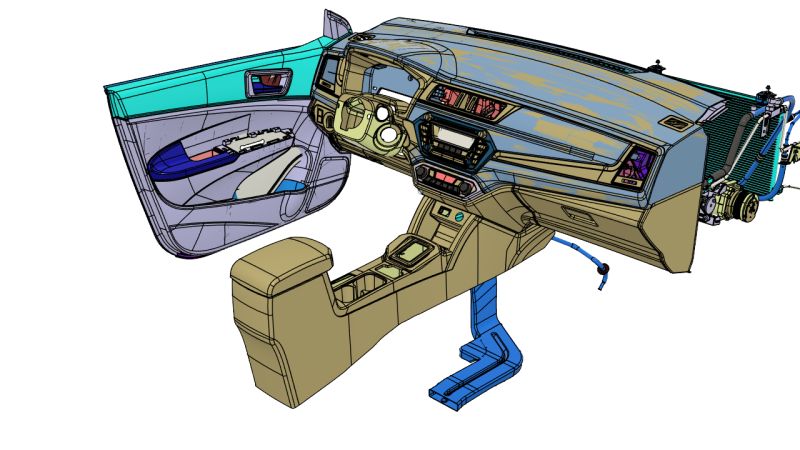
Utilizing industry-leading CAD systems, our team combines advanced surface modeling expertise with a deep understanding of economical injection molding. But we provide more than just technical tools. We bring the artistic vision and stylistic intuition needed to give your product a competitive edge. Let us help you turn your next big idea into a beautifully engineered, commercial success.
Maximizing Performance Through Design for Manufacturing (DFM)
Designing parts with advanced materials requires a unique mindset: they must be strictly engineered for seamless production. While basic product design is common, achieving true excellence demands deep expertise in manufacturing processes and tooling functionality.
With a proven track record in world-class mold design, we possess an unmatched understanding of tooling and molding dynamics. By combining this hands-on manufacturing insight with our advanced CAD and FEA stress analysis capabilities, we deliver optimized, production-ready designs that elevate your product’s performance from day one.
Why Stress Analysis is Critical for Plastic Design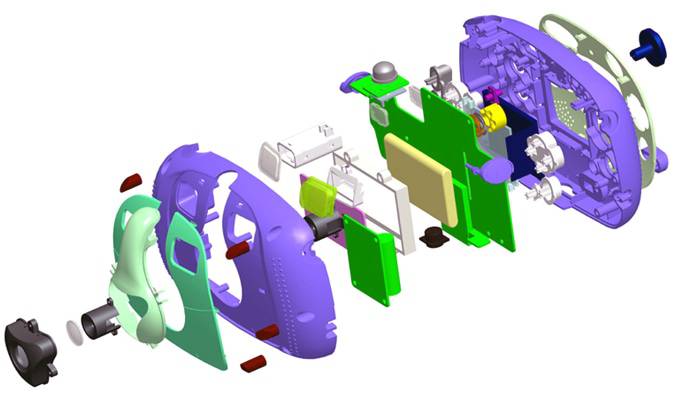
 It is well established that the structural characteristics of plastics differ fundamentally from those of metals. However, even a foundational concept like “stress” takes on a completely different meaning when applied to a plastic component versus a metal one. The core challenge for engineers is understanding exactly how these divergent material properties impact the design process.
While plastics are often perceived as a low-cost material, they are actually quite expensive from a unit-volume or load-bearing perspective. Their true cost-efficiency stems from the high-speed injection molding process. Given this reality, a 100% plastic design isn’t always the most cost-effective solution.
Furthermore, while plastics excel at handling intermittent loads, they are prone to permanent deformation (creep) even under low, long-term stress. In many designs, simply adding more plastic is not a viable fix. Instead, strategically integrating a small amount of load-bearing metal components into a primary plastic structure often yields a significantly superior, high-performance product.
Designing a plastic part for manufacturability involves many important factors that touch on all areas of part design, tooling, material selection and production. First, it is essential to build parts around functional needs by keeping design intent or the end use in mind. Consider weight reductions, the elimination of fabrication and assembly steps, improving structural components, reducing costs and getting products to market quicker.
Plastic part design consideration plays a significant role in designing and manufacturing a plastic component. Whenever a Product Designer designs a plastic part, it is important to take care of factors such as the moulding process, selection of material, mass manufacturing process and overall area of the part around the functional need by keeping the design intent intact or the end use in consideration.
While engineering plastics are used in many diverse and demanding applications, the most common design elements or features influencing the overall area includes wall thickness and radius, ribs, bosses, draft etc.
molding engineers and designers can work with you to develop and design your plastic injection molded component. To ensure a quality part, there are three major areas of focus throughout the design stage:
Proper plastic part design
Proper material selection plastic part design
Processing conditions for plastic injection molding
The mold designers and plastic engineers should have rich combined years of experience in designing parts for plastic injection molding, selecting materials, and processing resins (specializing in engineering and high performance resins).
Designing a part that can be molded with a “straight pull” or “up & down” motion is a great way to keep the cost of the mold down. A straight pull mold is designed so that when the two halves (A side and B side) of the mold separate from each other, there is no plastic blocking the path of the metal in the direction of the pull. Undercuts on the part cause this blockage of path and require an action in the mold (cams, core pulls, etc.). Action in the mold can have a major impact on the cost (and overall size) of a mold.
Proper wall thickness is one of the most fundamental requirements in designing a part for plastic injection molding. Plastic shrinks as it cools which can lead to defects such as sink marks, voids, stresses, and warping. Plastic resin solidifies in the mold nearer to the outside of the part (closest to the mold surface). Thick sections of a part tend to pull inward, creating stresses, sink marks, or voids. Since thinner sections cool quicker, stress can build in the part between thinner and thicker sections, resulting in part warpage.
In order to bring a new plastic product to market and ensure its future industrial viability, it is essential to take into account design, materials, production and processing, as well as managing and/or recovering, this product once its life cycle has ended.
In the initial phase, it is important to be aware of possible legal restrictions, limitations arising from similar developments already on the market and product certification requirements. Product features must also be considered (weather resistance, resistance to chemical agents, resistance to high or low temperatures, chemical incompatibility, lack of mechanical properties, etc.).
Once the viability of the product has been analysed, there are three keys to successful development: design, materials and the manufacturing process. The optimum product will be obtained from the best combination of the three.
Now, if this is your first approach to plastic product design, you’re probably thinking about what the primary factors are to look for this service resource. To make the most appropriate decision making to your business needs, here are some useful considerations to think about and share with your designer/supplier combo:
Why is this design necessary?
Which need are we trying to meet?
How will its function help our product?
Are we going to replace other existing products?
Are there already similar products on the market?
Are there any patents or protected designs that could conflict with this new design?
How will its use and usability criteria make our product attractive to the final consumer?
Who is its potential user?
Are there any possibilities of misuse of my product that could harm the user?
Will it be a single-use product? How many uses will it have?
Is it a seasonal product?
Is it a promotional product?
How important is the appearance of the product?
Working with an experienced plastic injection molder and engineering team is a critical component to avoiding many issues that can occur during the design and development process. If you keep these factors in mind during the design process, and align with a knowledgeable plastics engineer, you will be on track to get your product to market quicker and within your budget.
Designing a part that can be molded with a “straight pull” or “up & down” motion is a great way to keep the cost of the mold down. A straight pull mold is designed so that when the two halves (A side and B side) of the mold separate from each other, there is no plastic blocking the path of the metal in the direction of the pull. Undercuts on the part cause this blockage of path and require an action in the mold (cams, core pulls, etc.). Action in the mold can have a major impact on the cost (and overall size) of a mold.
Product design is a big concept, and your focus on plastic product design is only part of it
Now, if this is your first approach to plastic product design, you’re probably thinking about what the primary factors are to look for this service resource. To make the most appropriate decision making to your business needs, here are some useful considerations to think about and share with your designer/supplier combo:
Why is this design necessary?
Which need are we trying to meet?
How will its function help our product?
Are we going to replace other existing products?
Are there already similar products on the market?
Are there any patents or protected designs that could conflict with this new design?
How will its use and usability criteria make our product attractive to the final consumer?
Who is its potential user?
Are there any possibilities of misuse of my product that could harm the user?
Will it be a single-use product? How many uses will it have?
Is it a seasonal product?
Is it a promotional product?
How important is the appearance of the product?
Plastic design is a combination of geometry and choice of materials. These two factors interrelate with each other, and knowledge of each area is important to achieve a comprehensive design. For plastic design, there are specific rules regarding part geometry, which supports in achieving the intended embodiment.
To manufacture a new plastic product design, your supplier must have knowledge of industrial design, materials, industrialization, and product management, once its life cycle is over. Elements such as walls, ribs and holes require detailed scrutiny, for which general design guidelines and checklists provide basic principles.