
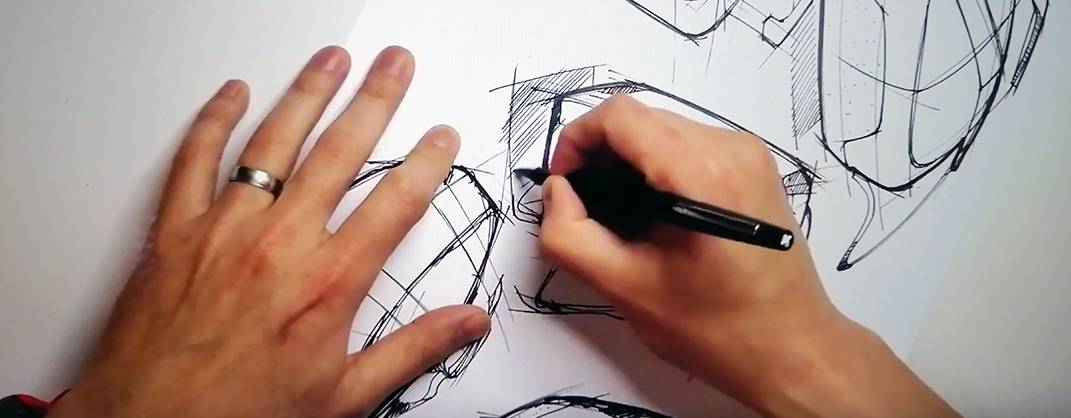
The Importance Of Product Design
Product design is the cornerstone of successful manufacturing. In fact, product molds represent nearly 40% of the entire molding industry, underscoring just how critical the design phase is to a product’s ultimate success. However, bringing a concept to life requires adherence to strict engineering rules and highly specialized expertise. It demands professionals.
Backed by decades of manufacturing excellence, the FMS Design Team transforms your concepts into market-ready realities. We don’t just design; we optimize your products for scalability, cost-efficiency, and premium quality.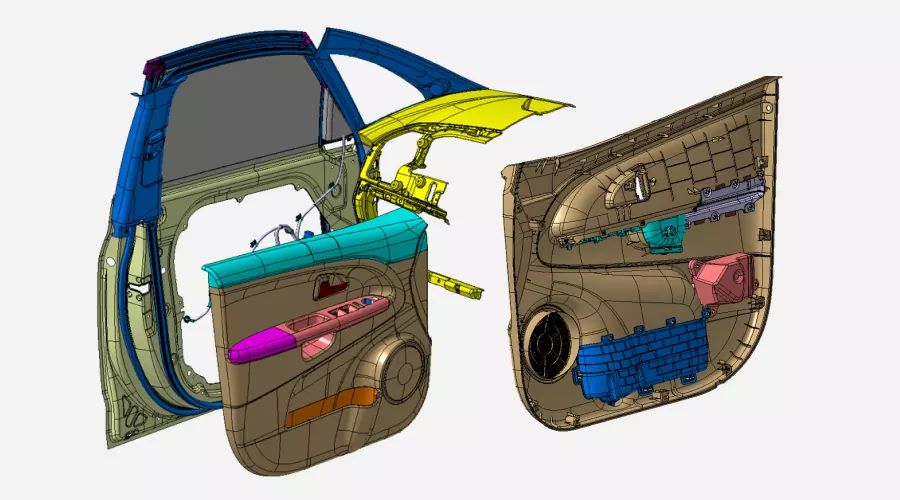
Seamless Collaborative Design
We have broken down geographic barriers with our advanced Internet-enabled Collaborative Design system. Distance is no longer a factor. You can review designs, analyze structures, and assemble virtual prototypes alongside our engineers in real time.  It feels exactly like having an in-house design department right next door—a seamless partnership that consistently earns the highest satisfaction ratings from our global clients.
Why Choose FMS for Product Design?
At FMS, we bridge the gap between innovative concept and flawless production. Here is how our unique design advantages accelerate your success:
• Design Built for Manufacturing (DFM): Backed by extensive expertise in molding simulation analysis and advanced mold design, our team ensures your products are optimized for production from day one—minimizing errors and reducing time-to-market.
• Strategic Global Hub Advantage: Located at the absolute epicenter of the world’s mold-making and molding industry, we have direct access to cutting-edge techniques and top-tier manufacturers. This keeps our designs at the forefront of global innovation.
• Premium Quality, Competitive Edge: We deliver professional, efficient, and high-integrity design services that meet strict Western quality standards—offering you premium engineering expertise at a highly competitive price point.
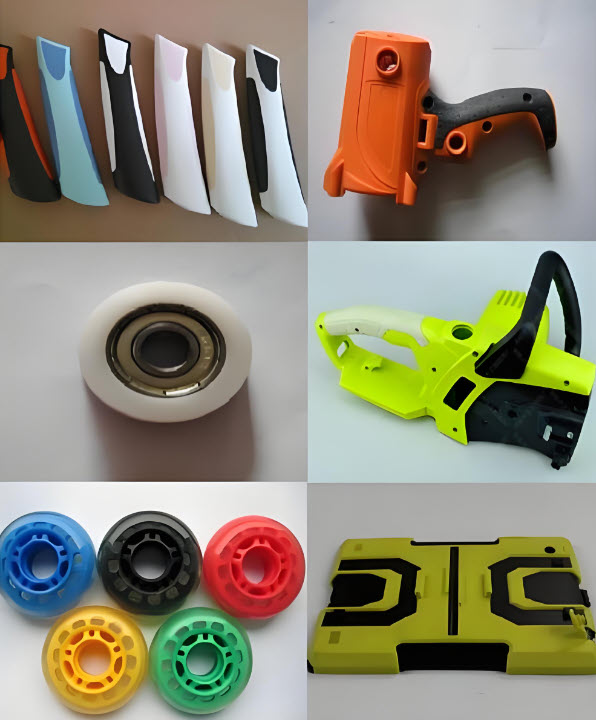
Elevate Your Product with High-Impact Design
Great design shouldn’t cost more. We transform standard product concepts into eye-catching, market-ready products that consumers actually want to buy—without driving up production costs.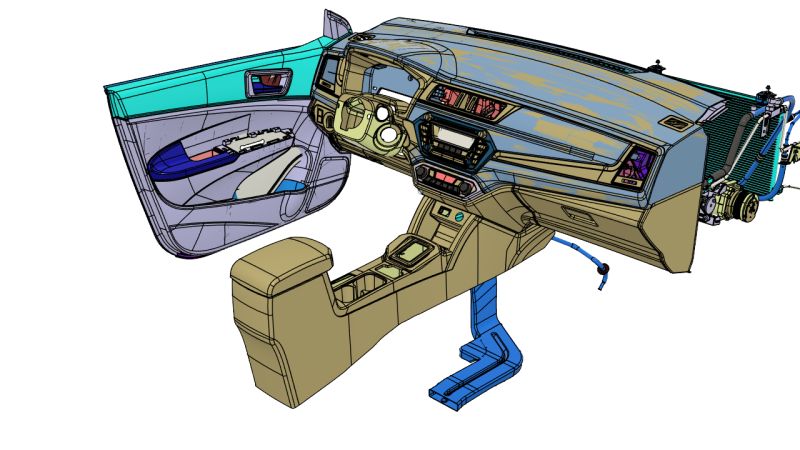
Utilizing industry-leading CAD systems, our team combines advanced surface modeling expertise with a deep understanding of economical injection molding. But we provide more than just technical tools. We bring the artistic vision and stylistic intuition needed to give your product a competitive edge. Let us help you turn your next big idea into a beautifully engineered, commercial success.
Maximizing Performance Through Design for Manufacturing (DFM)
Designing parts with advanced materials requires a unique mindset: they must be strictly engineered for seamless production. While basic product design is common, achieving true excellence demands deep expertise in manufacturing processes and tooling functionality.
With a proven track record in world-class mold design, we possess an unmatched understanding of tooling and molding dynamics. By combining this hands-on manufacturing insight with our advanced CAD and FEA stress analysis capabilities, we deliver optimized, production-ready designs that elevate your product’s performance from day one.
Why Stress Analysis is Critical for Plastic Design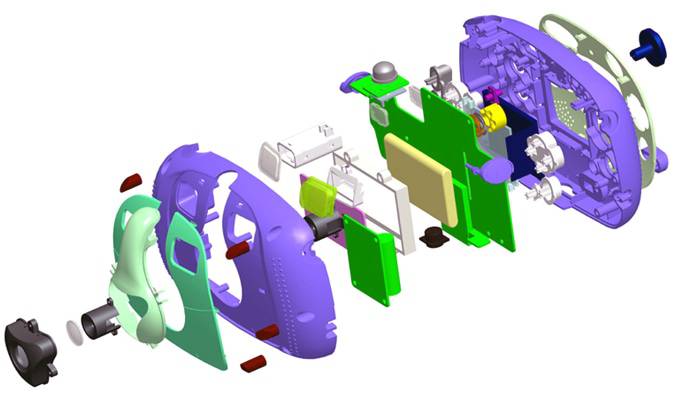
 It is well established that the structural characteristics of plastics differ fundamentally from those of metals. However, even a foundational concept like “stress” takes on a completely different meaning when applied to a plastic component versus a metal one. The core challenge for engineers is understanding exactly how these divergent material properties impact the design process.
While plastics are often perceived as a low-cost material, they are actually quite expensive from a unit-volume or load-bearing perspective. Their true cost-efficiency stems from the high-speed injection molding process. Given this reality, a 100% plastic design isn’t always the most cost-effective solution.
Furthermore, while plastics excel at handling intermittent loads, they are prone to permanent deformation (creep) even under low, long-term stress. In many designs, simply adding more plastic is not a viable fix. Instead, strategically integrating a small amount of load-bearing metal components into a primary plastic structure often yields a significantly superior, high-performance product.
if you’re new to designing molded plastics or if you’re curious about the process.
Use a uniform wall thickness. This will promote uniform patterns, uniform molded-in stress distribution and uniform shrinkage. Having a uniform mold will also make warping less likely.
Avoid abrupt transitions from thin to thick. All parts require some variations with wall thickness including features such as ribs. Because of the structural differences, the transition should be as gradual as possible in order to avoid flow hesitation.
Avoid sharp corners as much as possible. Sharp corners act as stress concentrators that can lead to crazing, cracking, increased susceptibility to chemical attack and part failure. To best avoid sharp corners with plastic product design, use generous radius at all corners. Radius corners make it really easy to add fillets or chamfers to avoid sharp corners altogether.
Use ribs to improve part stiffness in bending. Ribs are also used in plastic parts to prevent warpage. If ribs aren’t designed properly relative to the surfaces they’re attached to, problems such as sink marks, warpage and part failure can occur.
Use the least thickness compliant with the process, material or product design requirements. This will ensure rapid cooling, short cycle times and minimum shot weight. Combined, this will result in the least possible part cost.
Try to design parts to facilitate easy withdrawal from the mold by adding draft in the direction of mold openings or closings. The amount of draft angle depends on the depth of the part in the mold and its required end function.
Injection molding is not the one and only perfect plastic manufacturing method. However, it has its set of disadvantages but the benefits clearly outweighs its cons with a huge disparity. All of these information on how to design plastic products through injection molding may seem so sketchy if you are still new to plastic manufacturing. It needs time and experience before you get yourself fully acquainted to injection molding as a method on how to design plastic products. An experienced plastics manufacturing company can help you with the details.
Getting great results from plastic injection molding requires a respect for the properties of thermoforming plastic resins and how they behave inside of a mold tool. Using good design practices at the beginning of the product development cycle will help you to avoid common pitfalls and will improve the look and performance of your parts. you always are some suggestions for the most common causes of defects in plastic injected molded parts and how to avoid them for our next project. thanks you so much!
Designing uniform wall thickness is essential to controlling the distribution of heat within the part during molding.
To get the best results, follow these design tips for wall thickness. Be careful to note the type of plastic being molded, which may effect the rate of shrinkage in the mold.
Adjacent walls should be equal in thickness wherever possible, but should in no case differ more than ~50%
Long wall sections should be supported with ribs or gussets, instead of making them thicker for strength
There should be a draft angle of 1 degree for every 2 cm in wall height
Walls should have a slight radius at their base to relieve stress which can cause cracking or deformation
Material and Thickness are very important when designing a plastic product
Depending on (1) how the product works, (2) the environment it will be in and (3) the preference of the designer, a material should be selected. These materials change how the part feels, looks and operates. Some are flexible, some are rigid, some are strong, some are brittle. The type of material chosen will often have a significant effect on the design of the part. Some support ribs may need to be removed or added, walls may need to be thicker or thinner, etc.
The plastic product design process offers many versatile solutions and unique benefits, but it’s a practice that depends on the strength of its design. The injection molding part design must be developed to maximize the efficiency inherent in high-volume molding. Plastic product and mould design, tool building, plastic material selection, and Injection molding manufacturing process are the four key factors that go into making a high-quality plastic injection molded part. During both the injection and cooling stages of the manufacturing process.
There are some differences between plastic product design and other product design. Here I would like to share some experience about plastic product design:
1. Wall thickness
Thin walls are advisable in plastic manufacturing for shorter cycle times and being able to produce more plastic part designs in shorter production lead time. Thinner walls also makes the cooling process faster. Ideal wall thickness from 0.08? (2mm) to 0.16? (4mm), but thin wall injection molding can go as thin as 0.02? (0.5mm).
However, wall thickness also depends on the type of plastic material being used. Here are the recommended wall thickness for various plastic materials; ABS resin is between 0.045 and 0.140 inches, Acrylic is at 0.025 –0.150, Liquid crystal polymer at 0.030 -0.120, Nylon at 0.030–0.115, Polycarbonate at 0.040 – 0.150, Polyester at 0.025 –0.125 and Polypropylene at 0.025– 0.150.
2. Ribs
Adding ribs helps increase the bending stiffness due to the increased moment of inertia. This is a suggested option instead of adding thickness to the wall. Here are recommendations with ribs in plastic production;
Rib’s thickness should not be more than 60% of the nominal thickness value.
Height should be three times lower than the wall thickness.
Draft angle is at 25 degrees.
The ribs position must be perpendicular to the axis where the bending occurs.
Corners of the attachment points must be rounded instead of having them pointed.
3. Bosses
Bosses are layers wherein fasteners are attached and threaded inserts are located. Recommended specifications for bosses are the following;
Bosses’ wall thickness should not be more than 60% of the main wall.
Base radius should be at least 25% thickness of the main wall.
Bosses should be supported by ribs connecting to walls adjacent from their position or gussets at the bottom the mold design.
Ribs should be used to isolate bosses in corners of the design.
Plastic product designer’s Services include dynamic, linear and non-linear analyses, consulting, CAD development and design and prototyping.
Plastic Part design could become tricky and compromises and trade-offs usually lead to failures. Automotive OEM’s will mainly use plastic material in cosmetic components and some other non-load carrying components.
Main features of plastic part design would include:
Good Knowledge of Material Database – There are many sources of data available for 100’s of plastic material types and grades in the market. But very few would provide complete understanding of material properties. When select the plastic materials, temperature and time variation of strength should be considered, as it could significantly lead to development of creep & fatigue.
Type of Loading & Application – Short term cyclic loading or long term constant load. In both cases, the maximum allowable stresses are going to be significantly lesser than the tensile strength of material. The environmental exposure of the part can also decide the life of the part as it degrades on coming in contact with chemicals, UV rays, sunlight and temperature.
Part Design Features – Many factors like ribs, notches, wall thickness, holes can contribute to stress concentration & residual stresses in the part. Thus careful consideration of part features should be done in order to optimize the stress lines within the part. For example, any abrupt change in wall thickness may lead to high stress concentration and thus reduce strength of the part.
Process Induced issues – process control parameters like cooling time, heating temperature, poor material mixing, poor part design leading to improper material flow can significantly affect the structural characteristics & quality of the part.
Basically, the manufacturer try to cut costs by compromising on either of these factors which should be taken care by the product engineering team of the automotive company.
When designing with plastic, our goal is to achieve a technically accurate design that works well and can effectively reduce manufacturing costs. Following these basic techniques will help achieve these goals and speed up the design process.
Today’s high-performance plastics bring many benefits to the design table, which was previously thought to be only available on metal. The first is durability. Over time, today’s high performance plastics have proven to be much stronger than metals in many applications. Every imaginable industry, from plumbing, medical and aerospace, now has hundreds of applications, and previously designed metal parts are converted into plastic.