
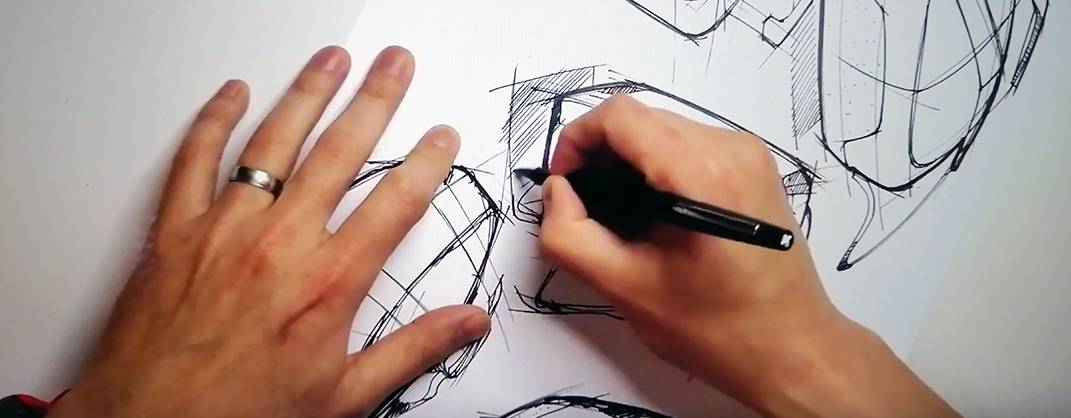
The Importance Of Product Design
Product design is the cornerstone of successful manufacturing. In fact, product molds represent nearly 40% of the entire molding industry, underscoring just how critical the design phase is to a product’s ultimate success. However, bringing a concept to life requires adherence to strict engineering rules and highly specialized expertise. It demands professionals.
Backed by decades of manufacturing excellence, the FMS Design Team transforms your concepts into market-ready realities. We don’t just design; we optimize your products for scalability, cost-efficiency, and premium quality.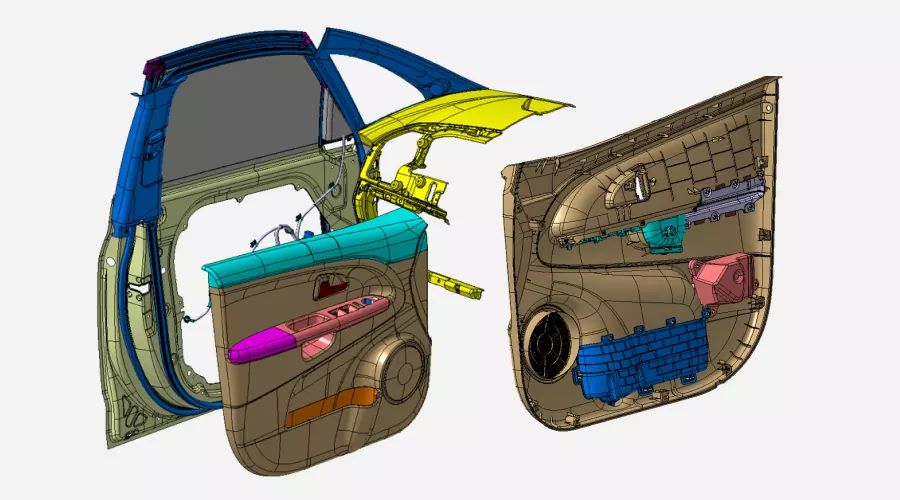
Seamless Collaborative Design
We have broken down geographic barriers with our advanced Internet-enabled Collaborative Design system. Distance is no longer a factor. You can review designs, analyze structures, and assemble virtual prototypes alongside our engineers in real time.  It feels exactly like having an in-house design department right next door—a seamless partnership that consistently earns the highest satisfaction ratings from our global clients.
Why Choose FMS for Product Design?
At FMS, we bridge the gap between innovative concept and flawless production. Here is how our unique design advantages accelerate your success:
• Design Built for Manufacturing (DFM): Backed by extensive expertise in molding simulation analysis and advanced mold design, our team ensures your products are optimized for production from day one—minimizing errors and reducing time-to-market.
• Strategic Global Hub Advantage: Located at the absolute epicenter of the world’s mold-making and molding industry, we have direct access to cutting-edge techniques and top-tier manufacturers. This keeps our designs at the forefront of global innovation.
• Premium Quality, Competitive Edge: We deliver professional, efficient, and high-integrity design services that meet strict Western quality standards—offering you premium engineering expertise at a highly competitive price point.
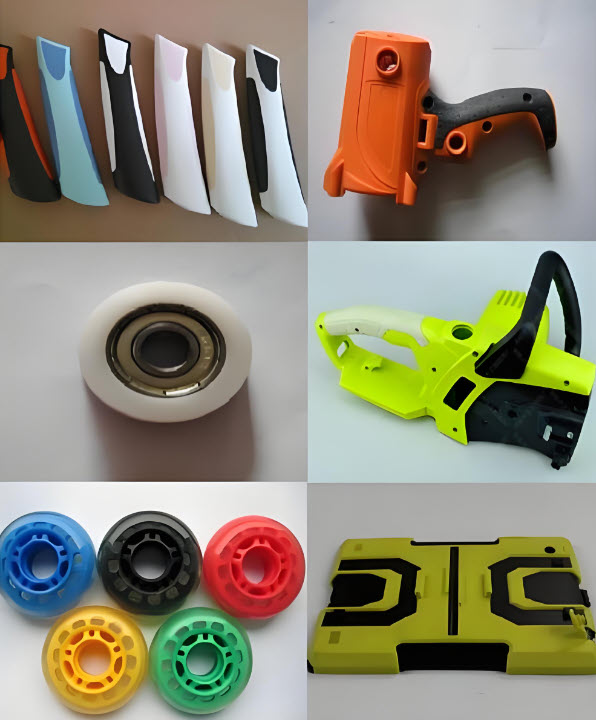
Elevate Your Product with High-Impact Design
Great design shouldn’t cost more. We transform standard product concepts into eye-catching, market-ready products that consumers actually want to buy—without driving up production costs.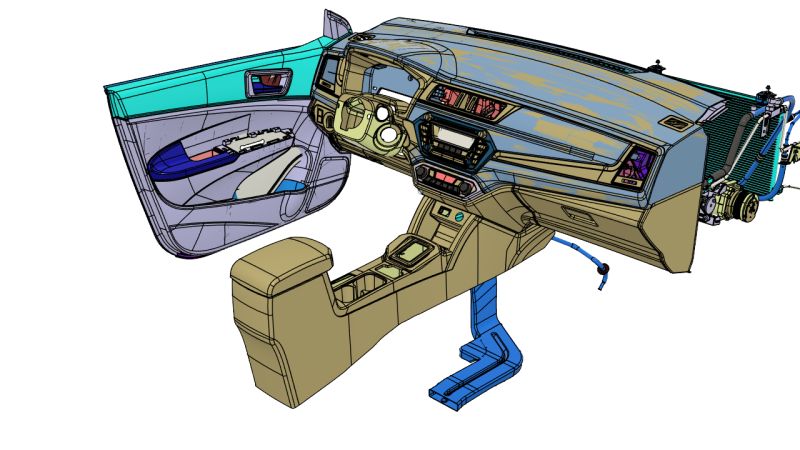
Utilizing industry-leading CAD systems, our team combines advanced surface modeling expertise with a deep understanding of economical injection molding. But we provide more than just technical tools. We bring the artistic vision and stylistic intuition needed to give your product a competitive edge. Let us help you turn your next big idea into a beautifully engineered, commercial success.
Maximizing Performance Through Design for Manufacturing (DFM)
Designing parts with advanced materials requires a unique mindset: they must be strictly engineered for seamless production. While basic product design is common, achieving true excellence demands deep expertise in manufacturing processes and tooling functionality.
With a proven track record in world-class mold design, we possess an unmatched understanding of tooling and molding dynamics. By combining this hands-on manufacturing insight with our advanced CAD and FEA stress analysis capabilities, we deliver optimized, production-ready designs that elevate your product’s performance from day one.
Why Stress Analysis is Critical for Plastic Design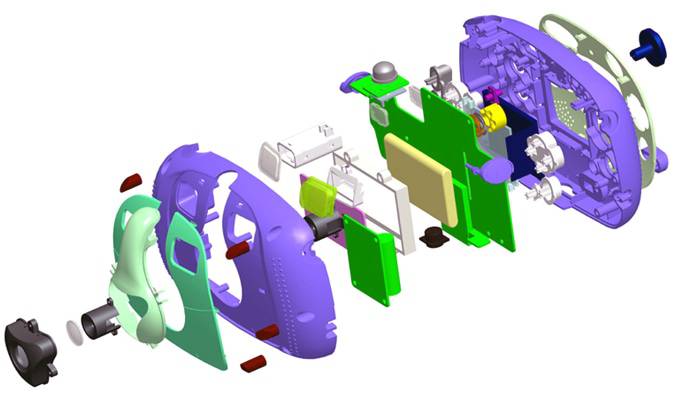
 It is well established that the structural characteristics of plastics differ fundamentally from those of metals. However, even a foundational concept like “stress” takes on a completely different meaning when applied to a plastic component versus a metal one. The core challenge for engineers is understanding exactly how these divergent material properties impact the design process.
While plastics are often perceived as a low-cost material, they are actually quite expensive from a unit-volume or load-bearing perspective. Their true cost-efficiency stems from the high-speed injection molding process. Given this reality, a 100% plastic design isn’t always the most cost-effective solution.
Furthermore, while plastics excel at handling intermittent loads, they are prone to permanent deformation (creep) even under low, long-term stress. In many designs, simply adding more plastic is not a viable fix. Instead, strategically integrating a small amount of load-bearing metal components into a primary plastic structure often yields a significantly superior, high-performance product.
There are hundreds of plastic materials available, all with different performance characteristics. You need to understand what plastic will work best for your application. You should also understand the stresses that will affect the performance and the life of the part. Key questions to answer are: will part stress occur repeatedly or will it be a one-time occurrence? Will the stress in a moving plastic part experience a continual peak load and relaxation or will it be under constant load. What chemicals will come into contact with the part? Some plastics are very sensitive to specific chemicals whereas others are not. Both the plastic material supplier and an experienced molder will prove helpful in selecting the correct material for the application.
Molded plastic parts may be designed with a variety of surface finishes, from a high gloss to a rough texture. The choice of surface finish is usually based on cosmetic considerations. A glossy finish can enhance the appearance of a part while a textured surface may help to mask sink marks or parting lines.
Surface finish should be specified so it does not interfere with ejection of the part from the mold. The smoother the finish, the more easily the part is ejected from the mold. An extremely rough surface may hinder ejection from the mold. Rough finishes tend to function much like an outside dimension undercut thus preventing the part from slipping easily out of the mold.
When not otherwise specified, the surface finish standards of the Society of Plastic Engineers and the Society of Plastic Industries should be followed.
In the last couple of decades, use of lightweight alternatives such as plastics and composites has dramatically increased, with its applications well entrenched in automotive, aerospace, consumer electronics industry.
Today’s car for example, has more than 150 kilograms of plastics on board in the form of seats, dashboards, bumpers, and engine components. Boeing 787 on the other hand has 50% carbon fibre-reinforced plastic and other composites in its airframe. The company says it has used more carbon composites and plastics than ever before in the 787 model.
Plastics offer good mechanical properties and are relatively lighter than metal, making products more efficient, while providing enough toughness to withstand the test of time. However, it is important that designers be sensitive to certain physical and mechanical properties of plastics as it is not as strong as metal, has relatively lower density than metal and is poor conductor of heat and electricity
Injection molding is the most commonly used manufacturing process but due to its intricacies product designers need to make adequate design considerations to ensure that part designs focus on maximizing molding performance and reducing tooling costs , an area that often plague the injection molding industry.
Plastics tend to have higher rates of thermal expansion than metals and thicker sections shrink more than a thinner section, resulting in warpage or sink mark during the molding process. Stress concentration is another area that is of particular concern for plastic part manufacturing. These stresses can be the result of a continuous load, warpage, or any other issue related to design, material, processing, or tooling factors. Additionally there can be many latent defects in plastic parts that can not be detected with routine quality control.
Plastic part performance and cost can be significantly enhanced by proper part design features. Through the use of simple designs and by following general moldability guidelines for plastic parts, design engineers can avoid problems occurring during manufacturing and also reduce the cost of parts. These factors require designers to introduce adequate design features that can lessen the stress level within a part and help develop low-shrinkage, warp-free parts.
Creating a high-quality, reliable precision injection molded plastic part involves careful planning, prototyping, and testing. Although most part issues originate during the first steps of manufacture, they can be easily avoided from the outset by working with a trusted turnkey molding manufacturer, rather than a company that outsources their work.
These types of molding companies work with outside designers and then contract another company — often an offshore operation — to build the mold, essentially relinquishing control over operations in the process. Turnkey manufacturers, on the other hand, handle all steps under one roof, allowing for full oversight and ensuring accountability and quality.
Plastic injection molding allows for the production of precision parts at low costs, but high-volume molding processes require specialized part design. With the right design, consistently high-quality parts can be produced in bulk, avoiding expensive processing errors and delays.
Before beginning the injection molding design process, the following factors should be taken into account:
Wall Thickness Rib Design Boss Design Corner Transitions Weld Lines Gate Placement Vent Placement More Information
In the last couple of decades, use of lightweight alternatives such as plastics and composites has dramatically increased, with its applications well entrenched in automotive, aerospace, consumer electronics industry.
Today’s car for example, has more than 150 kilograms of plastics on board in the form of seats, dashboards, bumpers, and engine components. Boeing 787 on the other hand has 50% carbon fibre-reinforced plastic and other composites in its airframe. The company says it has used more carbon composites and plastics than ever before in the 787 model.
Plastics offer good mechanical properties and are relatively lighter than metal, making products more efficient, while providing enough toughness to withstand the test of time. However, it is important that designers be sensitive to certain physical and mechanical properties of plastics as it is not as strong as metal, has relatively lower density than metal and is poor conductor of heat and electricity
Injection molding is the most commonly used manufacturing process but due to its intricacies product designers need to make adequate design considerations to ensure that part designs focus on maximizing molding performance and reducing tooling costs , an area that often plague the injection molding industry.
Plastics tend to have higher rates of thermal expansion than metals and thicker sections shrink more than a thinner section, resulting in warpage or sink mark during the molding process. Stress concentration is another area that is of particular concern for plastic part manufacturing. These stresses can be the result of a continuous load, warpage, or any other issue related to design, material, processing, or tooling factors. Additionally there can be many latent defects in plastic parts that can not be detected with routine quality control.
Plastic part performance and cost can be significantly enhanced by proper part design features. Through the use of simple designs and by following general moldability guidelines for plastic parts, design engineers can avoid problems occurring during manufacturing and also reduce the cost of parts. These factors require designers to introduce adequate design features that can lessen the stress level within a part and help develop low-shrinkage, warp-free parts.
Designing products with molded plastic components and assemblies is becoming a more attractive option. New high performance plastics and innovative molding processes make this possible. Injection molded plastic parts offer an important combination of flexibility, toughness, and chemical resistance for cost effective, long-term performance in a range of applications. However, not every plastic part design can be efficiently injection molded. So working with an experienced molder with many years’ experience with high performance plastics and complex projects is important to a successful outcome. That way, you can be assured that your molded components and assemblies are both functional and within budget.
When designing a new plastic part, Wall thickness strongly influences many key part characteristics including mechanical performance, appearance, moldability and durability. So, to work with wall thickness, instead of increasing the entire wall thickness, the designer can check whether any kind of ribs, corrugations or curves can be added to get the same strength in the part as with increased wall thickness, as it leads to more weight and less moldability. By providing radius for each element instead of sharp edges, part ejection becomes easier during moulding process. Sharp edges create wear and tear which may result in malfunctioning of the final component after repeated use. The designer can then do a stiffness analysis from Analysis section before finalizing the product design.
Designing a part for manufacturing is a crucial component of getting a product to market, and designing that part for plastic injection molding requires some special considerations. Here are five tips for designing the perfect part.
Prototypes?
Creating a prototype is an essential part of the part design process, particularly for injection molding. An early prototype can save on costs by helping to identify potential problem areas for the flow of plastic through the mold, cooling without warping or sinking, and possible ejection issues. Prototypes also allow you to physically examine and test a part before taking the next step to full-scale production.
Mold and Part Interaction?
The simplest and most cost-effective design will allow parts to be molded with a simple open-and-close action of the mold rather than more complex (and more expensive) side action or lifting mold mechanisms.
Plastic Flow
Thick to Thin – A critical part of planning any part for plastic injection molding is to take into consideration the way plastic will flow through the mold. You want to make sure it will flow through rapidly, smoothly, and evenly. The best designs will force plastic to start in the thickest areas and progress to thinner areas which helps prevent blockages if plastic cools too quickly in thin areas preventing material from reaching the areas beyond that point.
Wall Thickness – Consistent wall thickness for best flow will aid in the smoothest flow of plastic and will help prevent warping and unattractive sinks during the cooling process.
Curves – Rounded corners and smooth transitions rather than sharp angles and corners will keep the plastic flowing easily through the mold, helping to reduce stress on the plastic and prevent warping and weakness.
Mold Ejection
Getting your part out of the mold after it’s cooled is just as important as getting the plastic properly into the mold in the first place. Adding an appropriate taper (draft angle) to parts will make them less likely to stick in the mold, and will add to the stability of parts. Rough surfaces for parts can also make them difficult to eject from molds.
Materials
The types of plastics used for parts should be carefully chosen. Each kind of polymer, additive, and filler has different suitabilities for different types of parts. For the best results, take into consideration the stress and strains on the part, the strength it will need, its durability and lifespan, the cost of different material choices, and, of course, its physical appearance. There’s a lot to take into account when designing a part for plastic injection molding.
Designing an injection molded plastic part requires optimizing the part with respect to various stakeholders’ needs throughout its life cycle. The conditions in which a product is operating in service are often inadequately understood or specified, resulting in wrong material selection, which in turn leads to failure when the product is used. Many aspects interrelate with the initial part design and the essential rules of each should be taken into account to ensure a well-functioning plastic product. Regardless, a part design often passes sequentially from concept development to the manufacturing phase with features that unnecessarily complicate production, add costs and weaken the intended embodiment of the product. Therefore, a checklist was developed to ensure that oversights do not happen and verify that a design fulfills the requirements set for it.
First considerations for Plastic product design:
Now, if this is your first approach to plastic product design, you’re probably thinking about what the primary factors are to look for this service resource. To make the most appropriate decision making to your business needs, here are some useful considerations to think about and share with your designer:
Why is this design necessary?
Which need are we trying to meet?
How will its function help our product?
Are we going to replace other existing products?
Are there already similar products on the market?
Are there any patents or protected designs that could conflict with this new design?
How will its use and usability criteria make our product attractive to the final consumer?
Who is its potential user?
Are there any possibilities of misuse of my product that could harm the user?
Will it be a single-use product? How many uses will it have?
Is it a seasonal product?
Is it a promotional product?
How important is the appearance of the product?