
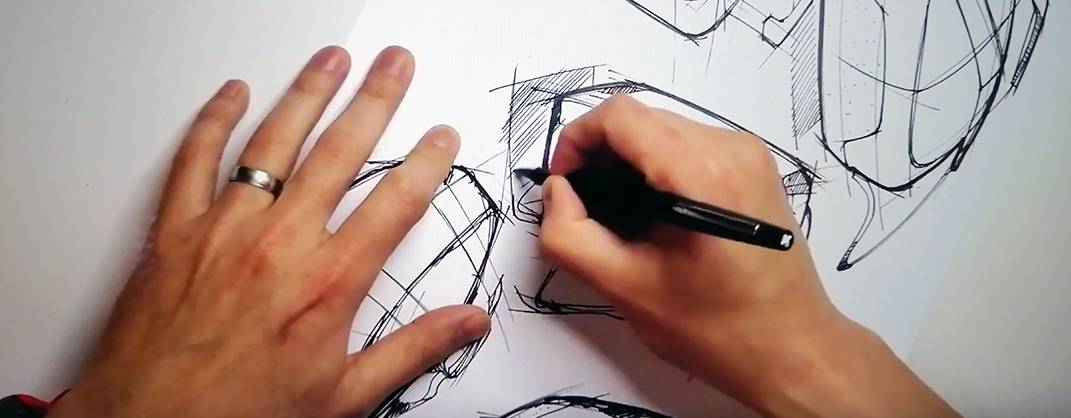
The Importance Of Product Design
Product design is the cornerstone of successful manufacturing. In fact, product molds represent nearly 40% of the entire molding industry, underscoring just how critical the design phase is to a product’s ultimate success. However, bringing a concept to life requires adherence to strict engineering rules and highly specialized expertise. It demands professionals.
Backed by decades of manufacturing excellence, the FMS Design Team transforms your concepts into market-ready realities. We don’t just design; we optimize your products for scalability, cost-efficiency, and premium quality.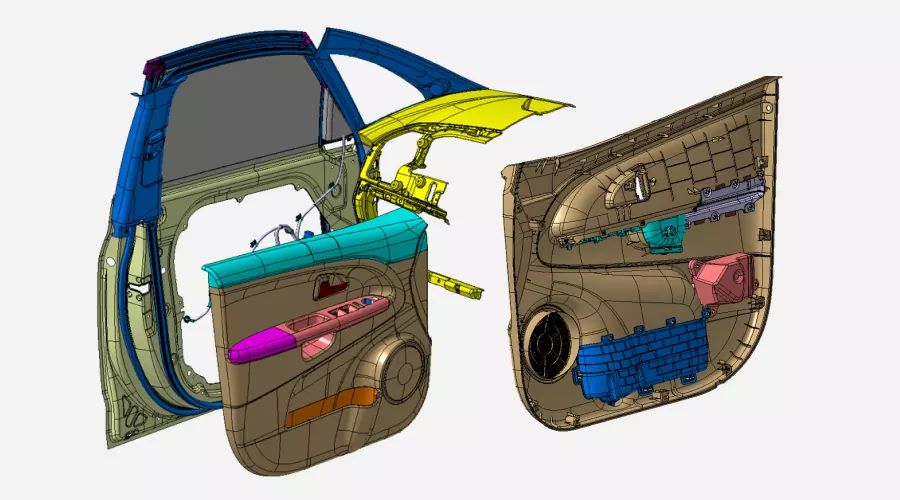
Seamless Collaborative Design
We have broken down geographic barriers with our advanced Internet-enabled Collaborative Design system. Distance is no longer a factor. You can review designs, analyze structures, and assemble virtual prototypes alongside our engineers in real time.  It feels exactly like having an in-house design department right next door—a seamless partnership that consistently earns the highest satisfaction ratings from our global clients.
Why Choose FMS for Product Design?
At FMS, we bridge the gap between innovative concept and flawless production. Here is how our unique design advantages accelerate your success:
• Design Built for Manufacturing (DFM): Backed by extensive expertise in molding simulation analysis and advanced mold design, our team ensures your products are optimized for production from day one—minimizing errors and reducing time-to-market.
• Strategic Global Hub Advantage: Located at the absolute epicenter of the world’s mold-making and molding industry, we have direct access to cutting-edge techniques and top-tier manufacturers. This keeps our designs at the forefront of global innovation.
• Premium Quality, Competitive Edge: We deliver professional, efficient, and high-integrity design services that meet strict Western quality standards—offering you premium engineering expertise at a highly competitive price point.
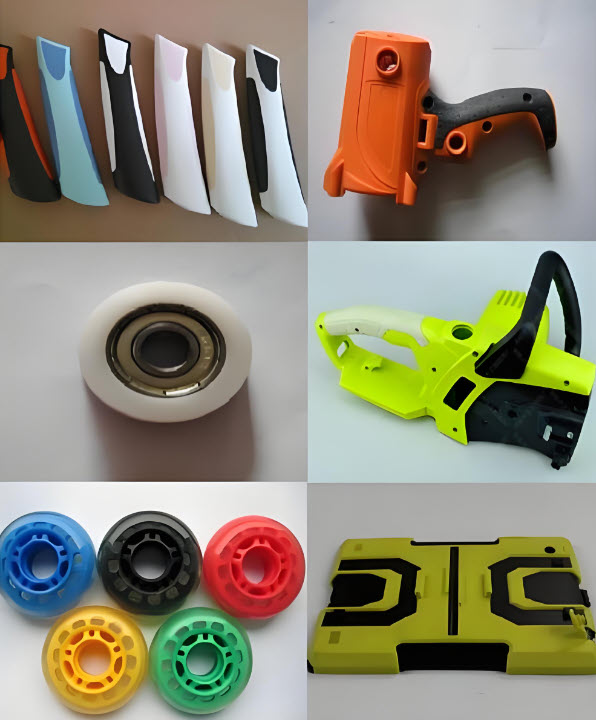
Elevate Your Product with High-Impact Design
Great design shouldn’t cost more. We transform standard product concepts into eye-catching, market-ready products that consumers actually want to buy—without driving up production costs.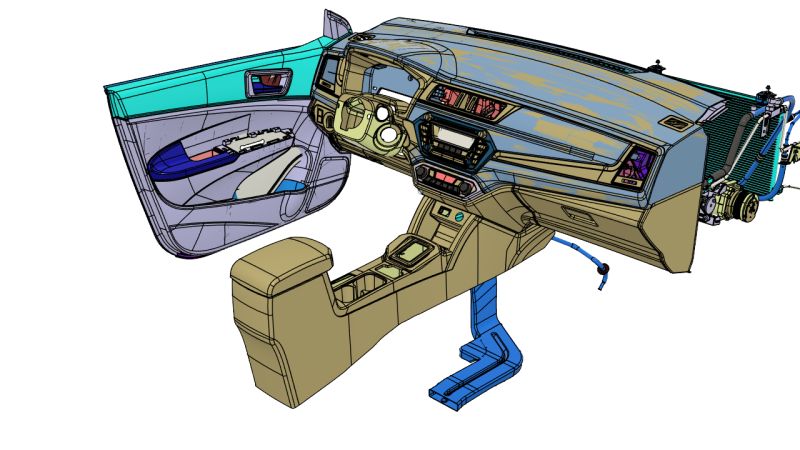
Utilizing industry-leading CAD systems, our team combines advanced surface modeling expertise with a deep understanding of economical injection molding. But we provide more than just technical tools. We bring the artistic vision and stylistic intuition needed to give your product a competitive edge. Let us help you turn your next big idea into a beautifully engineered, commercial success.
Maximizing Performance Through Design for Manufacturing (DFM)
Designing parts with advanced materials requires a unique mindset: they must be strictly engineered for seamless production. While basic product design is common, achieving true excellence demands deep expertise in manufacturing processes and tooling functionality.
With a proven track record in world-class mold design, we possess an unmatched understanding of tooling and molding dynamics. By combining this hands-on manufacturing insight with our advanced CAD and FEA stress analysis capabilities, we deliver optimized, production-ready designs that elevate your product’s performance from day one.
Why Stress Analysis is Critical for Plastic Design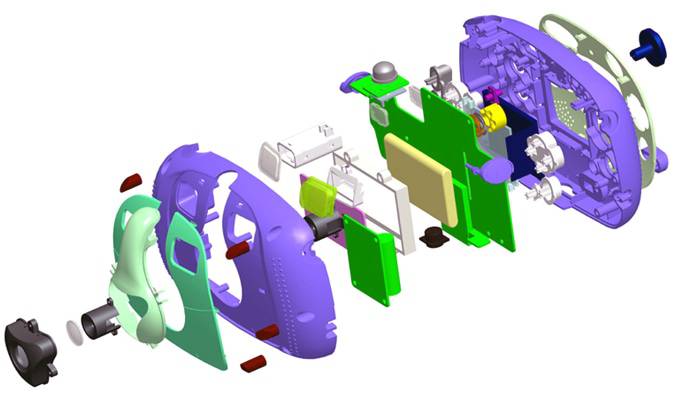
 It is well established that the structural characteristics of plastics differ fundamentally from those of metals. However, even a foundational concept like “stress” takes on a completely different meaning when applied to a plastic component versus a metal one. The core challenge for engineers is understanding exactly how these divergent material properties impact the design process.
While plastics are often perceived as a low-cost material, they are actually quite expensive from a unit-volume or load-bearing perspective. Their true cost-efficiency stems from the high-speed injection molding process. Given this reality, a 100% plastic design isn’t always the most cost-effective solution.
Furthermore, while plastics excel at handling intermittent loads, they are prone to permanent deformation (creep) even under low, long-term stress. In many designs, simply adding more plastic is not a viable fix. Instead, strategically integrating a small amount of load-bearing metal components into a primary plastic structure often yields a significantly superior, high-performance product.
Uniform wall thickness is the key to the design of molded parts. Uneven wall thickness can cause dimensional integrity problems such as dimensional control problems and warpage.
Material Selection – Some materials can flow through thin-walled sections and provide the proper strength for their application. However, some materials are not free to move or contain fillers to increase the strength of the selected material. These types of materials require a thicker minimum thickness.
Mechanical properties required for part integrity – What are the design requirements for the part? If this part is under constant load, it may require a thicker wall section than without any load.
There are hundreds of plastic materials to choose from, all with different performance characteristics. You need to know which plastic is best for your application. You should also understand the pressures that affect product performance and longevity. The key question to answer is: Will some of the pressure be repeated or a one-time occurrence? Is the stress of the moving plastic part in continuous peak load and slack, or in a constant load state? What chemicals will come into contact with the part? Some plastic pairs Certain chemicals are very sensitive, while others are not. Both plastic material suppliers and experienced molds will prove helpful in selecting the right materials for the application.
Designing products with molded plastic parts and components is becoming a more attractive option. New high performance plastics and innovative molding processes make this possible. Injection molded plastic parts provide an important combination of flexibility, toughness, and chemical resistance for cost-effective, long-term performance in a range of applications. However, not every plastic part is designed to be injection molded efficiently. Therefore, working with experienced molders with years of experience in high-performance plastics and complex projects is critical to successful results. This way, you can be sure that your molded components and components are functional and within budget.
There is no doubt about the importance of industrial design to a country
I have been engaged in industrial design for five years. I think it is not easy to become a qualified industrial designer
As an industrial designer, I am very proud of my work?Because it changed many people’s lives
Industrial design has a wide range. I think we need a platform for communication. Maybe this is a good idea
I am an industrial designer, and I think we can exchange some experience about plastic product design when we are free
hi dean, we are glad to do so, you are welcome anytime!
In my opinion, your industrial services are limited to the design of plastic products. I mean Industrial design is a big concept
In my opinion, to become an excellent industrial designer, we need to learn a lot of knowledge and experience, and talent is also important