
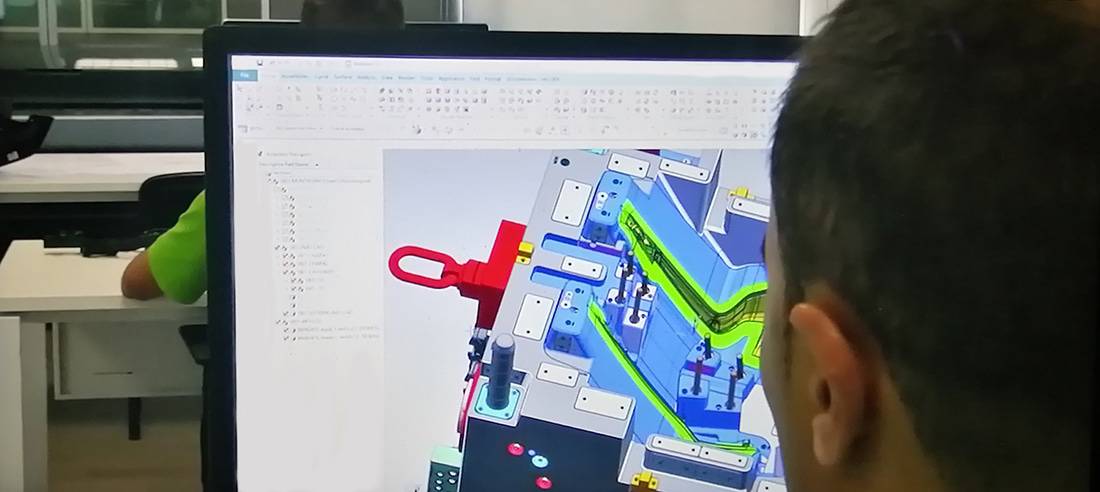
Why Partner with FMS for Mold Design?
FMS Mold Design combines decades of profound engineering expertise with state-of-the-art CAD technology to deliver high-precision tooling solutions. Supported by advanced data conversion tools and high-speed connectivity, our technical infrastructure makes global communication effortless and highly secure.
Real-Time Collaborative Engineering
We have redefined remote collaboration. Through our cloud-connected design workflows, your team can engage in real-time design reviews with our engineers at any time. We function precisely like an internal extension of your own design department—a high-touch approach that drives exceptional client satisfaction worldwide.
 FMS Mold Design Team delivers high-value, high-precision engineering solutions by seamlessly combining technical expertise with cost-effective execution. Our comprehensive services include mold feasibility studies, complete mold design and detailing, plastic part design and development, and advanced solid modeling.
Our Expertise & Capacity
The FMS engineering team consists of 10 dedicated designers, each bringing a minimum of 15 years of hands-on experience in mold design, manufacturing, and injection molding. All team members possess robust CAD/CAM/CAE competencies.
Our Design Director, David Zhang, leverages nearly 30 years of industry experience and a strong academic background in engineering. He possesses a profound understanding of European and American mold design and manufacturing standards (HASCO, DME, etc.). This deep integration of “real-world” manufacturing knowledge ensures every design we deliver is fully optimized for production, reducing lead times and costly modifications.
A Collaborative Partnership
We operate as a seamless extension of our clients’ internal engineering teams. Thanks to our diverse portfolio and decades of cross-industry experience, we adapt quickly to unique project requirements. We work closely with your engineers to deliver reliable, high-quality designs that strictly align with your standard operating procedures.
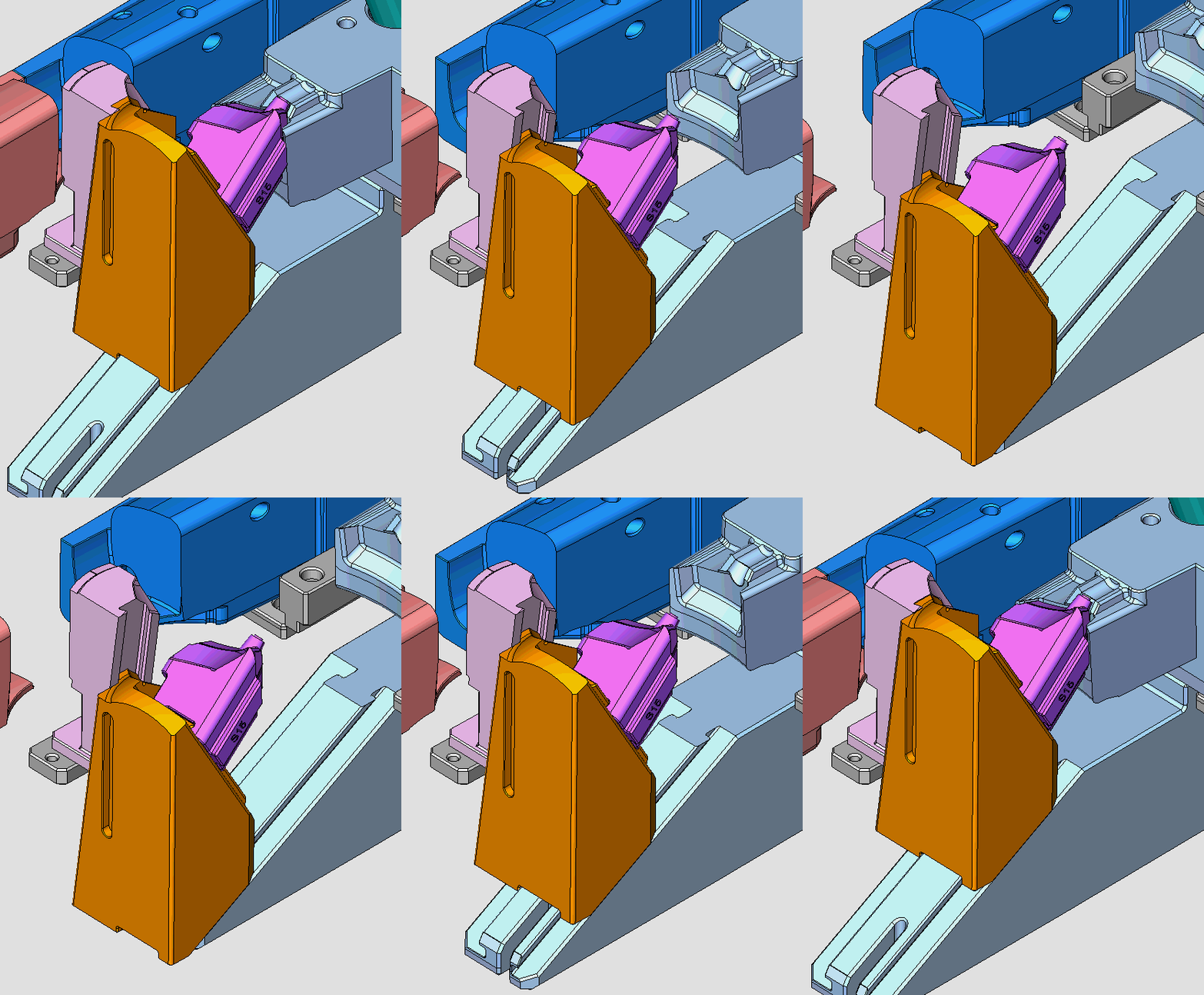
Value-Added Services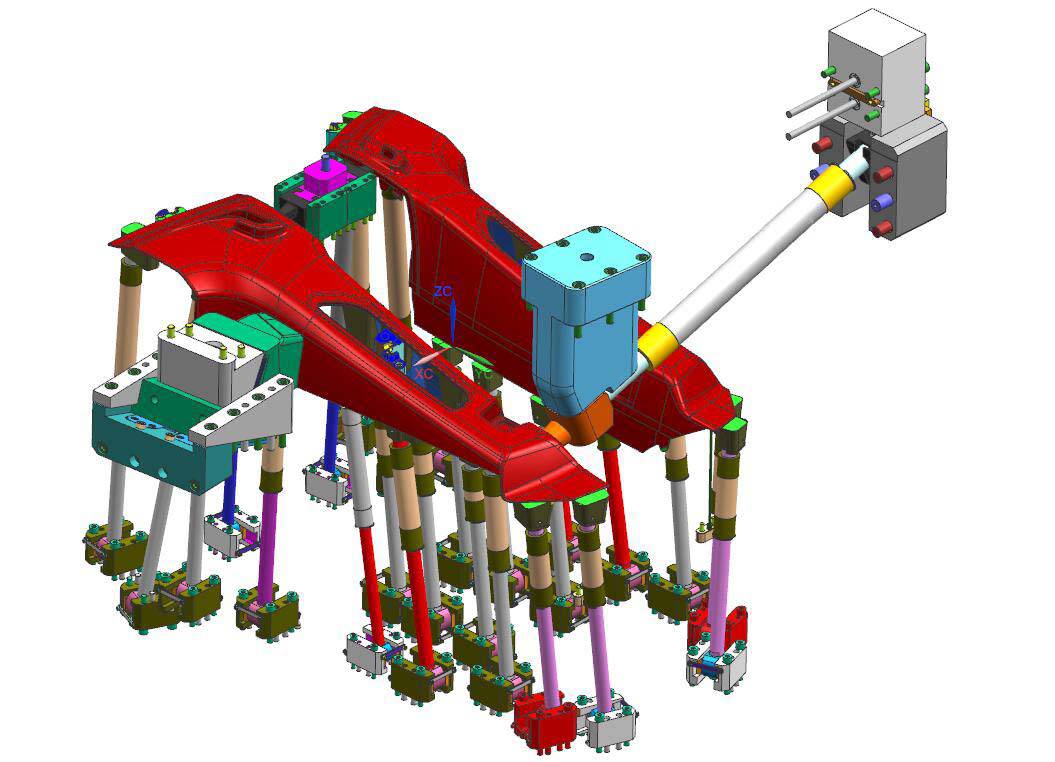
At FMS, our engineering team goes beyond standard mold design to deliver comprehensive, end-to-end technical support. Leveraging our deep industry expertise, we act as an extension of your team to provide specialized value-added services that optimize your production and fill internal capability gaps.
Our extended capabilities include:
Design for Manufacturing (DFM) and Mold Feasibility Studies / Offshore Mold Design and Third-Party Design Verification / On-Demand Engineering Resources (Additional Design Capacity)
Component Optimization Support (Assistance with Part Design) / Reverse Engineering
Design for manufacture /Mold Feasibility Studies / Designs for Off Shore Mold/Checking Designs / Additional Design Capacity /Assistance with Part Designs / Reverse Engineering
 Product Scope: Armed with a rich legacy in industrial design, our team delivers high-impact solutions across highly regulated and complex sectors. Our cross-industry footprint spans Medical Devices, Aerospace, Robotics, and Automotive, as well as Consumer Electronics, Smart Home Appliances, Workplace Technologies, and Commercial Toys. We seamlessly translate specialized technical requirements into market-ready product excellence.
Design & Engineering Flexibility
Every manufacturer operates on a unique ecosystem integrating mold design with production. At FMS, our engineering team seamlessly bridges design with advanced manufacturing methodologies. We provide fully customizable deliverables, ranging from 2D component drawings and CAD formats to precise 3D surfaces and comprehensive solid CAD data. Whether your project requires only a 2D assembly for rapid quoting or full solid CAD files with detailed hardware, cooling channels, and lifters, we adapt to your workflow. With robust data translation capabilities, we ensure seamless format compatibility—delivering exactly what you need, how you need it.
 Mold Design & Engineering Process
Robust mold design is the foundational element of a product’s manufacturing success. By engaging with our engineering team early in the design cycle, we help you optimize part geometry, mitigate manufacturing risks, and reduce overall tooling costs.
We understand that early-stage designs involve highly sensitive proprietary information. We treat your Intellectual Property (IP) with the strictest confidentiality, and we are fully prepared to execute a Non-Disclosure Agreement (NDA) before reviewing your concepts. Mutual trust is the cornerstone of our engineering partnerships.
Phase 1: RFQ & Initial Feasibility Assessment
To provide an accurate initial quotation and perform a preliminary Design for Manufacturing (DFM) review, we require the following baseline data:
• Product Geometry: Part drawings, 3D concept models, rough sketches, or physical prototypes.
• Application Environment: Product specifications, including mechanical performance requirements and operating conditions.
• Resin Specification: Intended base material (if predetermined).
• Production Volume: Estimated Annual Usage (EAU) and target production batch sizes to determine the appropriate tooling class (e.g., SPI Class 101 vs. Class 103).
During this phase, our engineering team collaborates with you to evaluate the part design for manufacturability, identifying opportunities to optimize cycle times, eliminate cosmetic defects, and minimize initial tooling investments.
Phase 2: Tooling Design & Engineering Validation
Upon successful acceptance of the quotation and project award, we require a comprehensive data package to initiate the formal mold design process:
• 2D Engineering Drawings: Fully dimensioned prints in .DWG or .DXF format.
• 3D CAD Data: Native CAD files or universal formats (.STEP, .IGES, or .X_T Parasolid).
• Material & Esthetics: Final confirmation of the raw material resin, grade, and color (Pantone/RAL or texture requirements).
• Critical-to-Quality (CTQ) Dimensions: A maximum of 5 key inspection measurements for quality control tracking.
• Project Governance: Designated primary engineering and commercial contacts for technical queries and milestone updates.
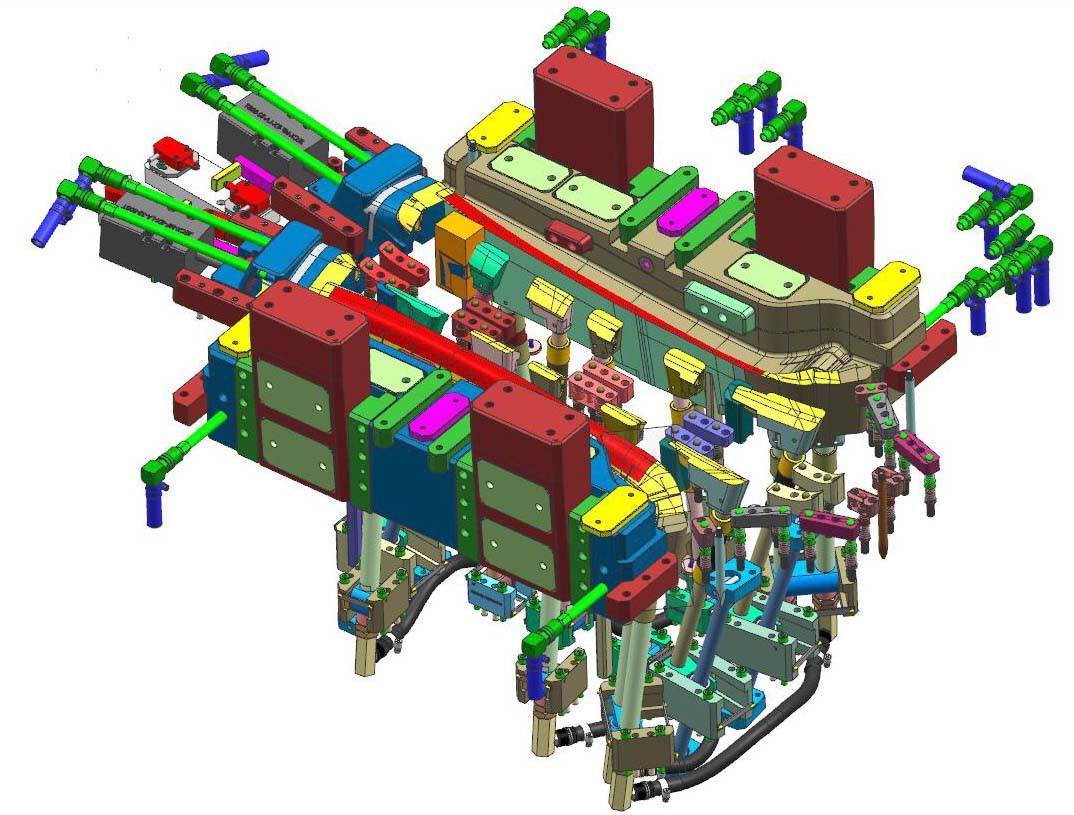 How We Execute Mold Design
Our process begins by gathering all necessary project data to provide an accurate initial quotation. We then perform a comprehensive Design for Manufacturability (DFM) review to optimize the part for production and identify potential cost savings. Following this, we generate a detailed Mold Design Specification (MDS). This guide outlines all critical requirements, including tool specifications, design standards, steel types, standard components, resin selection, shrinkage allowances, and processing parameters.
This specification guide is shared across our design, project management, and production engineering teams to ensure absolute consistency from concept to final manufacturing. Throughout production, we enforce a strict quality control workflow to maintain seamless data integrity between our 3D design models and CNC programming.
Our Stage-Gate Mold Design Process:
1. Mold Specification & Requirement Definition
2. Preliminary Tool Schematic & Concept Layout
3. Schematic Review & Customer Approval
4. Full 3D CAD Design
5. Detailed 2D Engineering Drawings & Manufacturing Documentation
Mould design is an important part of the development process when considering the production of a new moulding. Some considerations are given below.
The shape of the moulded part has a direct bearing on the time involved in making the mould, the cycle time of the moulding. For example, undercuts and deep screw threads often require a separate moving part which increases the cycle time of each moulding operation.
Angles on the side walls are necessary to ensure the moulding can be removed from the mould.
The surface finish of the moulding needs to be decided before the mould is completed. Embossing, etching and other finishes can be added to the moulding to enhance the aesthetic qualities of the moulding. Any imperfection on the finish of the moulding will transfer to every mould made.
Weight, surface area and thickness of the moulding directly affect cycle time. Where moldings have significantly varying thickness, cooling has to be controlled very carefully otherwise depressions form (sink marks) on the outer surface of the moulding caused by excessive shrinkage of the thick section of the moulding.
The number of cavities in a mould is governed by the number of units per annum required. The number of cavities directly affects the size of machine required for the multi-cavity mould; this in turn affects the cost of the mould and the unit cost of the moulding. Where there are many cavities, each one must be uniform compared to the others and the cooling profile needs to ensure that the outer and inner cavities cool at an equal rate, otherwise moulds of differing dimension will result. Hot runner systems are usually used for multi-cavity systems. This reduces the cycle time and amount of waste material formed but increases the overall cost of moulds.
The need for an insert or label to be inserted during the moulding sequence has to be considered at the mould design stage.
All injection moulds require a point or points at which the molten plastic is introduced into them. If not considered at the design stage, this can leave unsightly surface blemishes on the finished moulding which require a further stage to remove them, incurring extra costs.
I understand very well why you are willing to provide such a service?because If you have strong relationship with a design outsourcing company, you can outsource design when demand is more than your design department’s capability to handle it. With outsoureing, you can do more with less.
Hello,
I am looking for MIM mold design I have attached the pictures of part if you will make please get back with details.
Hi Adnan, please send your product detail to [email protected], thanks!
The biggest challenge in injection molding is the process of designing a mold. There are almost no limits to your creativity,but you can do the designs in clever and less clever way from a manufacturing point of view. Plastic manufacturers highlight this aspect as the most crucial part of injection molding. There will be no successful plastic part designs for injection molding if there is no perfect mold from where it is formed. The biggest factors to designing a mold are part and mold design. Getting these factors right means faster production, better quality and reduced costs while having them wrong could substantially affect these production aspects in a negative manner.
Mold design and cost are determined largely by part complexity and production demands. For example, factors such as annual volumes, material selection, dimensional requirements and mold life expectancy can dictate the materials and features used in a mold build.
However, in some cases a more complex tool can make part production easier and reduce the total long-term program cost. Collaborate with your supplier early on in order to find the most cost-effective solution for your mold project.
Before formal mold design, the following datas or documents are usually available:
1. Part’s design data (2D/3D)
2. Mold design and production standards;
3.Design and manufacture contract;
4. Other
To fully understand the above information, unclear details must be confirmed by the customer.
The part drawing determines the ultimate purpose of the mold design and must be fully understood. It usually includes the following sections:
The following aspects should be noticed during the viewing process: front view, plan view, side view, sectional view, detailed drawing, reference drawing, note, tolerance table, official mark table, title bar, etc.
1. Strict tolerance requirements;
2. Parts that have an impact on the mold structure;
3.Unexplainable parts of existing drawings;
4. Matters highlighted in the notes;
5. Special materials and heat treatment requirements;
6. Part of the wall thickness is thin (t <0.6mm)
7. Part wall thickness;
8. Technical requirements for the product;
9. Three-dimensional design drawing;
10. Designer, date, deadline, price, etc.
The correct injection mold design has the following benefits:
Quick mold setup
Faster cycle time
Quality parts
Low scrap rate
High productivity
Long mold life
Long life of the molding machine
Improve employee morale
Unfortunately, many mold designs have some fundamental flaws that prevent the injection molding machine from reaching higher productivity levels.
Your design skill is very good. your extensive professional knowledge and practical work experience benefit my projects a lot, I feel that I will continue to work with you. Thank you very much for your help! Choosing you as the agent of my project is the most correct decision
In my opinion, if your agent does not have the necessary expertise, it is difficult to ensure that the product meets your specifications. Because the burden of design review and the quality of the product must be borne by your broker. Your task is simply to tell your agent what kind of molds and products you need, so in this regard, First-rate mold solution company is doing very well, and they have a wealth of expertise, experience and the deep understanding of Chinese mold makers, so that you can give the project to them with great confidence, they can completely solve the problems raised by Chinese mold makers. In addition?Verification of the factory and equipment can also be handed over to your broker.
First-rate mold design team always designs products and molds in strict accordance with your design standards. Let you know that these designs belong to you, they will even use your standard title block. After all, these are your projects and should really be designed to your expectations.