

Elevate Your Product Development with Precision Prototyping by FMS
Prototyping is a critical milestone in modern product development and mold manufacturing. While 3D printing continues to evolve, traditional rapid prototyping remains irreplaceable for verifying toolability, tolerances, and real-world manufacturability.
 At FMS, we bridge the gap between design and production. We deliver cost-effective, high-precision prototyping services tailored for your new products and molds. Our commitment is simple: uncompromised quality, professional efficiency, and transparent collaboration.Our Core Capabilities:
• Design & Modeling: Conceptual models and fully detailed 3D component modeling.
• Advanced Rapid Prototyping: High-fidelity SLA, SLS (Selective Laser Sintering), and FDM 3D printing.
• Fit & Function Analysis: Engineering-grade prototypes to test form, fit, and operational performance before mass production.
Partner with FMS to accelerate your time-to-market without compromising your budget.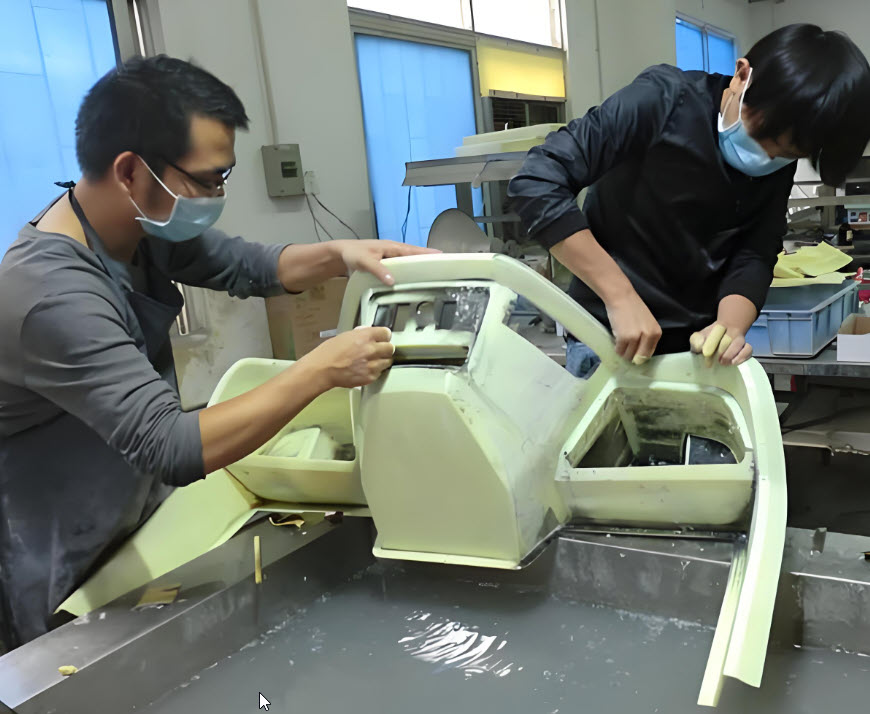
Transforming Vision into Reality: Advanced Prototype Manufacturing
Prototype manufacturing is the critical bridge between digital industrial design and market success. By transforming complex 3D CAD models into functional, tangible products, we enable real-world testing, immediate assessment, and flawless design validation long before mass production begins.
Utilizing a seamlessly integrated ecosystem—combining cutting-edge CNC machining, laser technology, automated CAD/CAM workflows, and advanced materials—we deliver a comprehensive from-part-to-prototype solution. Today, as we harness the full potential of next-generation 3D printing and additive manufacturing, we aren’t just adapting to industrial evolution; we are actively accelerating your product R&D and redefining what’s possible in making.
Industrial-Grade 3D Printing & Additive Manufacturing Services
Accelerate your product development and scale production with our end-to-end 3D printing services. We partner with designers and engineers worldwide to deliver high-performance prototypes, custom tooling, manufacturing aids, and flight-ready or end-use parts.
Leveraging state-of-the-art additive manufacturing technologies and deep material expertise, our team meets the most stringent industry standards—delivering exceptional precision, cost-efficiency, and fast turnaround times. No matter the complexity, we provide the technical expertise to bring your designs to life.
How It Works:
1. Submit Your Design: Upload your 3D CAD models via email for a secure project review.
2. Select Materials: Choose from a wide range of high-performance polymers, resins, or metals.
3. Precision Manufacturing: Our experts optimize and print your parts using advanced additive systems.
4. Quality Inspection & Delivery: Receive production-grade parts, thoroughly inspected and shipped directly to your facility.
3D Printing Service Technologies:
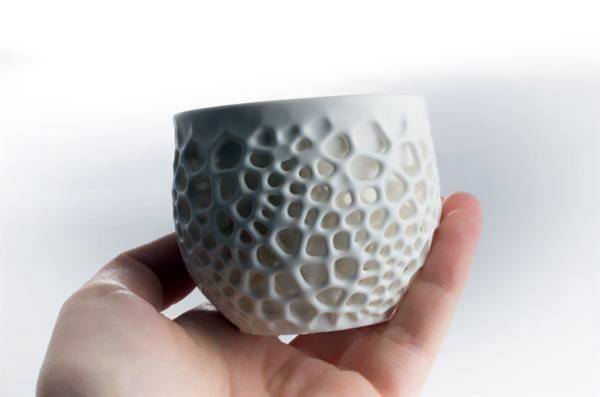 1) SLA
Stereolithography (also known as SL or SLA) builds parts layer-by-layer using a UV laser to solidify liquid photopolymer resins. It is commonly used to produce concept models, master patterns, large prototypes and investment casting patterns.
Advantages
SLA is a good general-purpose additive process for a wide range of applications. Models and prototypes are rigid, strong and durable
2) Multi Jet Fusion (MJF)
Multi Jet Fusion is a durable technology which produces medium-quality surface finish, which is ideal for high-complexity with medium accuracy and can be used for short production runs.
Advantages
MJF is ideal for enclosures, electronics housings, ducts, lattice structures, and functional assemblies. Suitable for applications that require durability such as snap fits.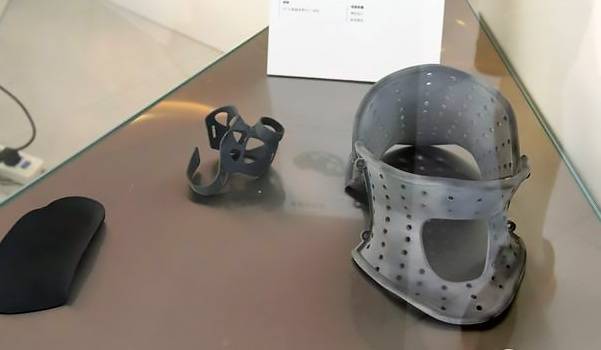
3) PolyJet
The PolyJet rapid prototyping process uses high resolution ink-jet technology combined with UV curable materials to quickly and economically produce highly detailed and accurate physical prototypes.
Advantages
High accuracy, superior surface finish, and wide selection of rigid and soft (rubber-like) materials to choose from. Build multiple materials and colours in a single part.
4) FDM
Fused Deposition Modeling (FDM) creates parts layer-by-layer with engineering-grade thermoplastics. Ideal for functional parts, including prototypes, low-volume production, manufacturing aids, jigs and fixtures.
Advantages
The FDM process uses the same types of raw materials used in the injection molding process. This technology includes use of support material to create create complex parts and assemblies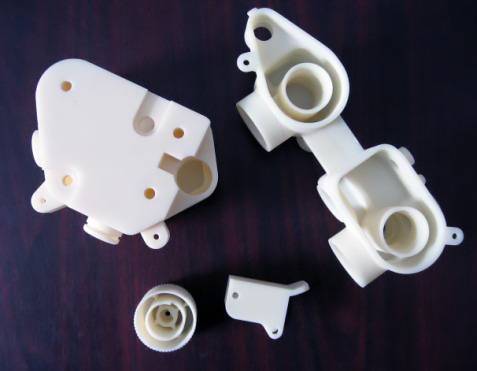
5) DMLS / Metal
Direct Metal Laser Sintering (DMLS) fuses powdered metal and alloy materials to produce metal parts. DMLS produces fully realized metal parts, including tools and end-use parts for a variety of industries.
Advantages
Metal 3D printing, with its advanced metals offering, is best utilized in highly complex and involved design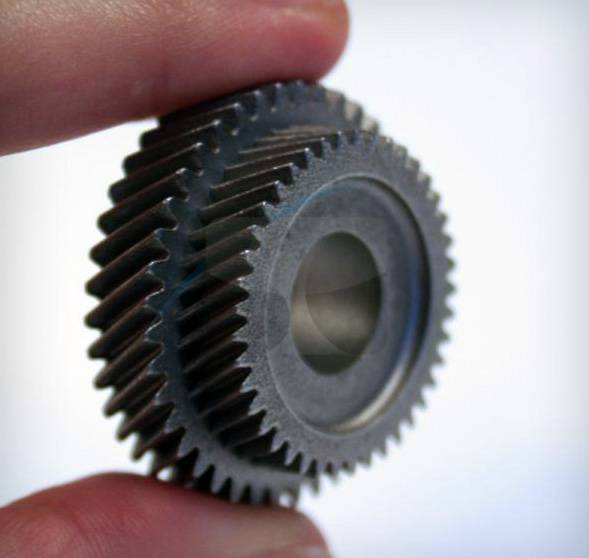
6) LS / SLS
Laser Sintering (LS) (also known as Selective Laser Sintering or SLS) uses a CO2 laser to heat and fuse durable
thermoplastic powder to build versatile parts with high elongation at break.
Advantages
LS production parts and prototypes provide lightweight, heat and chemical resistant solutions. SLS constructs 3D-printed parts from nylon (polyamide), which is strong, tough and durable
Material selection for 3D printing:
3D printed materials are very rich, including transparent, rubbery and biocompatible photopolymers, as well as tough, high performance thermoplastics and more. From fast, inexpensive concept modeling to detailed, super-realistic functional prototyping, through certification testing to agile, low-risk production, our team will help your designers and engineers solve material choice questions and make you design is successful at every stage. the following guides will help you select the perfect material based on a few important factors, like type, minimum thickness, texture and the all-important cost:
NYLON: (Polyamide)
Also called White, strong & flexible / Durable plastic / White plastic
Strong and flexible plastic, 1mm minimum wall thickness, Naturally white, but you can get it colored, About 10 layers per 1mm, Made from powder, Alumide = Polyamide + Aluminum, Interlocking, moving parts possible (chain)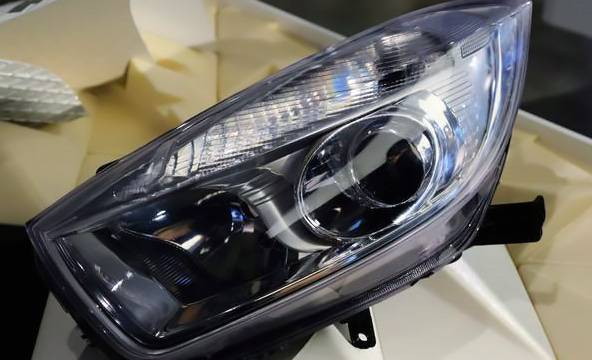
ABS: (Home printers)
Strong plastic like legos are, Made from spaghetti like filament, Many color options, About 3 layers per 1mm, 1mm minimum wall thickness
RESIN: (Multiple options)
Also called White-, Black-, Transparent detail / White detail resin / High detail-, Transparent-, Paintable Resin
Rigid and a bit delicate, Liquid Photopolymer cured with UV light, White, black & transparent most typical colors, About 10 layers per 1mm, 1mm minimum wall thickness
STAINLESS STEEL:
Very strong material
Made with multiple steps or from powder directly, Coloring options like gold and bronze plating, About 6 layers per 1mm
3mm minimum wall thickness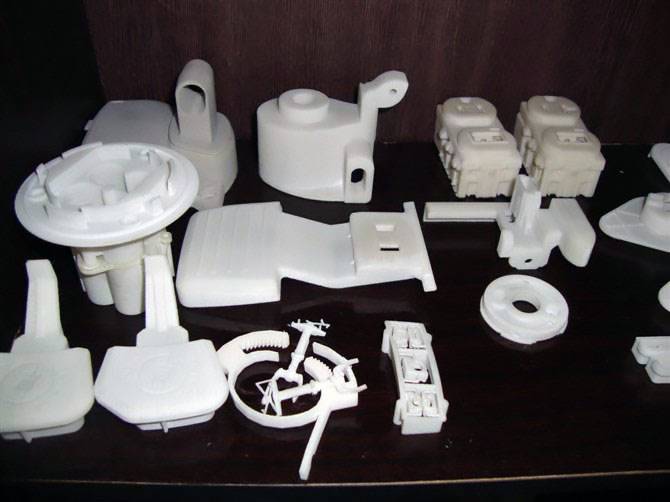
GOLD & SILVER:
Strong materials
Made from wax and then casted, About 10 layers per 1mm, 0.5mm minimum wall thickness
TITANIUM:
Strongest material
Direct metal laser sintering, About 30 layers per 1mm, 0.2mm minimum wall thickness
CERAMIC:
Rigid & delicate
First ceramic is printed then surface is glazed, Ceramic white, glaze typically white, About 6 layers per 1mm, 3mm minimum wall thickness
GYPSUM:
Also called Sandstone / Rainbow ceramics / Multicolor
Rigid & delicateMade from powder, Naturally white, but you can get it with colors, About 10 layers per 1mm, 2mm minimum wall thickness
Large-scale production processes are often not suitable for manufacturing small parts, so prototypes may use a different manufacturing process than the final product. For example, the final product will be injection molded from plastic and will require expensive custom tools, so the prototype of the product can be made by machining or three-dimensional engraving. Differences in the manufacturing process can result in differences in the appearance of the prototype and the final product.
The final product may undergo a series of quality assurance tests to verify compliance with drawings or specifications. These tests may include custom inspection fixtures, statistical sampling methods, and other techniques suitable for the ongoing production of a large number of end products. Prototypes are usually passed through more careful personal inspections and assumptions, and some adjustments or rework will be part of the manufacturing process. The prototype can also dispense with some requirements that apply to the final product.
I was curious if you ever thought of changing the page layout of your website?
Its very well written; I love what youve got to say.
But maybe you could a little more in the way of content so people could connect with it better.
Youve got an awful lot of text for only having 1 or 2
pictures. Maybe you could space it out better?
Thanks for your advice! We will take your suggestion into serious consideration
At least for now, 3D printing is unlikely to replace the traditional prototyping completely, because of material
I totally agree, because 3D printing is not good enough for functional samples,Poor mechanical properties
At least for now, 3D printing is not a complete replacement for traditional prototyping
Many 3D printing devices and materials do not fully meet the design requirements, which means that it will take some time for 3D printing to be truly applied in actual product development
There is no denying that 3D printing technology has entered the field of prototype manufacturing. In the near future, it will replace traditional prototyping
In fact, 3D printing technology has become more and more mature, and traditional prototyping technology will be eliminated
At present, 3D printing technology is gradually replacing the traditional prototyping technology.