
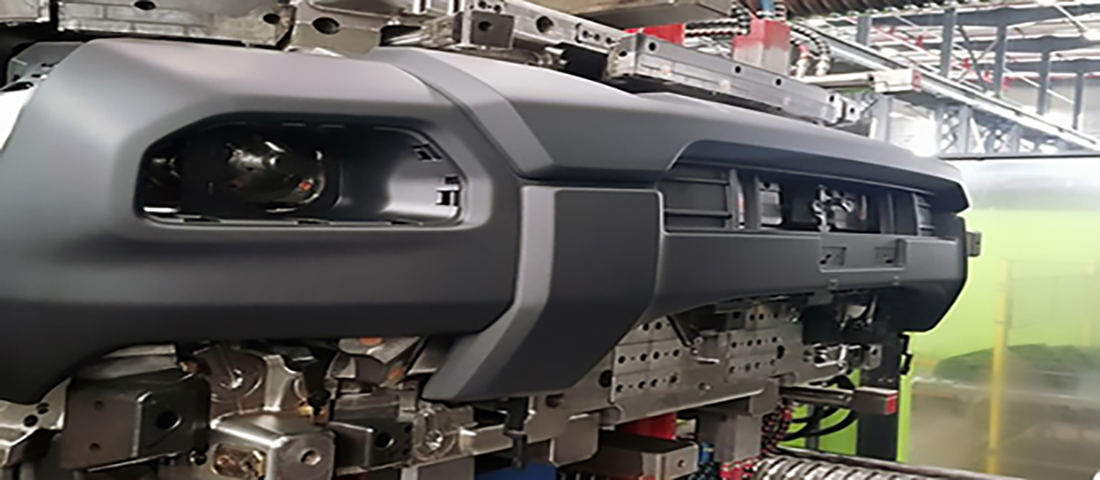
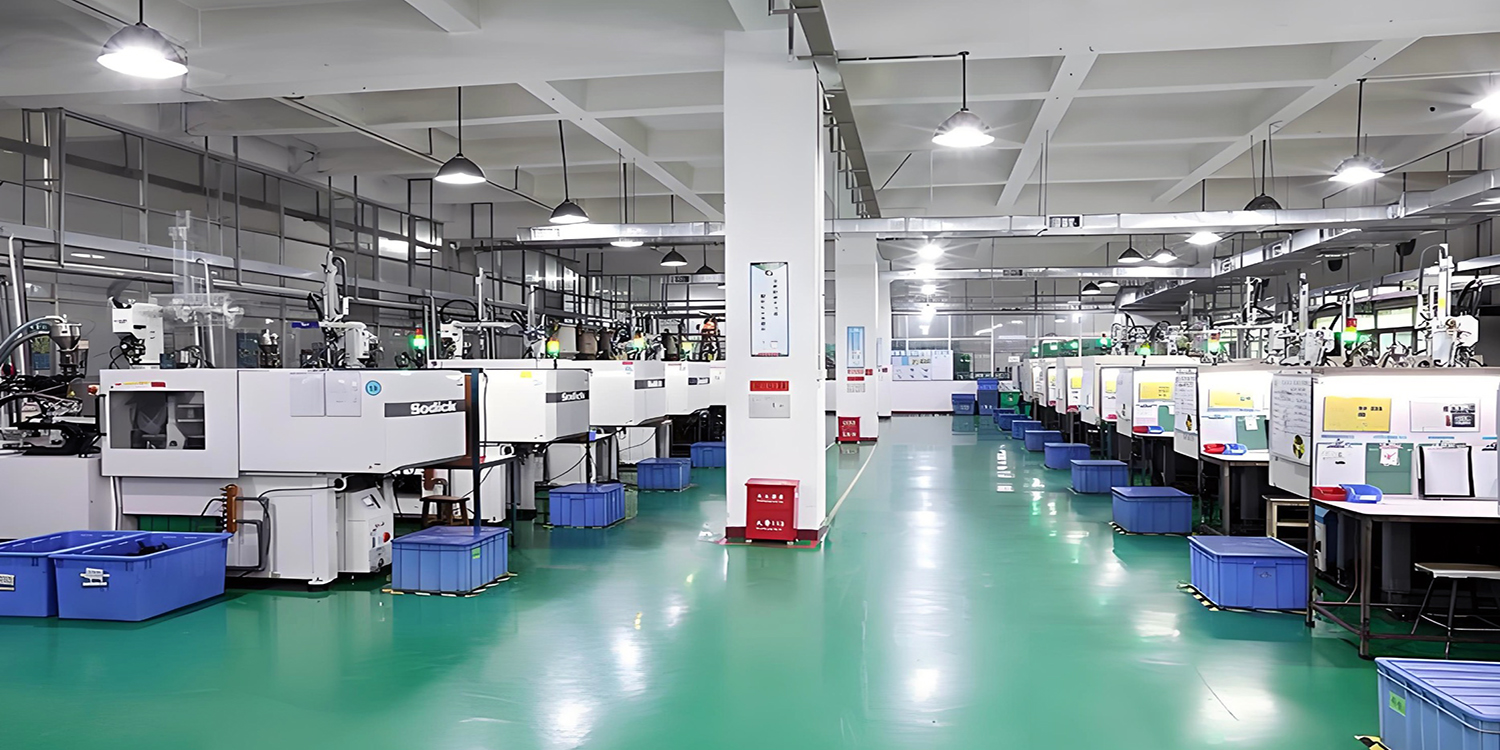
injection molding shop
FMS Molding Team Is Your Trusted Partner for Precision Mold & Injection Molding Since 2009
For nearly two decades, FMS has delivered world-class tooling and turnkey injection molding solutions to a global clientele. We specialize in custom plastic injection molding across highly demanding industries, including Medical, Automotive, Electronics, Packaging, Food & Beverage, and Outdoor Sports/Hunting.
Why Global Brands Choose FMS:
• Advanced Automation & Speed: 100% of our injection molding machines are integrated with high-speed robotics, ensuring consistent high quality, flawless precision, and minimized cycle times.
• High-Capacity 24/5 Operations: Operating on a 3-shift, 5-day schedule (with scalable weekend overtime), our workshop ensures your mass production deadlines are always met, no matter the volume.
• Engineering Excellence: Our veteran mold and design engineers bring deep cross-industry expertise, helping you optimize complex geometries for manufacturability (DFM) and cost efficiency.
• End-to-End Control: From initial tool design and steel/aluminum mold machining to final parts production, every step is managed entirely in-house by the FMS team for strict quality assurance.
Partner with FMS today to transform your complex designs into high-quality, cost-effective realities.
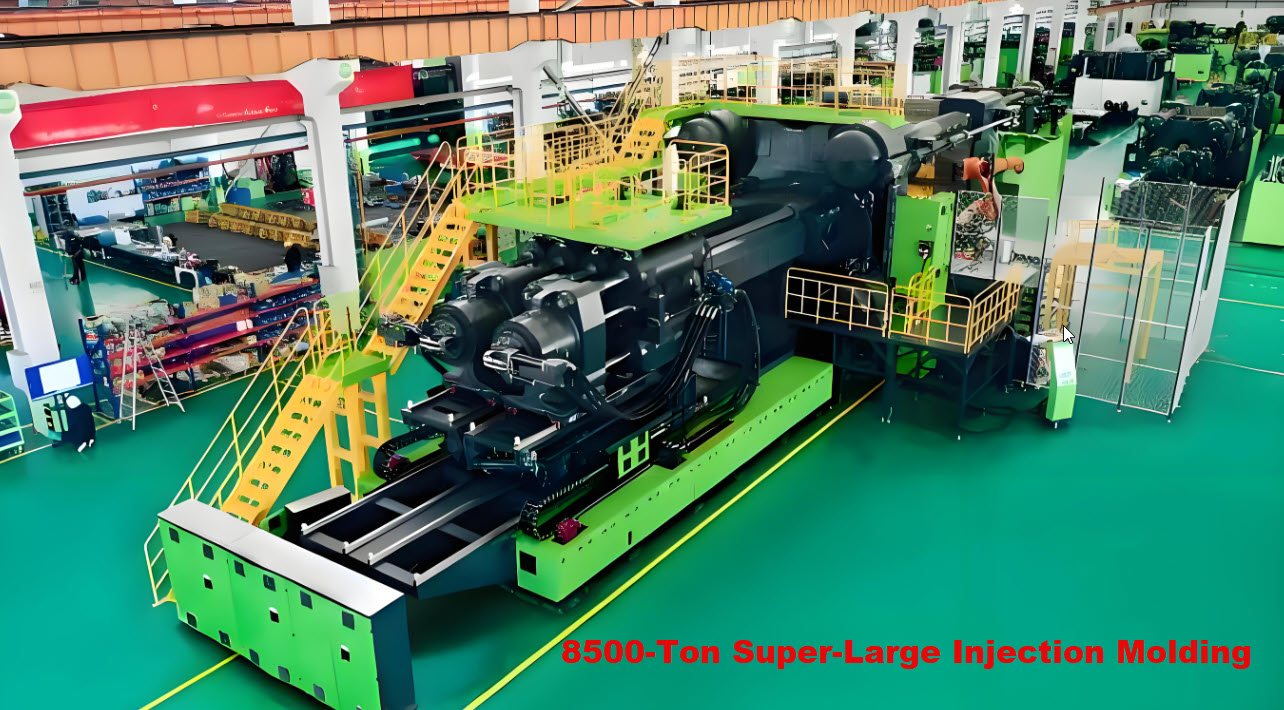
8500-Ton Super-Large Injection Molding Machine
How Does Injection Molding Work?
A special-purpose injection molding machine carries out injection molding. The manufacturing process is divided into the various steps listed below:
Step 1 – Creation of the Mold
The first step in injection molding is mold creation. The mold for the part to be manufactured is designed according to the specifications of the part’s 3D model, using computer-aided design, following several injection molding guidelines. It is then manufactured in two parts, usually using CNC machining. Molds are made from metals (mainly steel or aluminium).
Step 2 – Injection
The separate halves of the mold are placed in and held together tightly by the clamping unit of the injection molding machine. In the form of granules or pellets, the raw material is introduced into a barrel where it is heated at a high temperature and pressure till it melts. Now in molten form, the material is immediately injected into the mold cavity, filling the entire space in the mold. It then cools down and solidifies, forming the shape of the mold.
Step 3 – Ejection and Finishing
After the material has completely cooled and solidified, the mold is opened by the clamping unit and the solidified finished part is ejected. The finished part is subjected to some post-processing operations. These operations include removing excessive material and support structure, surface finishing, and, if required, painting, electroplating, heat treatment, etc.
Other Injection Molding Processes:
Over Molding
Over molding is an injection molding process that allows a part to be created from two different materials. The first material is molded and, before cooling down, the overmolding material is introduced, creating strong bonds between the substrate and the overmolding material. This technique is used to create multi-material objects with improved aesthetics and functionality, while eliminating the need for secondary operations.
Insert Molding
Insert molding is similar to over molding. In this injection molding technique a preformed object is inserted into the mold before the molten material is poured. With the point being to have the preformed material inserted into the molded object. An application of insert molding is inserting metal screw holes into plastic parts.
Metal Injection Molding
In this process, finely powdered metal is combined with wax, polypropylene binders, or other polymers to form a feedstock mix. It is then injected into the mold and left to cool. Once it solidifies, a portion of the blinder is removed using methods such as the catalytic process and the use of solvents.
Die Casting
The die casting process, also known as high-pressure die casting, is the forcing of molten metal under high pressure into a mold cavity. The process is as follows:
First is the preparation of the dies (molds), which entails the lubricating of the mold cavity to facilitate the easy removal of the casting and to control the temperature.
After that, the cast is closed and injected with molten metals under relatively high pressure between 1500 psi and 25400 psi.
Die casting products are made from nonferrous metals such as copper, zinc, aluminium, and lead.
Thin-wall Injection
This injection molding process is used to create plastic parts with very thin walls such as food packaging, parts of equipment, and lab apparatus. The sizes of these parts are larger than their thickness. This process of creating thin walls is more difficult than other processes.
Micro Injection Molding
Just as the name implies, “micro injection molding” is a molding process used to produce tiny plastic parts with weights of about 1 to 0.1 grams. This facilitates the manufacture of micro parts of various complicated geometries with maximum precision and accuracy.
Gas-assisted Injection Molding
In the production of thick plastic parts with injection molding, there’s the risk of distorted parts caused during the cooling process of the molten plastic. This is prevented from happening in gas-assisted injection. As the molten plastics solidifies, gas is introduced into the mold by gas channels, producing smooth surfaces.
The Future of Plastic Injection Molding
The future is bright for the plastic injection molding industry, with several new technologies showing a great degree of promise.
Internet of Things (IoT) technologies like sensors and automation solutions, for instance, allow for increased connectivity across the entire production system. This provides better visibility into the status of the injection molding process while also better positioning manufacturers to produce higher-quality parts at reduced costs. Automated solutions like robotic unloaders that can stack and unstack parts more efficiently can use programmable setups, sensors, and other IoT features to help shorten production timelines without sacrificing part quality.
Micro-injection molding is another emerging process that applies the mechanisms of injection molding at a microscopic scale. This is especially of interest in medical device manufacturing circles, where the technology could allow product teams to design smaller device assemblies capable of performing potentially life-saving procedures using less-invasive methods and tools.
Eco-friendly injection molding materials are increasingly in demand. While most thermoplastics can be reclaimed and reused simply by melting and re-integrating them, sustainability advocates are pushing for more ambitious goals. Out-of-the-box thinking is leading manufacturers to develop and use materials with less or no thermoplastic content, including next-generation, plant-based materials like corn- and flax-based plastics.
The Development and Emergence of Plastic Manufacturing. The history of plastic injection molding begins in 1868 when inventor John W. Hyatt patented the process of creating celluloid, a material originally intended to replace the ivory used in billiard balls. In 1872, Hyatt and his brother Isaiah patented the first injection molding machine, which used a simple plunger mechanism to push celluloid through a heated cylinder and into a mold. The device led to the development of a booming manufacturing industry that produced buttons, combs, collar stays, and other items from celluloid.
Soluble forms of cellulose acetate became available in the early 1900s, offering a much less flammable substitute for previous materials. In the lead-up to World War II, many of the thermoplastics commonly used today — including polystyrene and polyvinyl chloride (PVC) — were developed.
The Impact of World War II on Plastics Manufacturing
Developments in warfare technology, including aircraft, marine battleships, tanks, and other forms of weaponry, consumed vast amounts of raw materials during the course of the Second World War. The post-war industrial boom experienced by many developed Western countries coincided with skyrocketing demand for affordable materials that could be used to mass-produce parts. This was due in large part to how the war disrupted global shipping lanes and required the extraction of huge amounts of natural resources to manufacture tanks, ships, and other war-time products, leading to worldwide shortages of rubber and metal.
Thermoplastics presented affordable options capable of filling many of the market gaps created by these material shortages. Injection molding made it possible for manufacturers to quickly and cost-effectively manufacture parts in large volumes. As markets and supply chains worldwide shifted toward plastic, injection molding emerged as a mainstay and fixture for modern manufacturing companies.
In 1946, James Watson Hendry’s extrusion screw injection machine revolutionized the modern plastic injection molding field. The machine’s rotating screw gave the operator better control over the production process, resulting in significant improvements to the quality of the injection-molded parts. Hendry also pioneered the gas-assisted injection molding process, which made it possible to manufacture long and complex hollow parts.
During the latter half of the twentieth century, plastic materials became more advanced and competitive, offering comparable strength to some metals but at a greatly reduced weight.
Plastic production overtook steel production in terms of market share by the 1970s, and the introduction of lightweight aluminum molds in the 1990s offered a faster, more cost-effective substitute to steel tooling in some instances.
Assuming that the mold has already been created, injection molding becomes an easily-repeatable process consisting of six discrete steps:
1. Clamping
The first step of the injection molding process is clamping. Injection molds are typically made in two, clamshell-style pieces. In the clamping phase, the two metal plates of the mold are pushed up against each other in a machine press..
2. Injection
When the two plates of the mold are clamped together, injection can begin. The plastic, which is typically in the form of granules or pellets, is first melted down into a complete liquid. Then, that liquid is injected into the mold. Manufacturers should take care to ensure the temperature remains constant throughout this step of the process
3. Dwelling
In the dwelling phase, the melted plastic fills the entirety of the mold. Pressure is applied directly to the mold to ensure the liquid fills every cavity and the product comes out identical to the mold.
4. Cooling
The cooling stage is the most straightforward; the mold should be left alone so that the hot plastic inside can cool and solidify into a usable product that can be safely removed from the mold.
5. Mold Opening
Once the part has cooled, a clamping motor will slowly open the two parts of the mold to make for a safe and simple removal of the final product.
6. Ejection
With the mold open, an ejector bar will slowly push the solidified product out of the open mold cavity. The fabricator should then use cutters to eliminate any waste material and perfect the final product for customer use. Waste material can often be recycled and reinjected for the next part, decreasing your material costs.
Injection molding is process tailored for producing large volumes of parts. Compared to other manufacturing technologies—like CNC machining and 3D printing—it requires an upfront, capital investment into tooling. But individual piece-part price will be substantially less when compared to other means of manufacturing plastic parts. This cost structure makes it an affordable solution for production runs.
It’s most often used for the manufacturing plastic parts at scale due to its low material waste and low cost per part. It’s an ideal manufacturing process for industries like medical devices, consumer products, and automotive to name a few.
How Does Injection Molding Work?
Tooling fabrication: Once an injection molding design is finalized the first step in the manufacturing process is to mill the tooling, which is typically fabricated from steel or aluminum. In most cases, the metal block of material is placed in a CNC mill, which then carves out a negative of the final plastic part. Additional treatments like polishing or laser etching can then be applied to the tooling to achieve specific surface finishes.
Part production: The actual production of plastic parts begins by loading resin pellets into a barrel. The temperature of the barrel is raised until the resin pellets reach a molten state and are then compressed. Next, the molten plastic is injected into the metal tool through a runner system, which then feed into the mold cavity through gates. The part then cools down, solidifies, and is ejected from the tool with ejector pins.
Types of Injection Molding
The term injection molding encompasses a handful of processes that inject liquid resin into a tool to form plastic parts. Here are four common types:
Thermoplastic injection molding: Thermoplastic injection molding is the most common type of molding. It injects thermoplastic resin into the mold where the material cools to form the final part.
Liquid silicone rubber molding: Liquid silicone rubber uses thermoset materials and a chemical reaction creates the plastic part.
Overmolding: Overmolding is a process used to manufacturing plastic parts with two or more materials. You’ll often find this on parts to improve grip by adding rubber to the handle.
Insert Molding: Insert molding is process that begins with an insert component placed into the mold before resin enters. The material is then injected and flows around the insert, typically metal, to form the final part. This is frequently used for parts that require metal threads.
Injection molding is a complex manufacturing process. Using a specialized hydraulic or electric machine, the process melts, injects and sets plastic into the shape of a metal mold that’s fitted into the machine.
Plastic injection molding is the most widely used components manufacturing process for a variety of reasons, including:
Flexibility: manufacturers can choose the plastic injection mold design and type of thermoplastic that’s used for each component. This means the injection molding process can produce a variety of components, including parts that are complex and highly detailed.
Efficiency: once the process has been set up and tested, injection molding machines can meet high volume production. Using electric injection molding machines also makes the process relatively energy efficient.
Consistency: if the process parameters are tightly controlled, the injection molding process can produce thousands of plastic parts quickly at a consistent quality.
Cost-effectiveness: once the mold (which is the most expensive element) has been built, the cost of production per component is relatively low, particularly if created in high volumes for mass production.
Quality: whether manufacturers are looking for strong, tensile or highly detailed components, the injection molding process is able to produce them at a high quality repeatedly.
This cost-effectiveness, efficient production time and component quality are just some of the reasons why many industries choose to use injection molded parts for their products.
Plastic injection molding is a versatile process that can be customized to meet different manufacturing needs. Depending on the complexity, materials, and end-use of the product, different injection molding techniques are used. Here are some of the most common types:
Custom Injection Molding
This is the most common type of injection molding, where a manufacturer creates plastic parts based on specific designs and requirements. It is widely used in industries like automotive, healthcare, and consumer goods to produce parts with precise dimensions and functionality.
Overmolding
Overmolding is a technique where multiple materials are molded together to create a single part. It is often used to add a soft-touch grip to tools, improve durability, or enhance aesthetics. For example, toothbrushes and power tool handles often have rubberized grips made using overmolding.
Insert Molding
In insert molding, a non-plastic component, such as a metal insert, electronic chip, or threaded fastener, is placed inside the mold before the plastic is injected around it. This technique is used in industries like electronics and automotive manufacturing to create strong, integrated parts.
Micro Injection Molding
This method is used to produce extremely small, high-precision plastic components—often less than a few millimeters in size. It is ideal for industries like medical devices, aerospace, and microelectronics, where precision is critical.
Gas-Assisted Injection Molding
In this process, pressurized gas (usually nitrogen) is injected into the mold along with the plastic, creating hollow sections within the part. This reduces weight, material usage, and production costs while maintaining strength. It is commonly used for automotive panels, furniture, and large plastic enclosures.
Thin-Wall Injection Molding
This technique is designed to produce lightweight and high-strength parts with extremely thin walls. It is widely used in packaging, electronics, and consumer goods to reduce material costs while maintaining product durability.
Each of these techniques serves a specific purpose, helping manufacturers create plastic parts that meet unique functional and aesthetic requirements.
In today’s world, plastics play an integral role in countless products we use daily, from packaging and toys to automotive components and medical devices. Custom plastic parts are specialized pieces designed to meet specific requirements for unique applications. These parts are essential in various industries, allowing for tailored solutions that enhance functionality, improve efficiency, and often reduce costs.
Whether you’re designing a prototype for a new gadget, manufacturing components for machinery, or creating packaging that stands out on store shelves, custom plastic parts provide the flexibility and adaptability needed to bring innovative ideas to life.
What is Injection Molding?
Injection molding is a manufacturing process in which molten material is injected into an already prepared mold and left to cool. Upon cooling, the material solidifies and takes the shape of the mold, before being ejected. While this process may be used for one-off productions, it is usually used in the mass production of identical parts. Materials most commonly used in injection molding are plastics or elastomers.
Due to its high output rate and consistency of quality, injection molding is widely used across different industries to create parts such as electrical components, automotive parts, basic consumer plastics, furniture parts, and many others.
Injection molding is the most widely used form of plastics processing worldwide. The process involves the injection of heated, liquefied plastic into a temperature-controlled mold under high pressure.
After the plastic fills the mold, it cools and solidifies into finished part(s) which can be easily removed when the machine opens up the mold. Each production sequence, from the closing of the mold to the injection “shot” to opening and removal of the part, is a “cycle.”
Injection molding processing is done in specialized injection molding machines, or IMMs, which are sized according to tons of mold clamping force. These may range from “micro” IMMs of just a few tons that produce extremely small parts in small molds to very large IMMs exceeding 3,000 tons of clamping force that can hold very large molds and make extremely large parts, such as automobile front fascia or bumper covers.
There are a number of considerations to bear in mind before undertaking injection moulding:
1. Financial
The entry cost for injection moulding manufacture can be high – given the cost of the machinery and the moulds themselves.
2. Production Quantity
It is important to determine how many parts you wish to manufacture so as to decide whether injection moulding is the most cost-effective production method.
3. Design Factors
Minimising the number of parts and simplifying the geometry of your items will make injection moulding easier. In addition, the design of the mould tool is important to prevent defects during production.
4. Production Considerations
Minimising the cycle time will aid production as will using machines with hot runner moulds and well thought-out tooling. Such small changes and use of hot runner systems can equal production savings for your parts. There will also be cost savings from minimising assembly requirements, especially if you are producing many thousands of even millions of parts.
Injection molding is one of the most ubiquitous and accessible processes that you can use to manufacture your products. The versatility of injection molding that makes it such a good choice for so many products does not, however, mean that certain design aspects and considerations can get overlooked. In fact, understanding the injection molding process and the qualities of product design that are most suited to it can go a long way toward improving the efficiency of your production runs and the quality of your end products.
Taking just a few minutes to learn (or remind yourself of) some principles of design to incorporate in your injection molding designs is more than worth the effort it can save you in the future.
1) Don’t forget the necessities of the process. A quick refresher on the injection molding process: Two halves of a mold are hollowed with a negative image of your part. Hot, liquefied plastic or rubber is injected into the mold and allowed to cool. Once the plastic injection mold design is cooled, the two halves of the mold are pulled apart, and the part is released.
• During the injection process: There must be a location in the mold and on the part for the base material to be injected into. This is called the gate, and it must be removed from the finished part (this can occur automatically or manually). Gate position is important in injection molding design — you will typically want to position the gate at a thicker, intersectional area of your part where it can be removed without concern for the structural integrity of the part. Gate removal will likely also leave a scar — something to consider, because part appearance is a concern.
• During the cooling process: Your liquefied plastic or rubber material will shrink as it cools and solidifies. Be sure to take that into consideration — not only when laying out part dimensions, but also for design elements like adding radius to corners and deliberating wall thickness.
• During the part release: When the two halves of the mold are separated, there will always be what’s called a “parting line,” a natural incorporation of the fact that the mold consists of two separate halves. This is different from draft, which is caused by defects in the mold or machine, and cannot be avoided — it is best to design your part to plan for the parting line location.
2) Consider wall thickness. Some shops will tell you that they can only produce injection mold parts with a uniform wall thickness. While this can make it easier to manufacture parts, it is not integral to the process. It is, however, true that different wall thicknesses can make for a more difficult process. This is because of the cooling process mentioned above: thicker wall areas will cool and solidify more slowly than thinner areas. Combined with the shrinkage factor during the cooling process, this means that improperly designed molds and products can be subject to uncooled, still-liquefied substrate running to areas of the part where it should not be located.
Manage this potential problem by designing your part with manufacturability in mind. Thicker areas can, for instance, be located at lower parts of a mold, allowing gravity to help keep still-cooling material where it belongs. Questions? We’re always glad to offer our expertise in designing for manufacture, and can help you build the part you need while allowing for the practicalities of the process.
3) Incorporate draft. When you pop an ice cube out of a tray, you’re seeing the concept of draft at work. Each individual cube cavity in the tray is tapered to allow for a smooth exit process, eliminating the need to try and pry the cube out of the tray. Draft in your injection molded product design serves the same purpose. Adding a few degrees of taper (depending on the material and product design) means that parts will leave the mold much more smoothly, with minimum friction and scraping between the finished, cooled product and the walls of the mold. The surface of your part remains undamaged, and the process moves much more efficiently.
4) Build in texture. Rather than adding a second finishing process after injection molding to create texture on your product, you can incorporate the desired finish, pattern or texture right into the mold. By etching or milling the mold to create a finish, you gain a much greater degree of control and uniformity over the look and feel of your part, which saves some time and money by incorporating two processes into one.
5) Know your materials. This tip really plays into most of what has been covered already in this piece, but it’s important to remember: Material selection is one of the most critical considerations in designing your piece — it factors into many aspects of the process, including shrinkage factor, cooling time, flexibility and more. Different materials can have different minimum and maximum wall thicknesses, for instance, or can require different degrees of draft.
Plastic injection moulding is a very precise process that offers several advantages over other plastic processing methods. Here are just 2 benefits:
1. Precision
Plastic injection moulding is perfect for very intricate parts. Compared to other techniques, moulding allows you to incorporate more features at very small tolerances. Have a look at the image to the right. You can hold this moulding in the palm of your hand and it has bosses, ribs, metal inserts, side cores and holes, made with a sliding shut off feature in the mould tool. That’s an awful lot of features on a small part!
2. Material choice
There’s a vast amount of materials available for plastic injection moulding. A range of standard materials, but also things like antistatic plastic, thermoplastic rubber, chemical resistant plastics, infrared, biocompostable…and with colour compounding or masterbatch colouring you have an endless choice of colours as well. The moulding above is just black, but it’s made out of PPO which is an extremely rigid and flame-retardant material…..
The Injection Moulding Process
The injection moulding process involves heating & injecting plastic material under pressure into a closed metal mould tool. The molten plastic cools & hardens into the shape inside the mould tool, which then opens to allow the mouldings to be ejected or removed for inspection, delivery or secondary operations.
Injection-molded parts can feature complex geometries, and offer product designers a fair amount of design flexibility. The only caveat is that product teams must design their parts around the specific requirements of injection molding.
It’s very challenging to make design adjustments after the part has already been manufactured. As such, product designers must design the plastic part perfectly for injection molding to reduce the risk of issues with the tool design, achieve the best results, and reduce costs. To design clean, functional parts, start with these three injection molding design best practices:
1. MAINTAIN CONSISTENT WALL THICKNESSES
The number one rule of injection molding part design is managing the thickness of the mold. Non-uniform walls can cause the part to warp as the thermoplastic material cools down or cause sink marks to occur. Recommended wall thicknesses vary depending on the plastic used. For example, polyurethane (PUR) has a recommended wall thickness of 0.080 inch to 0.750 inch, while polystyrene (PS) has a much smaller range of 0.035 inch to 0.150 inch. A good rule of thumb is to keep any given mold’s wall thickness between 1.2mm and 3mm.
If the part is designed to include different thicknesses, product designers should make the transition between them as smooth as possible. This ensures that the molten plastic flows evenly inside the mold cavity. A chamfer or fillet that is 3x as long as the difference in thickness should do the trick.
Thick sections in an injection mold design can cause warping, sinking, and other defects, but sometimes they’re necessary for complex geometries. Product designers can include thicker sections in their molds while adhering to wall thickness limitations by hollowing these sections out. Including ribs in the part strengthens the hollow sections and provides stiffness.
Rib thickness varies depending on the thermoplastic used, but ribs should always be less than two thirds of the main wall thickness. If the rib is too thick, it will cause sink marks on the outer surface.
2. ELIMINATE UNDERCUTS THAT AREN’T DESIGN CRITICAL
Undercuts are features that prevent the injection-molded part from being ejected cleanly from the mold without any structural damage. Undercuts can come in a variety of forms — holes, cavities, or areas where alignment is not perpendicular to the mold’s parting line. A product designer’s best bet is to avoid undercuts altogether. They always make the injection mold design more expensive, complicated, and labor-intensive than necessary.
Still, there are a few design tricks to handle undercuts. The simplest way to fix an undercut is to move the parting line of the mold such that it intersects with the undercut. However, this tip is only applicable for designs with undercuts on the outside of the mold.
Bumpoffs, or stripping undercuts, are an option if the feature and material are flexible enough to expand and deform over the mold during ejection. The bumpoff should be far away from the mold’s support structures and have a lead angle between 30 to 45 degrees.
As a last resort, side-actions or lifters can fix undercuts when the mold cannot be redesigned to avoid undercuts. Side action cores are perpendicular inserts that slide in and out of the mold as it opens and closes.These mechanisms drive up cost and complexity significantly. Even with these solutions, it would behoove designers to steer clear of undercuts altogether and eliminate undercuts during prototyping.
3. DRAFT, DRAFT, DRAFT
Draft angles are design considerations that make it easier to cleanly eject an injection-molded part from the mold. This might sound like a non-essential design feature, but drafts are critical to manufacturing functional injection-molded parts. Drafts help prevent the part from becoming damaged upon release, lower production costs, accelerate production timelines, ensure a uniform surface finish, and provide a slew of other benefits. Without draft angles, product teams risk damaging their expensive molds and producing a large number of rejectable parts.
Drafts should be accounted for early in the design process. Draft angles will vary according to a number of factors related to the part, including wall thickness, wall depth, material, and any applicable shrink rates, texture, or ejection requirements. It’s best to apply as much draft angle as possible. Product designers should include one degree of draft per inch of cavity depth to start, adjusting for the aforementioned factors as necessary.
Even if it looks like draft might negatively impact the performance of the part, it’s always better to have draft than to not have draft. Parts can be designed with a minimum of 0.25 degrees of draft, generally, but the smallest degree of draft possible will depend on the part’s unique geometry and material.
Unless your electronic product will be marketed solely to DIYers and electronics hobbyists it’s going to need an enclosure. Most likely this enclosure will be made of plastic.
Injection molding is going be a big part of your journey to market. Regardless of your technical background you at least need to understand injection molding at a basic level.
Many entrepreneurs are surprised to learn that while the electronics will likely be the most expensive to develop, the plastic enclosure will be the most expensive to scale to manufacturing.
This is primarily due to the high cost of the injection molds. In fact, mold cost is one of the biggest expenses when taking a product from concept to market.
Injection molding is an ancient technology that has been used since the late 1800’s. Injection molding machines incorporate a huge screw to force molten plastic into the mold at high pressure. This screw drive method was invented in 1946 and is still the method used today.
Injection molding machines definitely do not have the modern, high-tech feel of 3D printing technology. There is really nothing cool about injection molding, but nonetheless it is a requirement for most hardware products.
An injection mold consists of two halves that are forced together to form a cavity in the shape of the part to be produced. Hot, liquid plastic is then injected at high pressure into this cavity.
The high pressure is needed to ensure that the plastic resin fills in every crook and cranny of the mold cavity.
Once the plastic has had time to cool, the two halves of the mold are pulled apart, and the part is ejected.
Although designing for injection molding can be quite complicated, and the cost of the molds themselves are incredibly expensive, there is one huge reason why injection molding is still used today.
No technology can beat injection molding when it comes to producing millions of identical copies of a part at an incredibly low price.
Injection molds are expensive, and you’ll most likely need a few of them, so their total cost can be quite significant. The more parts you need to produce with the mold the more expensive the mold.
This is because the mold must be designed to withstand incredibly harsh conditions. Over and over again a mold is subjected to high temperature and high pressure.
These two destructive forces act to quickly degrade the molds to the point of not producing parts of sufficient quality.
In order to tolerate this harsh environment injection molds are made from hard metals. The hardness of the metal required is typically determined by how many parts you plan to produce with the mold.
For example, a mold designed to produce 10,000 parts can be made of a much softer metal than a mold designed to produce 1 million parts.
Aluminum is a popular choice if you are producing less than 10,000 parts and works well for low volume production. Once you reach higher production volumes you will need to switch to a harder metal such as steel.
The harder the metal, the more difficult it is to make the mold, so the higher the cost. It also takes much longer to produce a mold from a hard steel. This is because molds are created by milling (i.e. carving) so a hard mold requires even harder milling tools.
If you’re an entrepreneur or boot-strapped startup with a small budget then you should definitely try to find a manufacturer that will agree to amortize your manufacturing tooling costs.
This means if your molds cost $25,000 then you could perhaps offer to pay the manufacturer back by paying them $1 extra per unit for the first 25,000 pieces produced.
Sure, this will cut into your unit profit but it’s the best financing method you can find in my opinion. It is infinitely more practical than financing your mold costs with a bank loan.
Before you endeavor to produce a part via injection molding consider a few of the following things.
Start with Financial Considerations
You’ll want to determine the number of parts produced at which injection molding becomes the most cost effective method of manufacturing.
From there, you’ll want to determine the number of parts produced at which you expect to break even on your investment (consider the costs of design, testing, production, assembly, marketing, and distribution as well as the expected price point for sales). Build in a conservative margin.
And don’t forget about entry costs. Preparing a product for injection molded manufacturing requires a large initial investment. Make sure you understand this crucial point up front.
Next, Let’s Talk Design Considerations
When it comes to part design, you want to design the part from day one with injection molding in mind. Simplifying geometry and minimizing the number of parts early on will pay dividends down the road.
When designing the mold tool, the top priority is to prevent defects during production. For a list of 10 common injection molding defects and how to fix or prevent them read here. Consider gate locations and run simulations using moldflow software
Getting Production Right for Injection Molding
Cycle time is crucial here. Minimize cycle time as much as possible. Using machines with hot runner technology will help as will well-thought-out tooling. Small changes can make a big difference and cutting a few seconds from your cycle time can translate into big savings when you’re producing millions of parts.
Tied to production is the assembly process. You’ll want to design your part to minimize assembly. Much of the reason injection molding is done in southeast Asia is the cost of assembling simple parts during an injection molding run. To the extent that you can design assembly out of the process you will save significant money on the cost of labor.
Injection Molding: The Bottom Line
Injection molding is a great technology for finished production on a massive scale. It is also useful for finalized prototypes that are used for consumer and/or product testing. Prior to this late stage in production, however, 3D printing is much more affordable and flexible for products in the early stages of design.
The main advantage of injection moulding is being able to scale up production to produce a large number of parts. Once the initial costs of the design and the moulds have been covered, the price of manufacturing is very low. The cost of production drops as more parts are produced.
Injection moulding also produces minimal wastage when compared to traditional manufacturing processes like CNC machining, which cuts away excess materials. Despite this, injection moulding does produce some waste, mainly from the sprue, the runners, the gate locations, and any overflow material that leaks out of the part cavity (also called ‘flash’).
The final advantage of injection moulding is that it allows for the production of many identical parts, which allows for part reliability and consistency in high volume production.
We love to help our customers improve their product designs by offering insights gleaned from actual case studies. we’ve gathered together four tips we want to share that can help you optimize your designs when preparing your next plastic injection molding project.
1. Design for the Material
There are thousands of thermoforming resins, and each has unique chemical and mechanical properties.
2. Design for Draft Angles
Every resin has a unique shrink rate and shrink percentage, and this determines how strongly it grips the walls of the tool after molding. This tendency to stick inside the mold must be counteracted by a sound strategy for draft angles
3. Design for Wall Thicknesses
Managing wall thickness is important for controlling stress marks. But there is also a minimum wall thickness to consider.
4. Design for Ejection
A good strategy for ejection should be part of the design process from the beginning, not an afterthought.
There are a couple of sound reasons for this, especially on thin parts. Thin part edges offer areas too small to push against for a standard pin. In some cases, stripper plates must be made instead. Stripper plates work against larger surface areas but they’re also more time-consuming and expensive to make on the mold tool.
Injection molding overseas is not cost-effective for most companies. The high shipping costs and delivery delays by overseas customs make it inefficient, so make it locally? You have likely heard negatively about the quality of plastic injection molding companies in China. However, the outsourcing industry within China has grown consistently. Many companies worldwide continue to purchase China injection molding services; some are placing large orders, and some even set up their own sourcing office in China. People prefer advanced injection molds and durable injection parts. The Chinese suppliers are reliable business partners in the injection industry.
10 important best practices for injection molding
1) Material choice. Producing high quality, consistent plastic injected modeled parts relies heavily on the chosen material. Another option is go directly to material manufacturers.
Consider mixing materials. With today’s injection molding processes, you have the option to mix materials or include additives. Additives can be a way to enhance materials to meet your needs. One additive to consider is glass. Another is carbon fiber, which will add strength and static dissipation.
2) Appropriate wall thickness. Next to your material selection, maintaining a uniform wall thickness throughout your part is critical.
Wall thickness will often determine mechanical performance, cosmetic appearance, ease of molding the part, and the cost of the part.
Achieving an optimal wall thickness is a balance between strength and weight. A 10% increase in wall thickness provides about a 33% increase in stiffness with most materials. But avoid changing wall thicknesses within a design, going from thick to thin or from thin to thick over sections.
This will be mentioned later, but ribs and curves can provide strength to a part without resorting to increased wall thickness.
3?Draft. Draft is the angle designed into your part that aids part removal from the mold. Include draft in a design to prevent sticking an ejector pin push into your parts, especially on a cavity or show surface.
Draft, annuals, and tapers all ease a part out of mold during ejection. Less draft will sometimes damage parts during ejection, a condition known as drag, especially at the parting line.
4?Runners and gates should be designed and incorporated into a mold to ensure the consistent flow of material to fill the mold at the right pressure. A gate is the connection between the runner system and the molded part. The location and size of the gate is integral to the molding process.
5?Appropriate tolerances. A part with too tight of a tolerance can lead to loss of performance or even part failure. A team skilled on advanced manufacturing technologies can advise on the best ways to safely and effectively reach exact specifications.
Many factors come into play with tolerance, including materials, part complexity, tooling, and of course the injection molding process. A tight tolerance part for injection molding is plus or minus two thousandth of an inch. Starting with a good part design will ensure your tight tolerances.
Avoid tight tolerance areas around the alignment of mold halves, the parting line, or in moving mold components such as slides. If you have two parts coming together, such as in a housing, you may want to do a beauty reveal, where you can get away with hiding the mismatch.
6) Ribs. Ribs are often used for structural reinforcement. They allow for greater strength and stiffness in parts without the need to increase wall thickness.
As a general rule, design ribs as approximately 60% of your nominal wall, or whatever the wall that the rib is joining, to minimize risk of sink. Glossy materials require a thinner rib, typically about 40% of the wall thickness. Thin ribs may be more difficult to fill in, especially once you start adding draft to them.
7) Bosses are used for locating, mounting, and assembly. Wall thickness and height are the biggest factors to consider. Wall thickness around a boss design feature should be 60% of the nominal thickness, similar to ribbing.
If a nominal part thickness is greater than one-eighth, the boss wall thickness should be around 40% the nominal wall. The height of the boss will also have a role. As a general rule, the boss height should be no more than two and a half times the diameter of the hole on the boss.
8) Reduce undercuts. An undercut is any indentation or protrusion that prohibits the ejection of a part from a mold. Most commonly, it’s called an undercut, internal, external, or inaction. Undercuts typically increase mold complexity and can lead to higher mold construction costs. Use creativity and design them in a way where actions won’t be needed.
9) Corners and transitions tie into wall thickness. Any sharp corners can cause molded in stress, just from the resin flow.
Minimize the stress by using rounded corners, adding rads on inside corners, outside corners, and trying to maintain a consistent wall thickness.
10) Thick and thin transitions. Design these as smoothly as possible. Try to avoid steps; use a ramp to improve the flow of material through your part.
Follow these best practices in the following order to ensure an easy, cost effective molded part: materials, wall thickness, tolerances, draft, ribs, bosses, undercuts and corners, and transitions.
Plastic is one of the cheapest materials to produce and it’s used by a large variety of companies and people, making it of great demand. With this high demand, it’s vital that manufacturers focus on new advancements in technology that allow machines to run longer and more efficiently, conserving energy and producing more, faster.
One key way to achieve asset longevity and maintain a sustainable environment is to use a CMMS to track key performance indicators around energy consumption and failure rates. A CMMS can ensure that manufacturers reap the benefits of predictive maintenance to make sure machines are running smoothly and address issues before they happen. Tracking energy usage can be vital in both determining issues with any equipment, as well as ensuring energy consumption is at a minimum. It isn’t just the machines that need to be sustainable; it’s important for the plastic resources, as well.
Environmental concerns are a key focus for the plastic industry. This concern goes far and beyond just equipment energy usage, but also the amount of plastic scrap produced. Both go hand in hand, as equipment that is maintained better produces at its expected quality and limits scrap plastic, as well. Strategies like using energy efficient machines and recycling scrap plastic are both efforts going into making everything more sustainable. In addition to limiting scrap plastic, many manufacturers are using an alternative to normal plastic, such as bioplastics, which are biodegradable over shorter amount of time when compared to normal traditional plastics.
Injection molding is done in a 6-step process.
1) The first step of injection molding is the process of clamping. The clamping unit is what pieces together the mold before the injection takes place. The two sides of the mold are placed into the unit and then the machine pushes the two halves together to prepare for the next step: injection.
2) Once the clamping phase is complete and the two halves are put together, the injection of the plastic begins. The plastic, usually in the form of pellets, are then pumped into a container in which they are melted down to a complete liquid. This liquid is then injected into the mold, maintaining temperature throughout the process.
3) Next comes the dwelling phase, in which the plastic is filled to the entirety of the mold. This is done through pressure. Pressure is applied to the mold so that way the plastic covers all of the mold cavities to ensure the product will come out correct.
4) The fourth step is the cooling stage and is the most straightforward. The mold is left alone so the plastic inside can cool and start to form as a solid inside of the mold.
5?Next step is the mold opening.
6) This is followed by the final step of ejection, which reveals the final plastic product from the mold.
Injection molding has become one of the most popular manufacturing processes used in the world today. It offers numerous benefits, which we will now look at below:
Fast production speeds
One of the main benefits of injection moulding is that even complex products can be produced at rapid speeds. The process is also largely automated and requires little human interaction.
Low manufacturing costs
Thanks to the automated nature of injection molding, manufacturing costs are kept low. This makes it especially ideal for use in producing products where low manufacturing costs are important to compete in the market.
Low levels of waste
Injection molding produces very low levels of waste, whilst any plastic waste that is produced can usually be recycled. This makes injection moulding an extremely environmentally friendly process and therefore a good choice for any organisation looking to limit their impact on the world.
High strength
Don’t think that the high-speeds and low-costs of manufacture have a negative impact on the end product. Fillers can be added during the molding process to enhance the strength and durability of the product as required.
High levels of flexibility
Another beauty of injection molding is that the process is extremely flexible. Different materials can be easily injected into the mold to produce different variations – and with co-injection, it’s even possible to simultaneously inject different materials.
Injection molding Advantages
The main advantage of injection moulding is being able to scale up production to produce a large number of parts. Once the initial costs of the design and the moulds have been covered, the price of manufacturing is very low. The cost of production drops as more parts are produced.
Injection moulding also produces minimal wastage when compared to traditional manufacturing processes like CNC machining, which cuts away excess materials. Despite this, injection moulding does produce some waste, mainly from the sprue, the runners, the gate locations, and any overflow material that leaks out of the part cavity (also called ‘flash’).
The final advantage of injection moulding is that it allows for the production of many identical parts, which allows for part reliability and consistency in high volume production.
Injection molding Disadvantages
While injection moulding has its advantages, there are also a number of disadvantages with the process.
Up-front costs can be high for injection moulding, particularly with regard to tooling. Before you can produce any parts, a prototype part needs to be created. Once this has been completed, a prototype mould tool needs to be created and tested. This all takes time and money to complete and can be a costly process.
Injection moulding is also not ideal for producing large parts as a single piece. This is because of the size limitations of injection mould machines and the mould tools. Items that are too large for an injection moulding machine’s capability need to be created as multiple parts and joined together later.
The final disadvantage is that large undercuts require experienced design to avoid and can add even more expense to your project.
these are some tips for choosing an injection molding Service provider?
Is the new molding house educated on your company’s needs? Are they updated on the processing manuals supplied by the material manufacturer? Your molding company should be aware of the mechanical properties that were advertised and defined in the literature provided by the material manufacturer. Your engineering department believed these mechanical properties to be important, therefore they should be known and implemented. They will ultimately result in the survival of your product in its finished environment.
you also need to konw if your new molder have the proper knowledge to process the resin of my choice? Do they know how to utilize the best molding practices? Are they aware of resin drying time, heat history, and molding temperatures, etc., etc.? Be sure your new molder is aware of your machine settings. This is crucial in determining a dependable and high quality outcome for your products.
Please check carefully if the prospective molder have an effective training program for the employees. if the employees aware of expectations, processes, and deadlines; Communicate your needs with your potential partner. whether the new molding house know how to handle raw materials; specifically the materials that will develop new products, Knowledge of the materials is essential in the molding technique.
you should know you can trust your molding house to properly do the job, you have an honest and reliable relationship with your new partner. Good communication with your new molder is imperative to satisfying results. Continuous interaction with your new partner and creating a solid foundation of your business relationship will only benefit the development process.
cost is the important aspect of your project. Quality stands the test of time; it may not be obvious until parts fail to do their job in the finished product. You supply your customers with reliable products. Be sure your molding company is supplying you with a dependable process.
Once the injection molds have been designed to the customer’s specifications and the presses pre-programmed, the actual molding process is very quick compared to other methods of molding. Plastic injection molding process hardly takes times and this allows more parts to be manufactured from a single mold. The high production output rate makes plastic injection molding more cost effective and efficient. Typically, hot-runner ejection mold systems produce parts with more consistent quality and do so with faster cycle times, but it’s not as easy to change colors nor can hot runners accommodate some heat-sensitive polymers.
Plastic injection molding is an automated process. A majority of the injection molding process is performed by machines and robotics which a sole operator can control and manage. Automation helps to reduce manufacturing costs, as the overheads are significantly reduced. Furthermore, with reduced labor force the overall cost of manufacturing the parts is reduced and this cost saving can easily be passed on to the customer.
Furthermore, automation allows for making precise and accurate injection molds. Computer aided design (CAD) and computer aided manufacturing (CAM) allow close tolerances during the making of the molds.
There are thousands of designers who design injection molded parts but there is an elite group within this large community who can actually design parts for injection molders. Injection molded product design evolves through many phases of development before all the parts are ultimately documented and released to a molder for production. This last step in the development process is the most critical, since design changes or corrections can no longer be made without significantly adding cost or project delays.Unfortunately, plastic part design mistakes will be uncovered only after first article parts are inspected and evaluated by the project team. Even with today’s sophisticated mold flow simulation, 3D CAD interference checks, rapid prototyping and numerous other development tools, it is impossible for anyone to predict every potential problem for an injection molded part. However, there is a very simple, low-cost method for minimizing potential problems and virtually ensuring perfect parts. It’s called partnering with your molder.
It doesn’t matter how well you think you know how to properly design parts for injection molding—you should always form a close partnership with your preferred molder as early in the design process as possible. Every molder has his or her own tooling preferences and techniques for molding parts, which can have a significant effect on part design. These subjective preferences can influence any of the following major design-related parameters affecting an injection molded part.
Before you endeavor to produce a part via injection molding consider a few of the following things:
Financial Considerations
Entry Cost: Preparing a product for injection molded manufacturing requires a large initial investment. Make sure you understand this crucial point up front.
Production Quantity
Determine the number of parts produced at which injection molding becomes the most cost effective method of manufacturing
Determine the number of parts produced at which you expect to break even on your investment (consider the costs of design, testing, production, assembly, marketing, and distribution as well as the expected price point for sales). Build in a conservative margin.
Design Considerations
Part Design: You want to design the part from day one with injection molding in mind. Simplifying geometry and minimizing the number of parts early on will pay dividends down the road.
Tool Design: Make sure to design the mold tool to prevent defects during production. For a list of 10 common injection molding defects and how to fix or prevent them read here. Consider gate locations and run simulations using moldflow software like Solidworks Plastics.
Production Considerations
Cycle Time: Minimize cycle time in as much as it is possible. Using machines with hot runner technology will help as will well-thought-out tooling. Small changes can make a big difference and cutting a few seconds from your cycle time can translate into big savings when you’re producing millions of parts.
Assembly: Design your part to minimize assembly. Much of the reason injection molding is done in southeast Asia is the cost of assembling simple parts during an injection molding run. To the extent that you can design assembly out of the process you will save significant money on the cost of labor.
Injection moulding (U.S. spelling: injection molding) is a manufacturing process for producing parts by injecting molten material into a mould, or mold. Injection moulding can be performed with a host of materials mainly including metals (for which the process is called die-casting), glasses, elastomers, confections, and most commonly thermoplastic and thermosetting polymers. Material for the part is fed into a heated barrel, mixed (using a helical shaped screw), and injected into a mould cavity, where it cools and hardens to the configuration of the cavity. After a product is designed, usually by an industrial designer or an engineer, moulds are made by a mould-maker (or toolmaker) from metal, usually either steel or aluminium, and precision-machined to form the features of the desired part. Injection moulding is widely used for manufacturing a variety of parts, from the smallest components to entire body panels of cars. Advances in 3D printing technology, using photopolymers that do not melt during the injection moulding of some lower temperature thermoplastics, can be used for some simple injection moulds.
The plastic injection molding process is generally dated back to 1868, when John Wesley Hyatt of billiard ball maker Phelan and Collander was searching for a suitable replacement material for the ivory in billiard balls. Hyatt invented a way to inject celluloid into a mould that processed it into a finished form. In 1872 John and his brother Isaiah patented the first injection molding machine. This machine was relatively simple compared to the complex machines used by today’s injection molding companies. It consisted of a basic plunger to inject the plastic into a mold through a heated cylinder. The industry was slow to adopt the injection molding process, eventually beginning to produce plastic items such as collar stays, buttons and hair combs. Not until the 1940s did the concept of injection molding really grow in popularity because World War II created a huge demand for inexpensive, mass-produced products.
Although the manufacturing of plastic products using an injection mould may seem quite simple at first (the plastic material is injected into a mould, left to cool, then removed when ready) there are however more complex steps involved in order for this seemingly simple process to occur. The six main steps are as follows:
Clamping – the clamp unit consists of metal plates (or platen). The process begins with the mould being clamped together under pressure to accommodate the injection and cooling processes.
Injection – the molten thermoplastic material, which has been melted by pellet form in the barrel of the machine, is injected under pressure into the mould through either a screw or ramming device.
Dwelling – once the molten plastic is injected into the mould, more pressure is exerted to make sure all the mould’s cavities are filled, using hydraulic or mechanical pressure.
Cooling – the plastic is left to cool and solidify within the mould.
Opening – the movable platen is separated from the fixed platen to separate the mould.
Ejection – ejection is completed by the use of rods, a plate or an air blast to remove the plastic component completely from the mould.
When looking for a company to assist you with your plastics manufacturing, make sure you understand the processes they use so you can get a better idea of how they operate and what you can expect from the finished product. Some manufacturers will allow you to take a tour of their facility and many will have videos and other useful production information posted on their website.
Don’t be afraid to ask your manufacturer about the injection moulding process – a few questions at the start will go a long way towards ensuring you get the best results.
The biggest advantage of injection molding has to be its low production costs as plastic product designs created this way have very low price per unit compared to other plastic production following a different type of manufacturing technology. Its ability for mass production defeats the costs of materials since everything is in a lump amount making it cheaper overall. However, be reminded of the setup’s cost and tooling as well to balance its cost effectiveness.
Injection molding is a manufacturing process used on a wide variety of products from tiny components up to large items. It is popularly used in the plastics manufacturing industry. The process uses a granular plastic gravity fed from a hopper which is dumped into a heated chamber through a screw-type plunger. The plastic is melted while pressed against the mold. The object is allowed to cool and is removed as a solid product. In some aspects of manufacturing, aluminum molds are also being used since they are quick to mass produce while other large manufacturing companies use steel molds of various kinds. It depends on for how long or better for how many pieces the mold has to last.
Most traditional plastic manufacturing processes cut out a substantial part of its plastic sheet during production. With injection molding, scraps and wastes only come from overflows in the mold and leaks from runners and sprue. Injection molding follows cuts accurately keeping wastes at an all-time low in plastics manufacturing.
Injection molding makes it possible to produce plastic product designs in large volumes which is why it is popularly used in large-scale plastic custom manufacturing. Thousands of plastic part designs can quickly be manufactured after several hours of work in a manufacturing production line. The main disadvantage of injection molding is that the process is not suitable for very small-scale production given the setup costs and equipment needed for this type of technology.
When you use a project broker, you will find that you save a lot of time and money when you look at the cost of the entire project, for example, you can free up time to develop other projects and reduce unnecessary travel expenses. Everything is so easy, if you want to choose a direct supplier, there are a lot of things you can’t know, because no one will tell you about the real situation of your project. I have a deep understanding of this, and since I worked with First-rate mold solution company, I really appreciate the benefits of using a project broker.
I think that with the development of Internet technology, the way of making the offshore mould will become more and more popular.
In fact, the management mode of each company is different, depending on the specific situation of each company, we can discuss together.
your process about running an offshore mold project is perfect! thanks for sharing
project management is very important in offshore mold making
Very good blog! thanks for sharing your experience
l like any useful content
it seems that you can do a good job, because of your very good project management system
Good process! I read to t?is aricle on your website, It is very helpful for me
project management is a system engineering
it is not easy to make a good project management, especially for offshore project
your project management is very good, but different mold company has their own problem, we can discuss it
your project management process is very good
your process is perfect!:-)
Amazing process, I think you can a good job by this system
I think your project management is a perfect solution.
I think this is a good topic, it is worth discussing
your mold project management system is very good, I think we can discuss something about it
actually offshore project is not easy to control, you found a good process
I think that is an important sharing
Your project management system can make a good demonstration for some mould companies
a good project management team need some excellent mold engineers
we should learn from you in offshore project management. you really do a job in this field
I can see your major business are offshore project. I believe that you can do a good job for your customers
it seems that we can discuss some issues about project management
it is not easy to do a good project management
However project management is very important for every mould project
project management is not easy to do, Because you never know what will happen in the next step
project management is a professional job,It requires that every project engineer must master the relevant professional knowledge and working experience
project management is very important. your ideal in this field is very good
we have some experience in mold project management, maybe we can discuss
Welcome to discuss the problems you are interested in
your mold project management system is fine
we have a project department to do these things
in my opinion, your project management system is very good
your project management system is better than ours, we should learn from you
in the future, the mold will be replaced by 3 d printing
according to your project management process, you can do a good job for your customers.
project management need an excellent technical team
Project engineer technology literacy is very important
there is a different project management system for different company and different customer from different country
With the development of Internet technology, I’m bullish on this model, because…Do you know what I mean:-)
I think your company is a company which provides all kind of professional services for oversea customer’s products
Generally, Project Management is the guarantee of product quality
Your project management processes and ours are very similar, maybe we can discuss each other
when making moulds for a new project, project engineers are very important, it seems that your company has a good project management process
I am a mould engineer from Russia, your project management process is fine.
Your project management system seems perfect, I want to try to let you do my products, I will contact you soon
from the process of your Project management , I didn’t find anything special
Hello my friend, thanks for you share your project management process, actually, The same thing will follow the same rule
Your project management process is similar with ours, but need to add some details to make sure everything is OK! we can discuss later:-)
thanks for sharing your management process, We also have a good management process
One major advantage of your company is that you have a perfect project management process.
It’s impressive that we are getting ideas from this article, we do the same thing and discuss together:-?cheer!
The key of Your Project management is your detail management
I think we can discuss this topic here, because Our project management system and your system has some different
thanks! we are glad to do that
thanks for telling me your project management system, actually,Detail management is the most difficult
This is just a rough process? the ability to deal with emergencies is the most important part for a project engineer
I think I can learn some from your project management process, thanks
I think we should learn from you, your project Management system is very scientific
I have been reading out a few of your articles and i should say nice stuff.
I’ll certainly bookmark your blog.
Superb article from specialist. now I work in a mold company, I wish this website can Enlarge my knowledge? Thank you a lot for writing this helpful info for us all.
Project management is a technical job, as a mold project engineer, he should master the overall manufacturing process to make sure workshop do a good job. I believe first-rate mold solution limited company has an excellent team
I am a mold engineer, I’m so thrilled that I stumbled on your blog.
You truly know what you’re speaking of, and you made me feel like I need to learn more about this. thanks for you share your experience. maybe I will do that next time
You’ve made some really good points there. I checked on the net
to learn more about the issue and found most people will go along with your views on this web site.
Good post, well written. Thank you. I will be back
soon to check out for updates. Cheers.
Wonderful blog! I found it while searching on Yahoo News.
Do you have any suggestions on how to get listed in Yahoo News?
I’ve been trying for a while but I never seem to get there!
Many thanks
Many thanks for this extraordinary post, I’m pleased I found this site on the search engines.
Hello there, I found your blog by means of Google at the same time as searching for a similar
subject, your website got here up, it appears great. I have bookmarked
it in my google bookmarks.
Hello there, just changed into alert to your blog through Google,
and located that it’s really informative. I’m gonna be careful for brussels.
I will be grateful should you proceed this in future.
Many other folks will be benefited out of your writing.
Cheers!
Hello! I could have sworn I’ve been to this blog before but after reading through some of the post I realized it’s new to me.
Anyways, I’m definitely glad I found it and I’ll be book-marking and checking back often!
Hello there. I’m wondering if you’d be interested in doing a
link exchange? I see your blog: //firstratemold.com/services/c18-services/project-management-2/ and my blog are based around the same subject.
I’d love to switch links or perhaps guest author a
post for you. Here is my personal email: [email protected].
You should contact me if you’re even slightly interested.
Thank you.
maybe that is a good ideal, but before that, could you show us your website ?
WordPress platform can solve all the problems you met
This design is wicked! You obviously know how to keep
a reader entertained. Between your wit and your videos, I
was almost moved to start my own blog (well, almost…HaHa!) Fantastic job.
I really loved what you had to say, and more than that, how you
presented it. Too cool!
I’m curious to find out what blog system you have been working with?
I’m experiencing some small security problems with my latest site and I would like to find something more secure.
Do you have any recommendations?
Hi, this weekennd is nice for me, for the reason that this point in time
i am reading this enormous informative piece of writing here at my home.
Hey There. I found your blog the use of msn. This is a really
well written article. I’ll make sure to bookmark it and come back to read
extra of your helpful information. Thanks for the post.
I’ll certainly comeback.
These are really enormous ideas in about blogging.
You have touched some nice things here. Any way keep up wrinting.
Hi my friend! I wish to say that this article is awesome, great written and include approximately
all significant infos. I would like to see more posts like this .
Hi there, I discovered your website by means of Google while searching for a similar topic, your website got here up,
it seems to be good. I’ve bookmarked it in my google bookmarks.
Hi there, simply became alert to your weblog thru Google, and located that it is really informative.
I’m going to be careful for brussels. I will be grateful
when you continue this in future. A lot of other folks can be benefited from your writing.
Cheers!
I visited many blogs except the audio feature for audio songs current at this website is genuinely
marvelous.
We’re a gaggle of volunteers and starting a new scheme in our community.
Your website offered us with useful information to work
on. You’ve done a formidable task and our entire group will probably be grateful to
you.
Greetings from Ohio! I’m bored at work so I decided to browse your site on my iphone during lunch
break. I really like the info you provide here and can’t
wait to take a look when I get home. I’m amazed at how fast your blog loaded on my cell phone ..
I’m not even using WIFI, just 3G .. Anyways, amazing blog!
Great items from you, man. I have remember your stuff previous
to and you are simply too magnificent. I really like
what you’ve obtained here, really like what you’re
stating and the way by which you are saying it. You are making it enjoyable and you still care for to stay it smart.
I can not wait to read much more from you. This is actually a
great website.
Hello there, I discovered your web site by the use of Google at the same time as searching for a related topic,
your web site came up, it looks great. I’ve bookmarked it in my google bookmarks.
Hello there, simply changed into alert to your blog thru Google, and found that
it’s really informative. I am going to watch out for brussels.
I’ll appreciate when you continue this in future. Numerous other people can be benefited
out of your writing. Cheers!
We are a group of volunteers and opening a new scheme in our community.
Your web site offered us with valuable info to work on. You’ve
done an impressive job and our entire community will be grateful to you.
Hello There. I found your blog using msn. This
is a really well written article. I’ll make sure to bookmark it and return to read more of your useful information. Thanks for the post.
I’ll certainly return.
Woah! I’m really enjoying the template/theme of this website.
It’s simple, yet effective. A lot of times it’s challenging to get that “perfect balance” between user friendliness and visual appeal.
I must say that you’ve done a very good job with this. In addition, the blog loads extremely fast for
me on Internet explorer. Excellent Blog!
Good day! This is my 1st comment here so I just wanted to give
a quick shout out and say I truly enjoy reading through your posts.
Can you suggest any other blogs/websites/forums that go over the same
topics? Thank you so much!
I think if you have any question about those topics., please let us know
I am really impressed with your writing skills as well
as with the layout on your weblog. Is this a paid theme or did
you customize it yourself? Anyway keep up the excellent quality writing, it is rare to see a nice blog like
this one nowadays.
Beneficial information shared. I am very happy to read this
article. many thanks for giving us good info. appreciate
this post.
whoah this blog is magnificent i like studying your articles.
Stay up the great work! You already know, lots of persons
are searching round for this info, you could aid them greatly.
It’s an remarkable paragraph designed for all the web people; they will get advantage from
it I am sure.
Very well written information. It will be useful
to anyone who employs it, like me. Keep doing what you are
doing – definitely i’ll check out more posts.
Hello, I think your website might be having browser compatibility
issues. When I look at your blog in Safari, it looks fine but when opening
in Internet Explorer, it has some overlapping. I just wanted to
give you a quick heads up! Other then that, awesome blog!
please try to use a higher IE version, at least IE8.0. that would be OK!
This is really interesting, you’re a very professional blogger.
I’ve joined your rss feed as well as sit up for searching for
more of your great post.Also, I have shared your site in my
social networks!
I like this website it’s a masterpiece! Happy I discovered this on google.
Do you mind if I quote a few of your articles as long
as I provide credit and sources back to your webpage? My blog site
is in the exact same niche as yours and my users would certainly benefit from a lot of
the information you present here. Please let me know if this
ok with you. Thanks!
please shoot an Email to [email protected] and tell us more details about your ideal.
Hi there! I could have sworn I’ve been to this website before but after browsing through
some of the post I realized it’s new to me. Anyhow, I’m definitely glad I found it and I’ll be bookmarking and checking back frequently!
I just like the helpful information you supply for your articles.
I’ll bookmark your blog and take a look at once more right here
frequently. I am relatively sure I will be told plenty of new stuff proper here!
Best of luck for the next!
If you would like to grow your knowledge just keep visiting this
site and be updated with the most recent news
posted here.
You really make it appear really easy with your presentation but I to find
this topic to be really one thing which I feel I would never understand.
It sort of feels too complicated and very wide for me. I
am looking ahead for your subsequent post, I
will try to get the dangle of it!
Hey man, This was a great page for such a hard subject to
discuss. I look forward to reading many more great posts like these.
Thanks a bunch.