
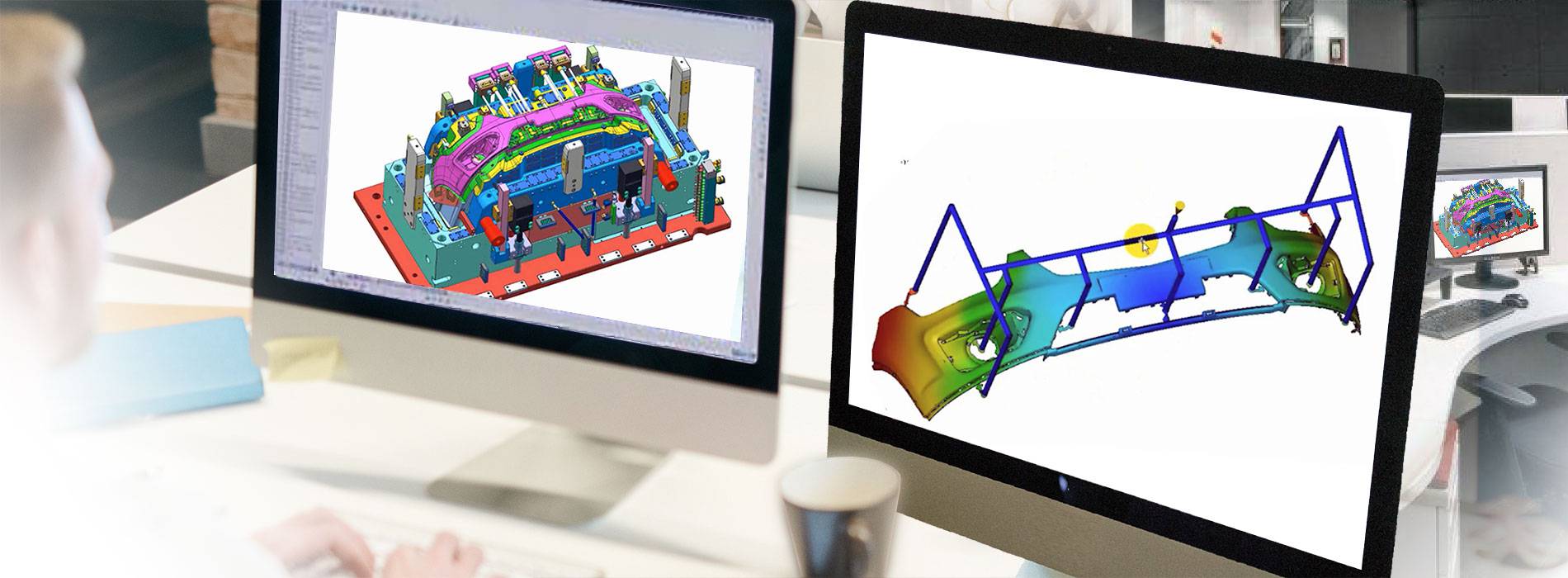
FMS Mold flow Analysis: Engineering Success Across the Life cycle
At FMS, mold flow analysis is driven by decades of hands-on manufacturing expertise, not just software operation. We translate data into actionable insights—optimizing your mold design from the ground up and accurately predicting potential production risks before steel is cut. Beyond supporting our turnkey projects, we offer this advanced simulation as a standalone engineering service.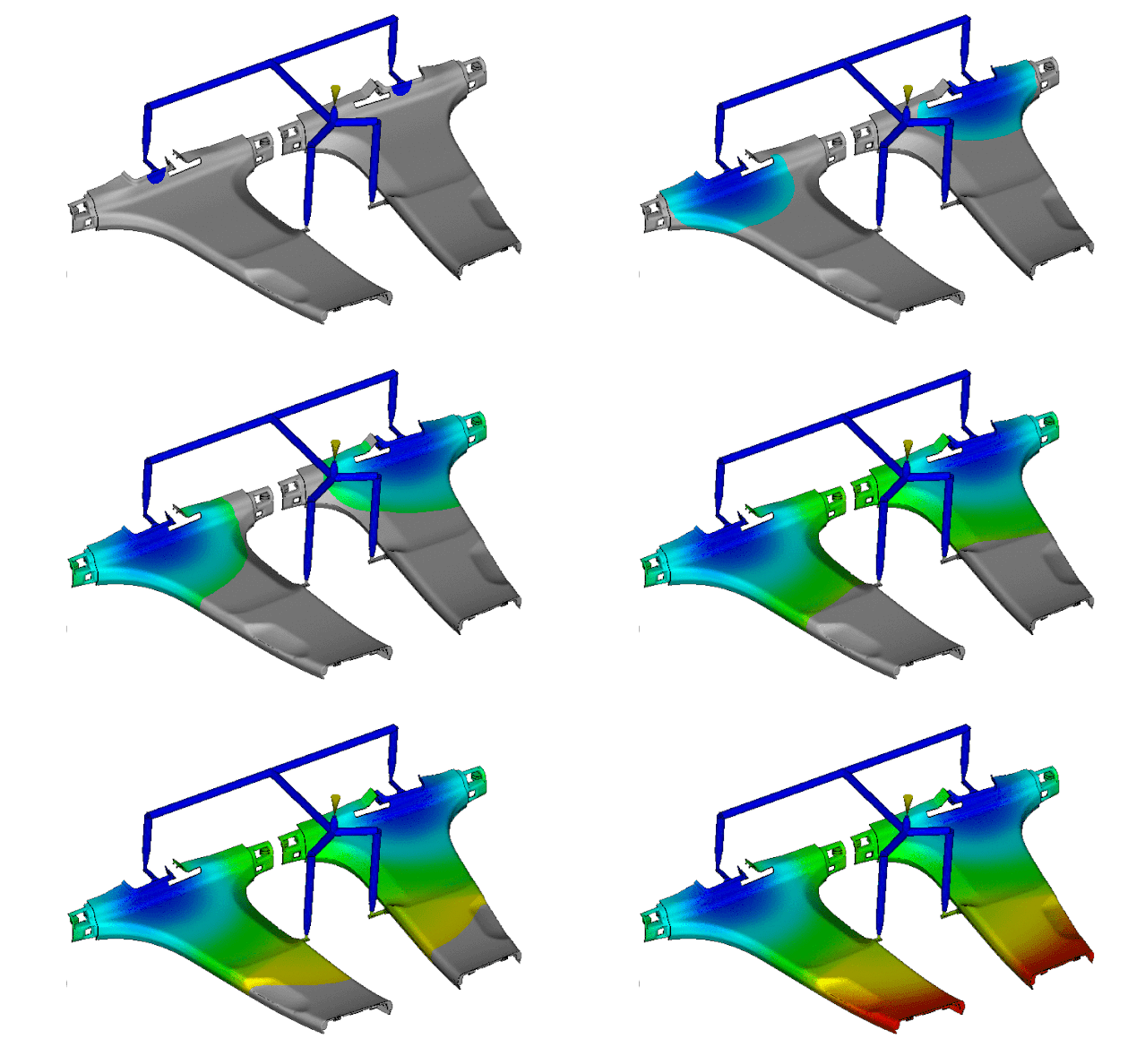
 Seamless Virtual Collaboration
Through our cloud-based collaborative platform, our engineering team integrates seamlessly with yours. Review analysis reports, discuss optimizations, and troubleshoot in real time—giving you the precise support of an in-house engineering department, no matter the distance.
First-rate Mold Solution Co., Ltd. delivers high-precision engineering services that seamlessly balance premium quality with cost efficiency. By leveraging advanced CAE mold flow simulation, our engineering team optimizes complex injection molding designs long before tooling begins.
This data-driven approach allows us to accurately predict polymer behavior, assess material options, and refine process parameters. Through detailed simulation, we analyze critical variables—including optimal gate location, runner efficiency, weld lines, air traps, shear stress, and clamping force—to eliminate potential molding defects proactively. By mitigating risks during the design phase, we ensure accelerated time-to-market and optimized production reliability for our clients.
 For different molds, our molding analysis engineers often do:
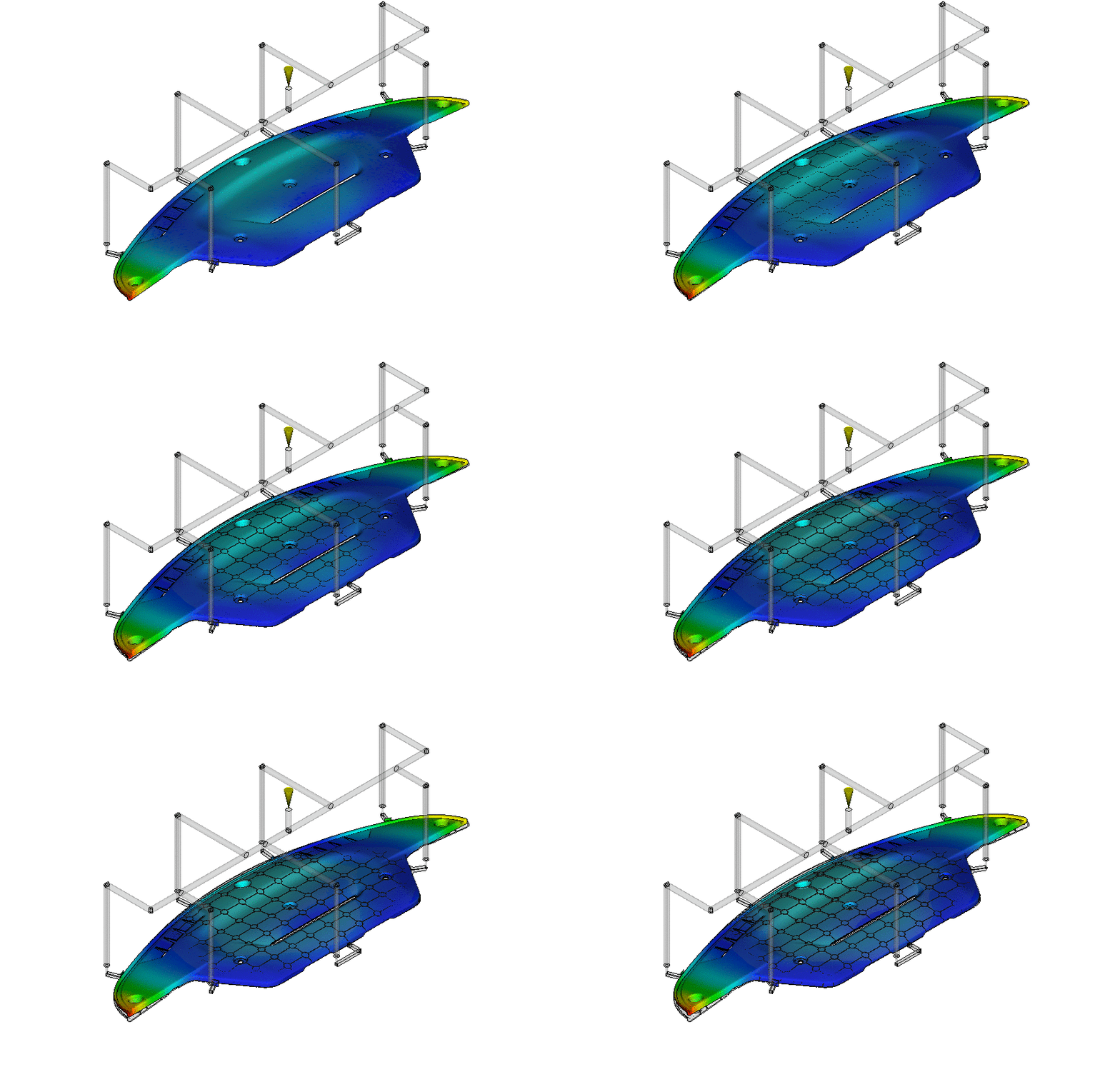
1) Flow analysis
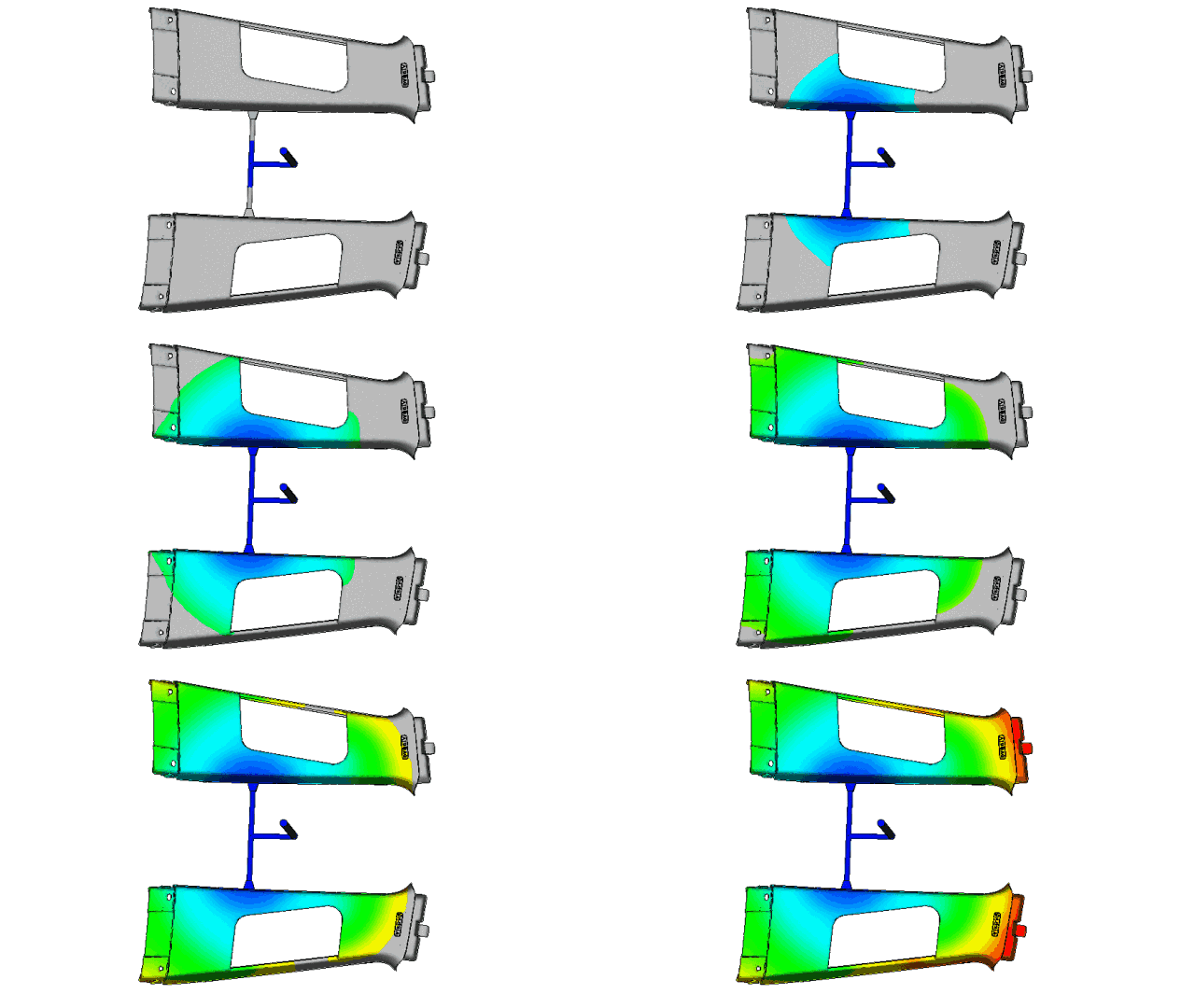
Predict product filled if hysteresis, whether playing, filling is balanced, with lines and pack wind position, filling the required injection pressure / clamping force sizes, into the plastic location / number / size are reasonable.
2) Runner balance analysis
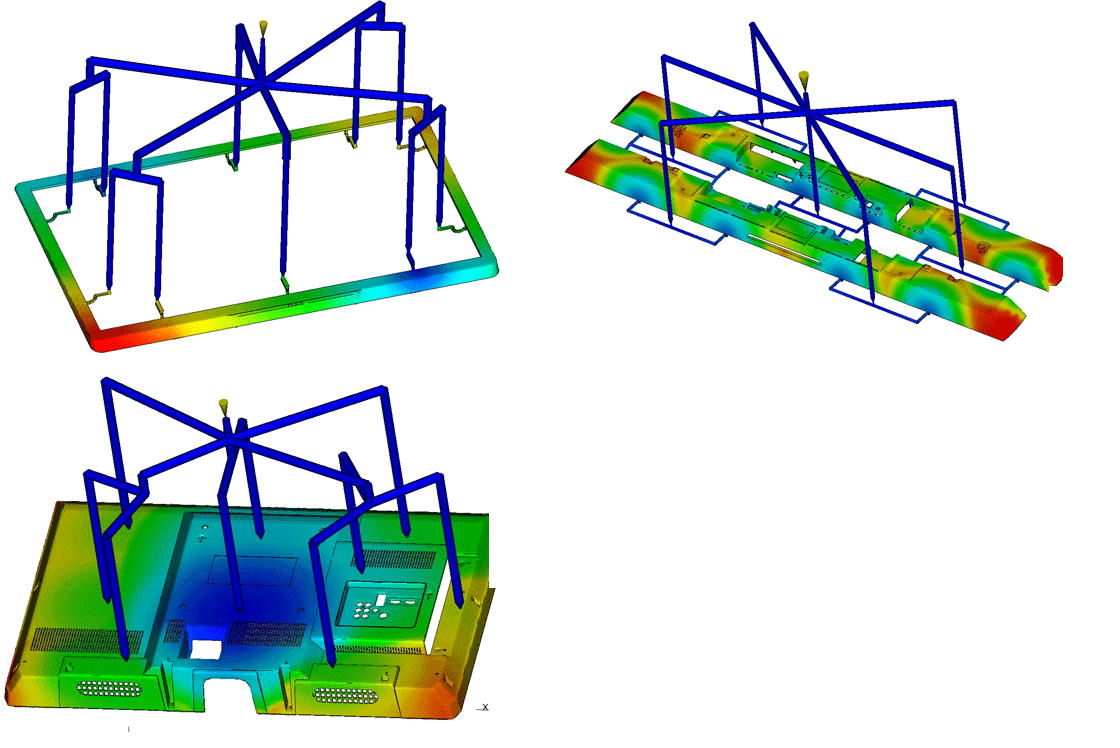
For a multi-cavity mold cavity or family, can be automatically balanced runner system analysis, through the analysis, we can recommend the flow channel dimensions, how much of the flow channel dimensions, several cavities filled at the same time, to achieve flow balance.
3) Gate location analysis
Moldflow gate location analysis which is called Gate location Analysis, whose role is to automatically analyze the best gate location. When the model already exists in one or more of the gate, and then manually set the gate already exists, the system will automatically analyze the best location for the other gate.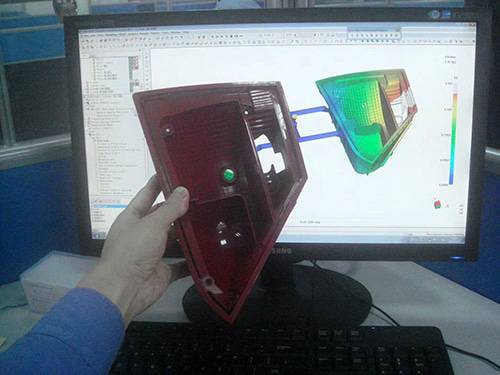
4) Cooling analysis
Prediction mold cooling water layout is reasonable, what areas need to be strengthened cooling, determine the thickness of product design is reasonable to predict molding cycles.
5) Warpage analysis
Predict product deformation and X, Y direction shrinkage values, combined with the adjustment of water / hold pressure parameters / methods into the plastic deformation and thus provide the smallest possible options before making the mold deformation
6) Shrinkage analysis
Analysis of the materials forming the product, the molding shrinkage fit put the number, and the volume contraction, if sink mark .
7) Gas-assisted analysis
Predict gas-assisted molding gas penetration distance, penetration effect, the best location and airway inlet arrangement to assess the product gas assisted molding shrinkage and deformation, etc.
 8) Core shift analysis
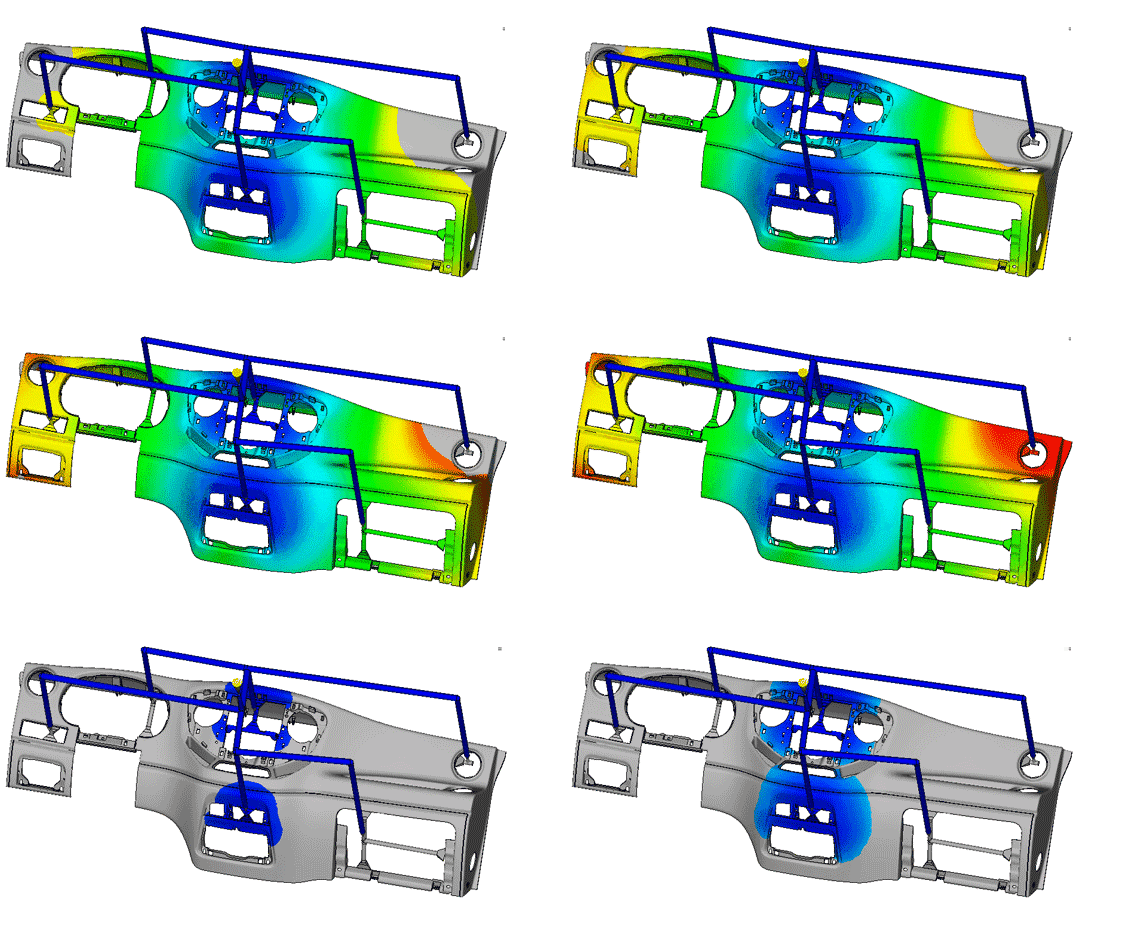
Mold core offset forecast trends and offset by correcting the mold design, reduce the process of filling the core of the impact strength of the weak, extended tool life.
9) Stress Analysis
Predicted residual stress distribution molded product and size.
10) Fiber orientation Analysis
It is to analyze and control the fiber orientation of the plastic, injection-molded parts in order to reduce shrinkage, warpage , and the floating fibers.
Many different types of fibers, including glass fibers, carbon fibers, silicon carbide fibers, synthetic fibers, boron fibers and the like, the simulation can be based on different fibers we percentage simulation. Fibers can improve the material properties are as follows:
1) over time, reducing material plastic deformation occurs and stress relaxation / 2) improve the flexural strengt / 3) Improve the tensile strength / 4) Improved heat distortion temperature
5) Improving the dimensional stability of the mixture
11) Overmolding analysis
Two-color molding molding products can be analyzed flows, warping and bonding situation.
12) Microchip Encapsulation IC chip package analysis
Predict chip package, thermosetting plastics in the mold cavity flow and curing conditions, flows on the impact of gold wire and pin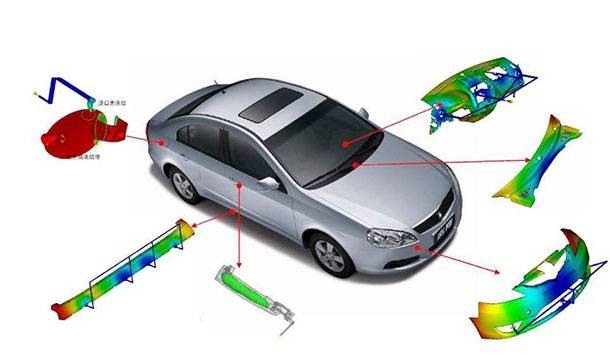
13) Underfill analysis
Optimization of thermosetting material molding conditions and filling dispensing model simulations predict various forms (I, L or … form) predicted injection pressure and clamping force of wind and demand forecasting package combines line position.
14) Birefringence Prediction
After forming the refractive index of refractive index difference can be manifested in the form tensor. General 0.1 The results for the optical parts is too large, it should be by adjusting the gate position, adjusting the process conditions or modify the product structure to achieve low residual stress. Asymmetric tensor indicate the occurrence of birefringence, the more serious the description of asymmetric birefringence more serious, actually see the “double word” the more obvious
MOLDFLOW Analysis gives injection molding manufacturers the luxury of visualizing their end-products, and this allows them to make quick and immediate decisions on the spot. These informed decisions can help the production process greatly and could improve the quality of the end-product, making it turn out way better than the initial intentions.
Some of the areas that greatly benefit from this include the product mould design part, the process, and material selection, the tooling part, and all the other important processes that are necessary for the process to be taken to completion. With MOLDFLOW Analysis, there’s no room for trial and error, everything is first calibrated to the optimum levels, and once the machines start running, the desired results are what you bet at the end of it.
Here I want to share something about my understanding in Moldflow Aanalysis:
1) Benefits of mold flow analysis
Mold flow analysis can offer various benefits for your injection molding projects, such as simulating the filling, packing, cooling, and warping stages of the molding cycle. It can also evaluate the effects of different material properties, mold geometry, gate location, and processing parameters on the final product. Moreover, it can identify and solve potential problems like short shots, air traps, sink marks, weld lines, and stress concentrations. Furthermore, it can optimize the mold design and layout, the runner system, the cooling channels, and the injection pressure and speed. Additionally, it can reduce trial-and-error iterations and material consumption while also enhancing the quality and consistency of molded parts.
2) Types of mold flow analysis tools
Depending on your needs and budget, there are various types of mold flow analysis tools you can choose from. Standalone software, for example, offers a comprehensive range of features and functions, but requires a high level of expertise and a significant investment. Cloud-based software, on the other hand, is an online platform that you can access through a web browser and use on demand. It offers a flexible and scalable solution, but depends on the internet connection and the security of the data. Additionally, plug-in software is an extension that can be integrated with your existing CAD or CAM software. It provides a convenient and compatible option, but has limited capabilities and compatibility issues. Finally, service providers offer mold flow analysis as a service either on-site or remotely. While they have a team of experts and advanced equipment, they also charge a fee and have less control over the process.
3) Features of mold flow analysis tools
When selecting a mold flow analysis tool, you should consider features that can improve the quality and efficiency of your analysis. Meshing, which is the process of dividing the mold and the part into small elements, should be able to generate a high-quality and accurate mesh, either manually or automatically, and handle complex shapes and geometries. The material database should have data on the physical and thermal properties of different materials and allow you to add custom materials. The tool should have multiple analysis modes, such as fill, pack, cool, warp, shrinkage, stress, etc., that can be performed sequentially or simultaneously with different injection molding techniques. Visualization should provide clear and detailed output such as 2D or 3D plots, animations, charts, tables, etc., and allow for customization of the output. Optimization should be able to find optimal values of the design and process variables to improve the performance of the molding system.
4) Methods of mold flow analysis
When performing a mold flow analysis, you should follow best practices and methods that can ensure accuracy and reliability of your results. This includes defining objectives and criteria, preparing data and model according to the tool’s specifications, running and verifying the simulation, and analyzing and optimizing results. Before starting the analysis, you should clearly define what you want to achieve and how you will measure it. When setting up the simulation, you should convert your CAD file to a compatible format and define boundary conditions. After running the simulation, you should check if it is valid and realistic and run multiple simulations with different scenarios or parameters for comparison. After obtaining results, analyze them to identify strengths and weaknesses of your molding system. Finally, optimize your results by adjusting or modifying design or process variables for improved performance.
5) Tips and tricks for mold flow analysis
To make the most of your mold flow analysis, you should consider tips and tricks that can help save time and money. For example, using a simplified model with only essential features and details, or a symmetrical model that only represents half or a quarter of your mold and part. Additionally, using a representative model to capture the behavior of your entire molding system, or a reliable tool that has been tested and validated by other users or experts. All these measures can help ensure the quality and accuracy of your simulation.
Mold analysis is the evaluation, revision, and validation of a mold to ensure it can produce a plastic part correctly the first time.
As a material, plastic has a certain charm: it’s lightweight, inexpensive and can be molded into almost any design. But just wait until that first warped or blistered part emerges from the mold. Designing a part so it can be manufactured easily and efficiently is critical to your product’s success.
With moldflow, you can determine the feasibility of a design by performing a 3D thickness check to analyze your model’s geometry and fix basic issues before handing off to a mold design expert.
Mold Flow Analysis Can Save Your Plastic Injection Mold Design
One of the keys to a quality plastic injection molded part is an accurate mold – one that produces consistent pieces time and time again. So how is that accomplished? First, if you are not familiar with the components of an injection mold and how they work, take a look at this blog post: Components of An Injection Mold to brush up on the basics..
Taking your mold from good to great is as simple as testing it via Mold Flow Analysis (MFA). This software simulates your mold conditions before you open up your wallet to pay for tooling. The effect MFA has on the quality of the mold, the performance and appearance of your product makes it an indispensable component of any plastic injection molding design project. Note: MFA software is expensive, but the return on investment is substantial.
What is Mold Flow Analysis?
Mold flow analysis (MFA) software simulates the flow of plastic, which allows you to elevate part and mold design to create products of impeccable quality. Like other simulation software, MFA gives you a virtual sneak peek into how your material of choice will fill the mold’s cavities and offers a head’s up on potential problem spots. The benefit is obvious, right? Simulating the process digitally means you can make changes BEFORE A TOOL IS CUT. This one thing is a big cost savings, not to mention a time saver as well.
When Should Mold Flow Analysis be Used?
In case it wasn’t clear, MFA is conducted before tooling production launches. (It wouldn’t make much sense to use it afterward!) Using a selected gate location and material properties, the software is able to predict how the part will fill during molding. Different data points can be assessed, including pressure, fill time and melt temperature. Doing so allows for optimization of the process before tool manufacturing ever begins.
Is Analysis Necessary for Every Application?
The short answer: not necessarily. The following factors can help you decide whether MFA should be used for your application:
PRODUCT GEOMETRY
The more complex the product geometry, the more benefit you’ll receive from MFA. Why? When the product’s design is more intricate, the flow is less predictable. It’s easier to predict how a simple mold design would fill, for example.
TOLERANCE REQUIREMENTS
Tight tolerances are an anathema to plastic injection mold designers anyway. Software that can analyze and demonstrate whether a product will meet spec prior to cutting a tool is a godsend.
PROJECT SCOPE
Clearly a project would have to meet certain financial requirements to warrant the investment of resources — time, software and talent — to run the tests.
UNUSUAL MATERIALS
Engineers know the fill patterns of standard materials but others — especially materials that include fillers — benefit from up-front analysis.
Development of high-density packaging and miniaturization in electronics industry requires designers to design small, thin-walled high-performance connectors, this requires higher quality plastic products for insulating and fixing contacts. In order to improve quality of plastic products in connector, shorten processing cycle, quickly and efficiently occupy market, it is necessary to adopt advanced mold flow analysis technology. Before actual production, potential problems in product and mold design can be found, make improvements, so as to ensure that a qualified product can be produced after a trial. Computer-aided engineering (CAE) technology has become the most effective way for these weak links in plastic product development, mold design and product processing. Compared with traditional mold design, CAE technology has great advantages in terms of improving productivity, ensuring product quality, reducing costs and reducing labor intensity. Using CAE (Moldflow) technology can simulate and analyze entire injection molding process on a computer before mold processing, accurately predict filling, holding pressure, cooling conditions of melt, as well as stress distribution, molecular and fiber orientation distribution in product, shrinkage and warping deformation of product, so that designer can find problem as soon as possible, modify part and mold design in time, instead of waiting for trial mold to repair mold. This is not only a breakthrough in traditional mold design methods, but also has great technical and economic significance for reducing or even avoiding mold repairs and scraps, improving product quality and reducing costs.
Mold flow analysis is a technique that involves simulating an injection molding cycle with a specific type of plastic and then evaluating the results. Prior to injection molding, moldflow analysis is essential. It involves using specialized software to simulate the design of the component. This should happen. Because the liquid material flows inside the mold significantly impacts how the finished product behaves, this process can help save a lot of time and effort in the long run.
The software generates color maps mirroring design features as they appear in mold flow. It includes features like heating and/or cooling, fill pattern, injection pressure, potential air traps, shear stress, fiber orientation, and a variety of other features. Mold flow analysis is a meticulous and hands-on process reserved for professionals only.
Everyone agrees that quality parts come from a flawless mold, and digitally simulating the process is the key to starting out with flawless tooling. Moldflow, an MFA software company owned by Autodesk, is one of the leading companies providing software to improve injection molding designs.
Here are some of the benefits you can expect from their software:
Optimized gate locations: In the past, gates (those areas that control plastic flow to the cavities) were made smaller initially and then re-machined after sampling the part—a costly and time-consuming step.
Mold cavities that are filled uniformly and consistently
Ability to find visual defects: Air traps and sink marks are discovered and eliminated up front.
Wall thickness issues are resolved
Weaknesses in design can be corrected
Various materials can be evaluated before production
Improvements to the manufacturability of the part can be made
The time it takes to get your parts to market is reduced
Will your injection mold shop always use Moldflow?
Probably not. While a mold flow analysis can be helpful for most projects, it is especially beneficial where there is a part with complex geometry and intricacies that make it more difficult to predict flow. Similarly, in parts with tight tolerances, mold flow analysis will ensure that your parts meet the required specifications with the material and tooling design.
On the other hand, you need to be able to justify the cost of conducting the analysis. The size and scope of your project must be large enough to merit the cost and labor to run the MFA.
Mold Flow Analysis services are made available to clients, by some of our most experienced engineers and professionals, holding experience and skills in the domain. The mold flow analysis provided by us, includes Fusion, Flow, Cool and Warp. The analysis supports customer’s ability to provide the finest plastic parts, cost effective manufacturing, generating precise layouts and designs required and eliminate expensive process of trial & error.
Mold Flow Analysis include:
Fusion / Flow / Cool / Warp
Some of the advantages of these analysis procedures include:
Supporting customer’s demands of building better plastic parts featuring lower set up time as well as costs involved
Arriving at correct tool layout and runner designs required
Providing complete report which eliminates expensive process of trial & error
Allows achieving quality plastic injection molded parts at very first time
Achieving optimal weld line placement
Allows predicting short shots especially important for those involved in creating plastic parts
There are multiple benefits to Molding analysis. They include:
Resolution of wall thickness complications / Gate location optimization / Mold cavities fill consistently and uniformly / Discover defects in design geometry / Prevent expensive tooling errors and rework / Enhance manufacturability / Reduce time to market / Boost efficiency and quality / Reveals potential visual defects, including air traps, sink marks and weld lines / Assess different material options, pre-production / Provides data to support design changes
Mold-filling analysis is the computer simulation of molten plastic flow into a given mold geometry. This could be a plastic part, hot or cold runner, gate, nozzle tip, sprue, rib, etc. For a mold, the flow is predicted to the point of 99% filled; packing is a separate simulation. With proper application by an experienced user, this flow simulation can predict—before the mold is built—how the flow front progresses through the flow path of nozzle, sprue, runner, gate, and part. This allows for possible prediction of gate location, fill time, flow restrictions, plastic pressure distribution, air entrapment, venting issues, temperatures, weld lines, and other concerns associated with plastic part production.
Possible is emphasized here because analysis of a virtual process in the computer is sometimes accurate and sometimes not. The software continues to improve, and more advanced programs attempt to simulate packing, warpage, and cooling. This article will focus on only the filling or flow simulation aspects. My perspective on flow simulation is that it is a type of computer-aided engineering (CAE), with the emphasis on aided. The computer can’t do it alone. The software helps an experienced user determine the fill pattern and associated phenomena. Computer software does not have the magic capability to provide good results if the person using it has little or no experience with plastics materials, processing, and tooling.