
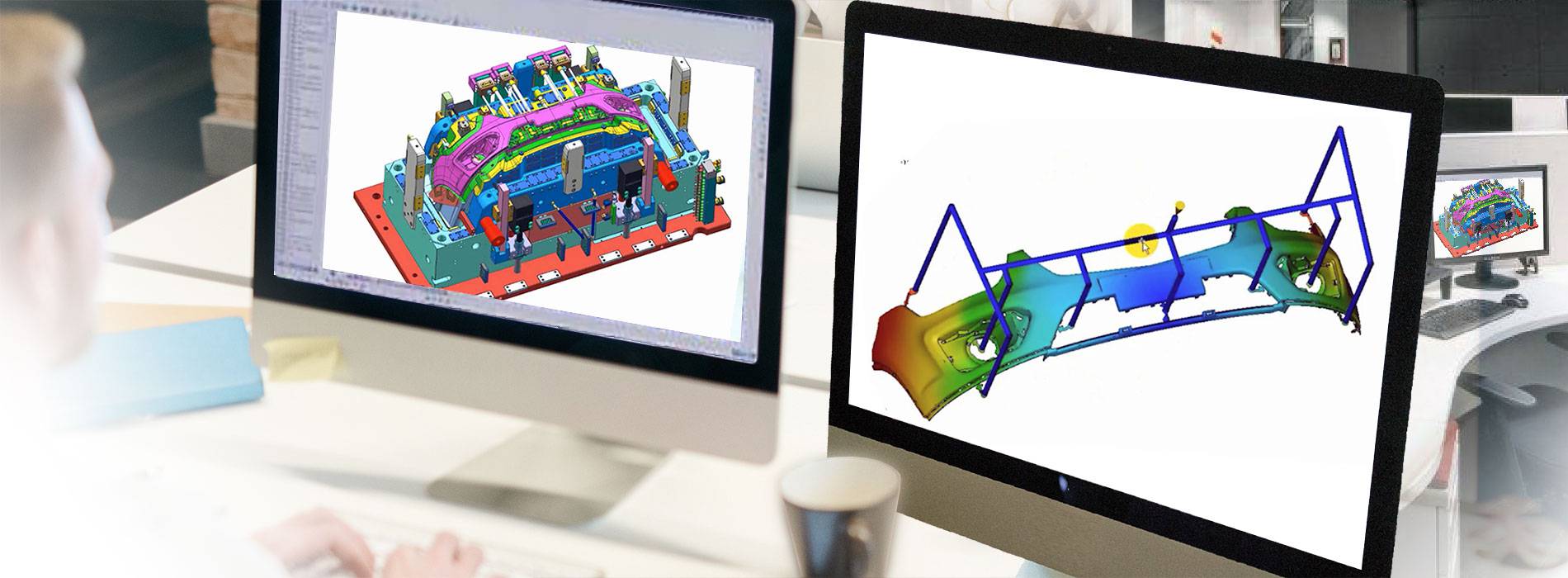
FMS Mold flow Analysis: Engineering Success Across the Life cycle
At FMS, mold flow analysis is driven by decades of hands-on manufacturing expertise, not just software operation. We translate data into actionable insights—optimizing your mold design from the ground up and accurately predicting potential production risks before steel is cut. Beyond supporting our turnkey projects, we offer this advanced simulation as a standalone engineering service.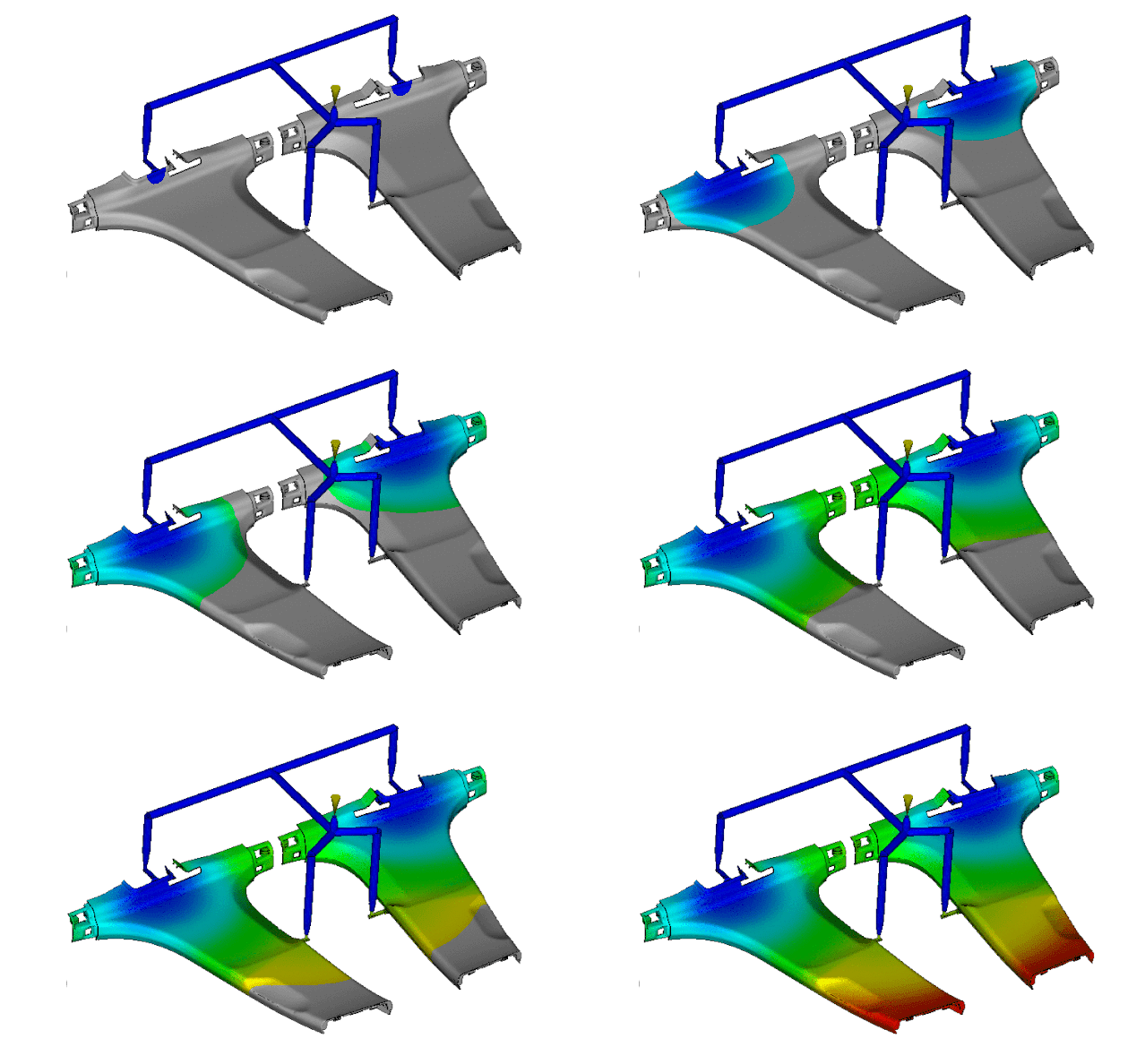
 Seamless Virtual Collaboration
Through our cloud-based collaborative platform, our engineering team integrates seamlessly with yours. Review analysis reports, discuss optimizations, and troubleshoot in real time—giving you the precise support of an in-house engineering department, no matter the distance.
First-rate Mold Solution Co., Ltd. delivers high-precision engineering services that seamlessly balance premium quality with cost efficiency. By leveraging advanced CAE mold flow simulation, our engineering team optimizes complex injection molding designs long before tooling begins.
This data-driven approach allows us to accurately predict polymer behavior, assess material options, and refine process parameters. Through detailed simulation, we analyze critical variables—including optimal gate location, runner efficiency, weld lines, air traps, shear stress, and clamping force—to eliminate potential molding defects proactively. By mitigating risks during the design phase, we ensure accelerated time-to-market and optimized production reliability for our clients.
 For different molds, our molding analysis engineers often do:
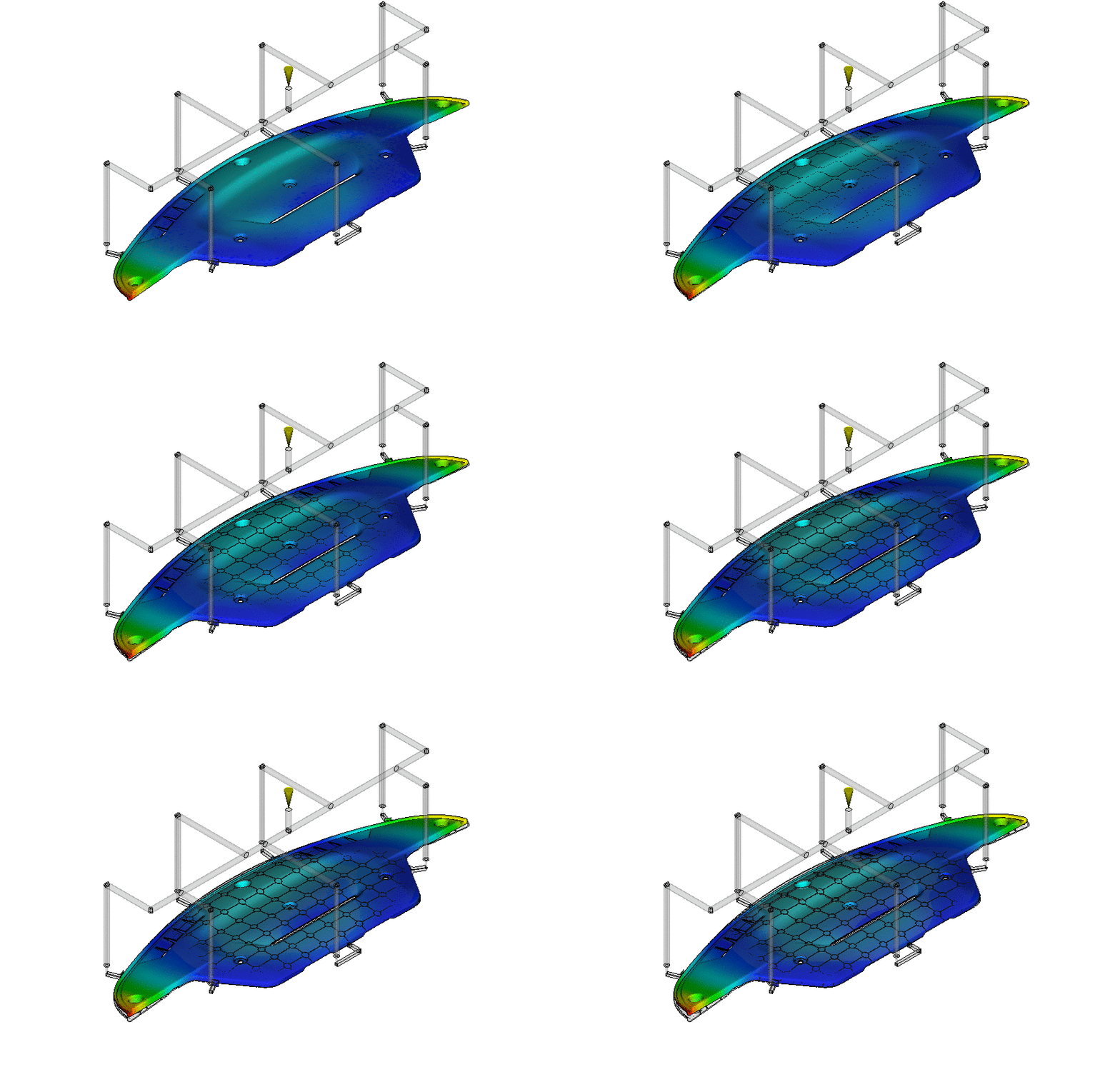
1) Flow analysis
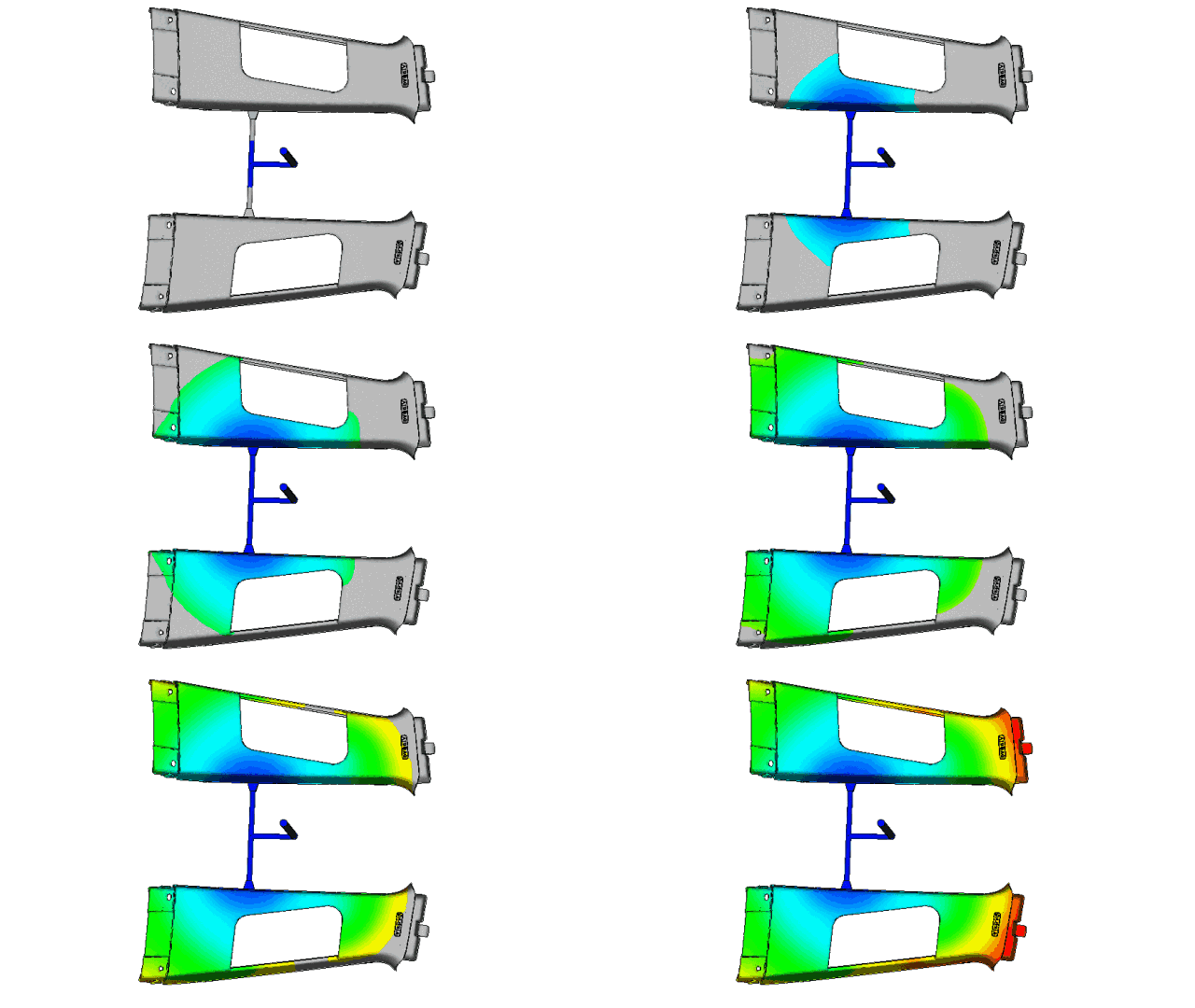
Predict product filled if hysteresis, whether playing, filling is balanced, with lines and pack wind position, filling the required injection pressure / clamping force sizes, into the plastic location / number / size are reasonable.
2) Runner balance analysis
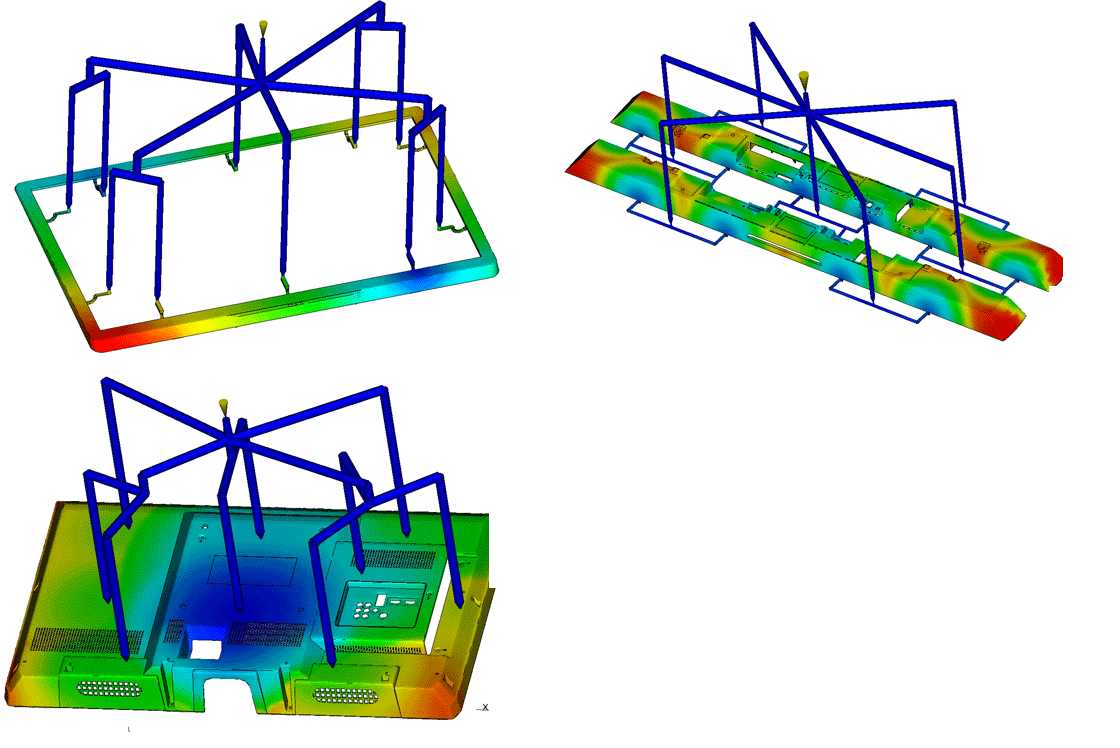
For a multi-cavity mold cavity or family, can be automatically balanced runner system analysis, through the analysis, we can recommend the flow channel dimensions, how much of the flow channel dimensions, several cavities filled at the same time, to achieve flow balance.
3) Gate location analysis
Moldflow gate location analysis which is called Gate location Analysis, whose role is to automatically analyze the best gate location. When the model already exists in one or more of the gate, and then manually set the gate already exists, the system will automatically analyze the best location for the other gate.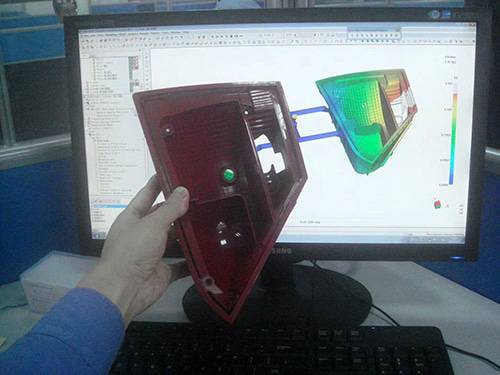
4) Cooling analysis
Prediction mold cooling water layout is reasonable, what areas need to be strengthened cooling, determine the thickness of product design is reasonable to predict molding cycles.
5) Warpage analysis
Predict product deformation and X, Y direction shrinkage values, combined with the adjustment of water / hold pressure parameters / methods into the plastic deformation and thus provide the smallest possible options before making the mold deformation
6) Shrinkage analysis
Analysis of the materials forming the product, the molding shrinkage fit put the number, and the volume contraction, if sink mark .
7) Gas-assisted analysis
Predict gas-assisted molding gas penetration distance, penetration effect, the best location and airway inlet arrangement to assess the product gas assisted molding shrinkage and deformation, etc.
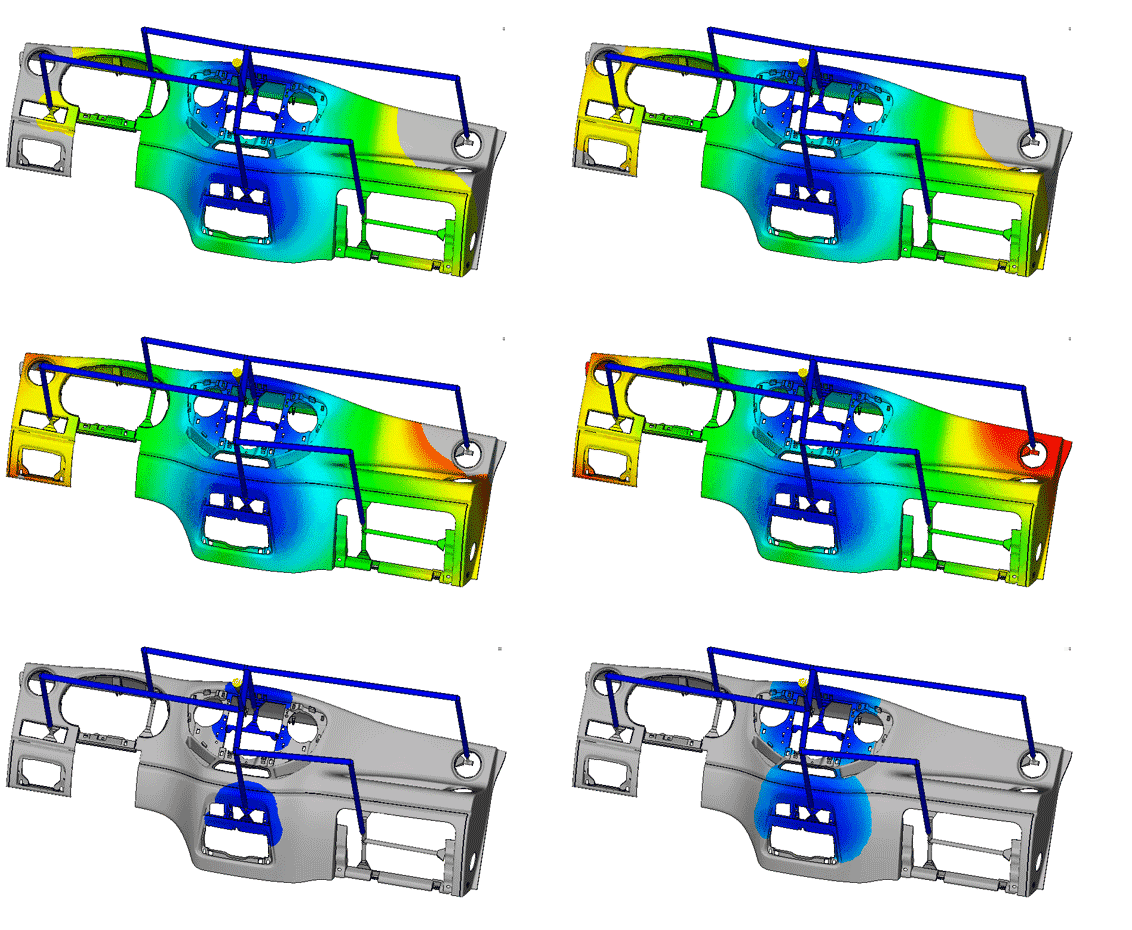 8) Core shift analysis
Mold core offset forecast trends and offset by correcting the mold design, reduce the process of filling the core of the impact strength of the weak, extended tool life.
9) Stress Analysis
Predicted residual stress distribution molded product and size.
10) Fiber orientation Analysis
It is to analyze and control the fiber orientation of the plastic, injection-molded parts in order to reduce shrinkage, warpage , and the floating fibers.
Many different types of fibers, including glass fibers, carbon fibers, silicon carbide fibers, synthetic fibers, boron fibers and the like, the simulation can be based on different fibers we percentage simulation. Fibers can improve the material properties are as follows:
1) over time, reducing material plastic deformation occurs and stress relaxation / 2) improve the flexural strengt / 3) Improve the tensile strength / 4) Improved heat distortion temperature
5) Improving the dimensional stability of the mixture
11) Overmolding analysis
Two-color molding molding products can be analyzed flows, warping and bonding situation.
12) Microchip Encapsulation IC chip package analysis
Predict chip package, thermosetting plastics in the mold cavity flow and curing conditions, flows on the impact of gold wire and pin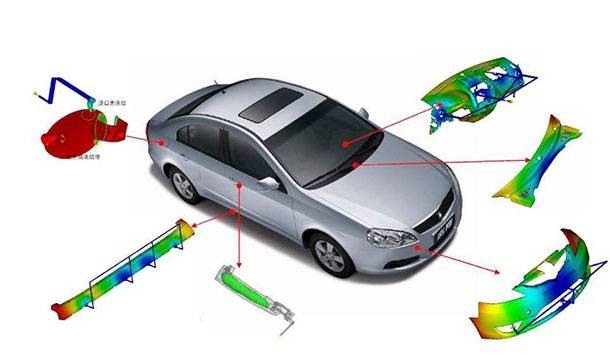
13) Underfill analysis
Optimization of thermosetting material molding conditions and filling dispensing model simulations predict various forms (I, L or … form) predicted injection pressure and clamping force of wind and demand forecasting package combines line position.
14) Birefringence Prediction
After forming the refractive index of refractive index difference can be manifested in the form tensor. General 0.1 The results for the optical parts is too large, it should be by adjusting the gate position, adjusting the process conditions or modify the product structure to achieve low residual stress. Asymmetric tensor indicate the occurrence of birefringence, the more serious the description of asymmetric birefringence more serious, actually see the “double word” the more obvious
The main reason to complete a mold flow analysis is the ability to predict where the current mold will have complications and offer a visual representation of where to focus resources to create fast, efficient, and consistent injection molded parts.
These are results that you can expect after an analysis identifies all areas needed for improvement:
Faster cycle times – You can expect your mold to run faster as it will be able to fill the parts quicker and more consistently after an anlysis that optimizes the injection molding process.
Reduce clamp tonnage – An optimized mold will reduce all restrictions and require only a miminum clamp load to secure the mold closed during the injection process.
Produce better quality parts – Your mold will offer consistency from part to part, whether that runs in the hundreds or millions. A properly designed mold will yield very minimal variance.
Speed up overall project progress – A mold flow analysis takes the guess work out of optimization and offers your tooling maker the resulting design that requires little to no modification to make optimized parts. Development time it minimized, which will also save you investment cost.
Reduce the number of mold test cycles – In early years of injection molding, development could take months to find the optimum design through trial and error. A computerized analysis removes most or all of the trial time, and allows the first use of the tool to produce optimized parts.
Reduce your delivery time on parts – An optimized mold will be ready to produce production parts sooner than ever before. As analysis modeling and software continually become better at creating accurate models, molds require less design and tooling changes before production can begin.
A good mold flow analysis has lots of benefits, although it is time consuming, the cost is much lower than the cost of trials during nights and days on a production injection molding machine. The difficulty is not to produce colored pictures but to explain to the customers the different results, some customers have enough knowledge to understand some others no.
In 90% of cases, I work before the injection mold is cut, so I am ready to take the responsibility of cycle time, warpage, sink marks and so others issues. I am specialized in gas assisted injection molding and I assist Chinese companies to produce plastic parts for the German automotive industry which generally use overflow. With short shot process, we can obtain a production costs reduction of 20% by simulation and 30% in practice
The consumer product development process is much more complex than just creating a design and having a machine spit out material in a desired shape; plastics are not as inert as they seem and do not operate like static building blocks. The color maps created by mold flow analysis assist in adaptive changes of the design in order to create a quality product before the molding process actually occurs. This ensures that when a prototype or product goes into production, it is going to perform and behave optimally. Despite the overhead that it adds to the process, mold flow analysis more than makes up for this in terms of final quality. In fact, it has been considered a factor in keeping North American manufacturing competitive in the face of cheaper product development processes elsewhere. Furthermore, it demonstrates a commitment to quality, and is a good indicator of design and engineering firms who are competent, reliable, and produce quality solutions.
A mould with a more complex shape will likely benefit from moldflow analysis because the flow is less predictable than with a simpler shape. The current trend is to make products lighter & thinner to save material cost but this makes moulding quality parts more difficult. The ability to optimise the gate location can prove essential for some parts with more complicated geometries.Moldflow analysis
Changes to the part design and also the tool design can be investigated and confirmed based on the moldflow output and potential quality issues in the part such as deep under cuts or inadequate draft angles can then be altered immediately to address these issues with little time and cost.we got much benefits from using moldflow analysis.
The advantages of moldflow are many, and the ability to see how a manufacturing process will work before financial outlay has been committed to tooling is priceless.
during mold design, we regularly use moldflow analysis so that new part designs can be analysed immediately for manufacturability. This includes not just the ability to mould a part, but also the quality of the resulting part, both physically and aesthetically. Moldflow
In the past there was a risk that flaws in part designs would not be noticed until a mould tool was made. Creating a virtual version through moldflow analysis, means multiple trials can be avoided and time and money saved, as changes in part and mould design at this stage would be far more
Mold flow analysis helps to maximize resources and create efficient products. It improves the entire injection molding process and cannot be ignored if durable products are the goal of the molding process. Therefore, this article talked about mold flow analysis in terms of how it works, it’s benefits, and how it can improve your design. From the article, it is evident that mold flow analysis is an important process in injection molding. Therefore, designers must incorporate it in their procedure to get the best result.
Molding flow analysis helps to examine mold design thoroughly. It is pre-analysis of the product manufacturing process with the help of software. Molding flow tries to come to a pre-conclusion of the temperature required to melt the plastics or steel, of the amount required to fill in the cavity and deciding the wall thickness of the object. For example, if due to any reason the wall of the object is too thick it would not cool properly and there would be sink marks that will not look good.
Molding flow analysis is a pre-manufacturing process which not only reduces the cost, it saves the time of the organization and it helps to manufacture parts, objects in a successful way. Suppose without a flow analysis if a prototype is manufactured and it shows some fault, then it needs to be started all again. The design of the tool needs to be changed and there would be enormous wastage of time and energy. Therefore, to control all these mishappenings a molding flow analysis is done.
A company expert in a technique of mold, injection considers flow analysis a necessary pre-requisite. There are various manufacturing companies which are an expert in 3D designing of objects and they are also an expert in designing tool according to the desired wishes. That is why some mold companies can supply the parts in all over the world especially North America and Europe.
Now, coming again to the molding flow analysis, it examines the flow of melted metal or plastic through channels and tells the quantity to be added or to reduce before manufacturing the parts. It is easy to cut the metal scrap from the object, but it is very hard to add metals due to their characteristics into the parts. For that, a whole new design is carved for the tool which overruns the manufacturing cost and time. All these problems can be averted through proper mold flow analysis.
Injection molding is altogether an expert technique which requires technical knowledge and years of experience in the field. China injection molding industry is considered such an expert especially in plastic injection molds and it is aptly called as an injection molding hub. It supplies, parts being used in healthcare equipment, automotive, electronics and home appliances. Almost everything is being manufactured in countries of this region through injection molding.
Injection molding has made the process of manufacturing an easy task compared to earlier days where the heavy objects were manufactured in one go and where the technologies like flow analysis were not common. Injection molding has turned the pace of economy in a great way.
In the case of plastic injection molding processes, simulations can also save considerable costs and, above all, time. Even in the initial phase of a project, professional simulation solutions help to determine the feasibility of specific designs. Or they help, for example, to determine the most suitable machines for injection molding. In addition, the software solutions can be used to design molds and determine the optimum process parameters – long before the first real component is produced.
Many injection molding defects occur during the filling phase. It is not uncommon for weld lines or voids or air inclusions to occur. Shrinkage and warpage of the components outside the tolerance limits lead to component rejects. This means that time-consuming and costly rework of the mold is necessary. Injection molding simulations are designed to predict these very defects. They identify problems that can occur and enable quick and easy testing with other parameters or part geometries. And they do this during the development phase, when changes can still be implemented easily and cost-effectively.
This is because the component properties are precisely displayed on the monitor as simulation results long before they can be measured in reality. Sophisticated injection molding simulation can also determine the orientations of different fiber-reinforced plastics and predict weak points in the component. For the mold manufacturer and the component designer, the precise data from the simulation make their work much easier. Thanks to them, time-consuming trial-and-error procedures are a thing of the past. Correction loops are significantly reduced.
For computer simulations to work and deliver realistic results, the computers first need a lot of input. If input data is missing as a basis for process calculation, or if it is inaccurate or even wrong, the injection molding simulation can also only output inaccurate results. The same can happen if the model to be calculated has been simplified so much on the computer that it does not reflect reality.
Highly professional injection molding simulation programs therefore contain extensive databases derived from countless measurements. Above all, this includes up-to-date material data, which have a considerable influence on the results of the simulation. The continuous updating of highly developed simulation software and the use of the latest program version enable precise component prediction.
Mold flow analysis is the process of simulating an injection molding cycle with a particular plastic and analyzing the results. Mold flow analysis should occur before the injection molding process ever begins, through the use of specialized software that simulates the design of the part to be manufactured. Since the flow of the liquid material in the mold makes a massive difference to the behavior of the product, this step can save a great deal of effort down the road. This software creates color maps of different properties of the design as they would be reflected in the actual mold flow. These may include heating/cooling, fill pattern, injection pressure, potential air traps, shear stress, fiber orientation, and many more properties. Mold flow analysis is a careful, hands-on-process meant for experts.
Here are our top seven reasons why you should always perform a mold flow analysis:
Optimization of Design
Without any tooling or molding necessary, you can answer all the what-if questions ahead of time. Mold flow analysis can point out many concerns or production factors, including:
Material selection issues / Thickness/thinness problems / Structural concerns / Weld line controls / Residual or structural stress issues / Filling concerns / Product function requirements / Sink or appearance problems, and more / Quick & Immediate Decisions
With mold flow analyses, you can make immediate, informed decisions. These decisions can impact multiple areas of the process including:
Product design
Material and process selection / Tooling
And everything else that is central to your production process
There’s no trial and error involved; there are just proven scientific engineering answers from art to part.
Optimization of Injection Molds and Tooling
You have all the information and answers to make the most optimal choices in injection molds and tooling to create the perfect product. Mold flow analysis can show you everything you need:
The optimal gate locations / Balanced filling and packing / Cavity layout / Mitigation of short-shot molding issues / Optimal injection mold materials / Prototype and production tooling / The best cooling layouts / Structural and thermal analyses for tool life / Core pull/deflection issues / Reasons for tool failures / Engineering calculations of pressure or force necessary for each part Etc…
Trying Different Materials
You’re now able to test out different materials and designs without building any prototype parts or tools. You can get virtual parts with a simulation as well, so you can have full process simulation with minimal upfront investment.
Optimize Overall Cycle Time
Mold flow analyses can optimize your overall cycle time by up to 10-30%. That reduction percentage on just one part can cancel out the cost of a complete flow analysis of multiple molded parts!
Ability to Select the Perfect Source
You can select the right source with expertise and practical experience for simulation, design, tooling, and molding. Otherwise, you would be spending money on analysis costs, as well as all tooling and molding issues, without obtaining any of the savings from upfront process simulation.
Specification
Plastic parts can be optimized for exact machine specification, cycle time, cooling, DOE, and more, without reducing production time or putting any tools on molding machines; this can help improve your bottom-line profit.
Creating a high performing mold is a vital part of the injection molding process, but can be a challenging. While one might think liquid plastic simply takes on the shape of the mold it’s injected into, a strong initial design and innovative techniques are vital to consistent part production.
Today, many manufacturers have proven mold flow analysis (MFA) to be the medium between a flawless design and production. Vital to the injection molding process, investing in MFA software will enhance mold quality, product appearance, and final performance. The return on investment more than justifies the cost of the MFA software.