

FMS Mold Engineering: Your Extended Engineering Team in China
As global OEMs recognize the FMS team’s advanced tooling technology and proven expertise, we have expanded our capabilities to fully manage and deliver your mold manufacturing projects.
Seamless, Real-Time Collaboration
Through our cloud-based digital workspace, we bring European standards of transparency to Asia. You can monitor every stage—from precision machining and assembly to mold tryouts—live and on-demand. It feels exactly as if our engineering team were working right inside your own facility.
A True Client-Side Partner, Not Just a Supplier
Unlike traditional mold makers who simply take outsourced orders, FMS operates under a unique, client-first model. We act as your direct on-site representatives. Our senior engineers strictly supervise and guide the manufacturing process, ensuring every detail flawlessly aligns with your exact specifications, quality standards, and timelines.
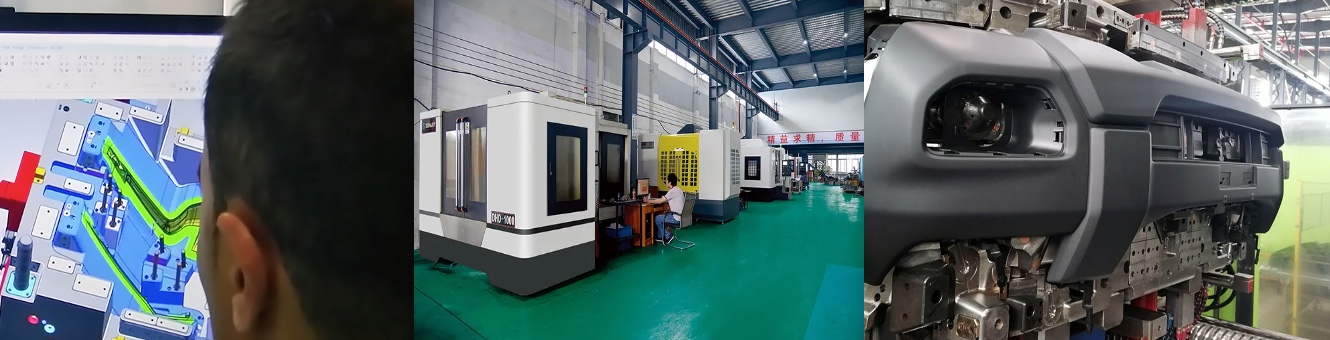
At FMS, we act as an extension of your own engineering team. We protect your interests at every stage of the manufacturing process through two flexible engagement models:
• FMS-Designed Tooling Solutions: When our internal team handles your mold designs, we bring deep technical familiarity to the production floor. We seamlessly bridge the gap between design and manufacturing, ensuring every technical requirement is executed flawlessly by our certified production partners.
• Client-Supplied Design Integration: If you prefer to provide your own mold designs, our engineering team conducts a rigorous review to align perfectly with your standards. We maintain real-time, transparent communication with your designers to proactively resolve complexities before manufacturing begins.
The FMS Core Promise: We don’t just manage production; we stand firmly in your corner, maximizing your efficiency and safeguarding your bottom line.
FMS Mold Engineering Solutions: Your On-the-Ground Partner in China
Upon receiving your mold manufacturing orders and thoroughly analyzing your design and technical requirements, the FMS team immediately takes charge of your local supply chain. We vet and select top-tier, compliant mold manufacturers in China through rigorous on-site audits and technical alignments before negotiating competitive quotes.
Once commercial terms are approved, FMS acts as your full legal and technical representative on-site. We manage contract execution and embed our senior engineers directly onto the shop floor to oversee production. You will receive transparent, comprehensive weekly progress reports, while our team proactively mitigates potential risks in real time.
From initial sampling and scientific trial evaluations to final pre-shipment inspections, we enforce strict quality standards. We deliver detailed engineering modification reports and final quality audits, ensuring every mold is delivered on time and fully compliant with your exact specifications.
Why Strategic Mold Outsourcing is the Right Move for Your Business
1. Focus on Your Core Competencies
If your primary expertise is product assembly and market distribution, managing a high-precision, in-house tooling shop can drain valuable resources. Outsourcing allows you to leverage specialized engineering expertise without the heavy overhead, keeping your team focused on what drives your revenue.
2. Fill Capability Gaps Instantly
Even established mold makers encounter specialized designs or complex geometries that fall outside their usual expertise. Instead of turning down lucrative contracts, outsourcing allows you to seamlessly take on these complex projects by partnering with niche manufacturing experts.
3. Scale Effortlessly Beyond Capacity Limits
When high-volume orders rush in, you shouldn’t have to choose between turning away business or buying expensive new machinery. Strategic outsourcing acts as an elastic extension of your factory floor, allowing you to scale up production instantly without the capital risk.
4. Gain Instant Access to World-Class Technology and Talent
By outsourcing your mold projects, you immediately integrate a robust, fully vetted ecosystem into your supply chain, including:
• State-of-the-Art Automation: High-efficiency, automated plastic injection molding equipment.
• Elite Technical Talent: Dedicated teams of specialized design, tooling, and processing engineers.
• Proactive Risk Management: Meticulous preventive equipment maintenance for guaranteed uptime.
• Flexible Staffing: A highly scalable production-support team ready to handle any surge.
Why cheap injection molds cost more than you think—and how to fix it
Over the past 40 years, China’s mold manufacturing industry has evolved from a low-cost alternative into a global hub of high-precision engineering, rivaling European and US standards. Yet, many Western buyers still struggle to source high-quality molds.
The reason? The “race to the bottom” on price. Sourcing based solely on the lowest quote inevitably triggers shortcuts in steel grade, hot runner selection, and tolerance control. You save on the purchase price, but lose heavily on downtime, maintenance, and delayed product launches.
To get a mold that matches Western engineering standards at competitive Chinese manufacturing rates, you need a local partner who speaks your language. FMS Team bridges the gap. We ensure your exact technical specifications are met without compromising your budget.
Mold shaping or mold engineering is of central importance in production. It includes designing and manufacturing molds used to produce different parts and products. These molds need to be very specifically made, so the final product may meet quality standards. Let’s take a look at what mold engineering is and why it is so vital to many industries.
The Basics of Molding
Molding is a technique of using molds to create products from raw materials. It is an essential practice in manufacturing and is used for producing parts from metals, plastics, and more. Mold engineering is indispensable in manufacturing, as it necessitates designing these molds to incredible accuracy, requiring detailed know-how and advanced equipment.
The Role of Precision in Mold Engineering
That is why precision in mold engineering is imperatively non-negotiable. Everything is based on precise measurements and careful design so that the molded components are able to achieve the proper tolerances and function properly. Precision molds are constructed to reduce errors, error tolerance, quality control, and longer mold usability.
Benefits and Importance of Precision Molding
The precision in mold engineering provides several benefits. Be it improving productivity or better product quality, precision is directly proportional to efficiency and effectiveness of the manufacturing processes. Here, we discuss a few of the benefits of precision in mold design and production.
Improved Quality and Performance
Precision molds are needed to create exceptional parts that meet high specifications Following accurate measurement allows manufacturers to prevent common defects, including warping, dimensional inconsistency, and poor surface finishing. This precision molding means that each piece has the same shape, which greatly enhances the overall performance of the finished product.
Cost Efficiency and Waste Reduction
Because precision molds minimize the chance of defects and scrapped parts, they can save money for manufacturers. Designing molds that produce accurate end goods from the beginning eliminates costly modification and rework for companies. This saves money and conserves materials allowing for more sustainable manufacturing practices.
Enhanced Durability and Longevity
High quality precision molds also have better durability and longer lifetimes. And through careful design and selection of tougher materials, molds are designed to withstand the grueling demands of production and to not become worn down after just a few uses. This durability directly contributes to less downtime and lower maintenance costs, reinforcing the economic advantages of precision mold engineering.
Key Considerations for Successful Mold Engineering:
Cost Efficiency and Waste Reduction:
Optimize the design to minimize material usage and manufacturing time.
Material Compatibility:
Ensure the mold and molded part materials are compatible to prevent corrosion or other issues.
Long-term Mold Life:
Design the mold to withstand the rigors of the molding process and maximize its lifespan.
Repeatability and Reliability:
Strive for a robust mold design that produces consistent, high-quality parts with minimal defects.
Communication and Collaboration:
Maintain open communication between designers, engineers, and manufacturers to ensure a successful outcome
The creation of the mold is the initial step in injection molding. Most molds are finely machined from metal, usually aluminium or steel, to suit the aspects of the product they will manufacture.
The material for the part is injected into a heated barrel and combined using a helical curved screw after the mold has been made by the mold maker. The substance in the barrel is melted by heating bands, and the liquid metal or plastic is then injected into the mold cavity, where it chills and solidifies to match the mold’s structure.
The use of chilling lines that disseminate water or oil from an exterior temperature controller helps shorten the cooling period. Mold tools are installed on plate molds, which separate once the substance has solidified and remove the item from the mold using ejector pins.
A two-shot mold is a type of injection molding that allows different materials to be blended into one component. This method can be used to provide plastic items with a softer feel, to colour a part, or to create objects with varied performance capabilities.
Single-cavity or multiple-cavity molds are available. Each cavity of a multiple cavity mold might have similar pieces or be distinct to generate parts with diverse geometry. Owing to the injection and clamping forces, aluminium molds are not recommended for high volume manufacturing or products with tight dimensional forbearance since they have poor mechanical qualities and are vulnerable to wear, distortion, and breakage. Steel molds are more robust than aluminium molds, but they are also more costly.
The structure and characteristics of the component, the materials for the component and the mold, and the attributes of the injection molding machine all demand careful design in the injection molding procedure.
Injection molding is a very efficient and widely used plastic manufacturing process for producing parts in large quantities. Mold development is a critical aspect of this process, essential for accurately shaping and forming molten plastic with high precision. The creation of molds, as one of the first steps, demands great precision and accuracy to ensure the quality and consistency of the final products.
There are various ways to classify molds in injection molding, including by plate type, runner type, cavity design and class. Among these classifications, mold cavity design—single-cavity, multi-cavity, and family molds—plays a pivotal role in determining production efficiency and quality. Single-cavity molds are simpler and offer high-quality parts, ideal for low-volume production and intricate designs. Multi-cavity molds enhance production speed and reduce the cost per part for large volumes, but require precise balancing to avoid defects. Family molds allow for the simultaneous production of different parts, optimizing manufacturing for multi-part products but increasing design complexity and the potential for defects.