

FMS Mold Engineering: Your Extended Engineering Team in China
As global OEMs recognize the FMS team’s advanced tooling technology and proven expertise, we have expanded our capabilities to fully manage and deliver your mold manufacturing projects.
Seamless, Real-Time Collaboration
Through our cloud-based digital workspace, we bring European standards of transparency to Asia. You can monitor every stage—from precision machining and assembly to mold tryouts—live and on-demand. It feels exactly as if our engineering team were working right inside your own facility.
A True Client-Side Partner, Not Just a Supplier
Unlike traditional mold makers who simply take outsourced orders, FMS operates under a unique, client-first model. We act as your direct on-site representatives. Our senior engineers strictly supervise and guide the manufacturing process, ensuring every detail flawlessly aligns with your exact specifications, quality standards, and timelines.
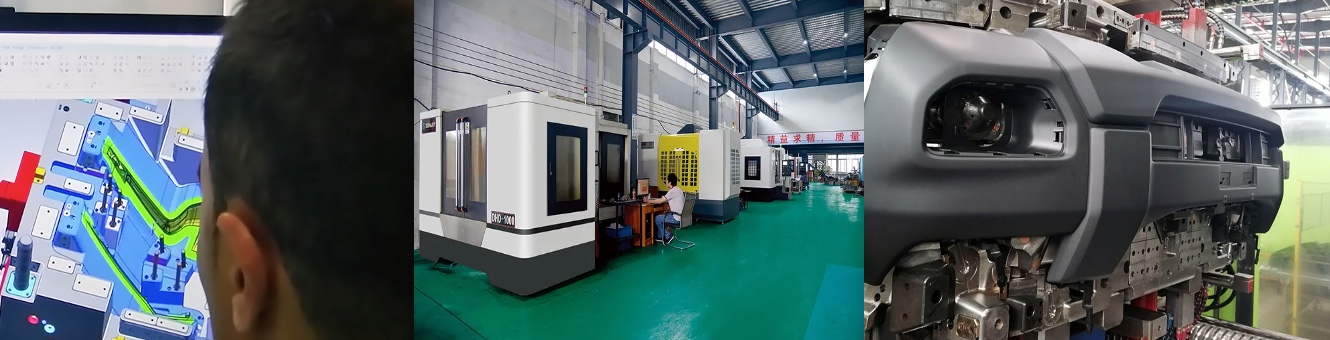
At FMS, we act as an extension of your own engineering team. We protect your interests at every stage of the manufacturing process through two flexible engagement models:
• FMS-Designed Tooling Solutions: When our internal team handles your mold designs, we bring deep technical familiarity to the production floor. We seamlessly bridge the gap between design and manufacturing, ensuring every technical requirement is executed flawlessly by our certified production partners.
• Client-Supplied Design Integration: If you prefer to provide your own mold designs, our engineering team conducts a rigorous review to align perfectly with your standards. We maintain real-time, transparent communication with your designers to proactively resolve complexities before manufacturing begins.
The FMS Core Promise: We don’t just manage production; we stand firmly in your corner, maximizing your efficiency and safeguarding your bottom line.
FMS Mold Engineering Solutions: Your On-the-Ground Partner in China
Upon receiving your mold manufacturing orders and thoroughly analyzing your design and technical requirements, the FMS team immediately takes charge of your local supply chain. We vet and select top-tier, compliant mold manufacturers in China through rigorous on-site audits and technical alignments before negotiating competitive quotes.
Once commercial terms are approved, FMS acts as your full legal and technical representative on-site. We manage contract execution and embed our senior engineers directly onto the shop floor to oversee production. You will receive transparent, comprehensive weekly progress reports, while our team proactively mitigates potential risks in real time.
From initial sampling and scientific trial evaluations to final pre-shipment inspections, we enforce strict quality standards. We deliver detailed engineering modification reports and final quality audits, ensuring every mold is delivered on time and fully compliant with your exact specifications.
Why Strategic Mold Outsourcing is the Right Move for Your Business
1. Focus on Your Core Competencies
If your primary expertise is product assembly and market distribution, managing a high-precision, in-house tooling shop can drain valuable resources. Outsourcing allows you to leverage specialized engineering expertise without the heavy overhead, keeping your team focused on what drives your revenue.
2. Fill Capability Gaps Instantly
Even established mold makers encounter specialized designs or complex geometries that fall outside their usual expertise. Instead of turning down lucrative contracts, outsourcing allows you to seamlessly take on these complex projects by partnering with niche manufacturing experts.
3. Scale Effortlessly Beyond Capacity Limits
When high-volume orders rush in, you shouldn’t have to choose between turning away business or buying expensive new machinery. Strategic outsourcing acts as an elastic extension of your factory floor, allowing you to scale up production instantly without the capital risk.
4. Gain Instant Access to World-Class Technology and Talent
By outsourcing your mold projects, you immediately integrate a robust, fully vetted ecosystem into your supply chain, including:
• State-of-the-Art Automation: High-efficiency, automated plastic injection molding equipment.
• Elite Technical Talent: Dedicated teams of specialized design, tooling, and processing engineers.
• Proactive Risk Management: Meticulous preventive equipment maintenance for guaranteed uptime.
• Flexible Staffing: A highly scalable production-support team ready to handle any surge.
Why cheap injection molds cost more than you think—and how to fix it
Over the past 40 years, China’s mold manufacturing industry has evolved from a low-cost alternative into a global hub of high-precision engineering, rivaling European and US standards. Yet, many Western buyers still struggle to source high-quality molds.
The reason? The “race to the bottom” on price. Sourcing based solely on the lowest quote inevitably triggers shortcuts in steel grade, hot runner selection, and tolerance control. You save on the purchase price, but lose heavily on downtime, maintenance, and delayed product launches.
To get a mold that matches Western engineering standards at competitive Chinese manufacturing rates, you need a local partner who speaks your language. FMS Team bridges the gap. We ensure your exact technical specifications are met without compromising your budget.
The most common reason for companies using custom injection moulding manufacturing is to cut costs; however, if your company is considering outsourcing manufacturing, you need to determine what your goals are:
Are you interested in reducing costs; Resources can be reallocated; or Production should be increased.
Those who support outsourcing custom injection moulding believe that the tactic encourages businesses to allocate resources where they will be most productive, as well as helping maintain free markets on a global scale.
Those who oppose it, however, believe it destroys local job opportunities, particularly in industries like manufacturing and textiles. As we discuss manufacturing companies that outsource, we’ll dig deeper into this.
As a starting point, let’s look at how manufacturing can be outsourced.
When deciding how to outsource injection moulding services, what exactly is he suggesting someone be on the lookout for?
1. Keep Track Of Injection Moulding
Be vigilant over the custom injection moulding you outsource. You need a hawk’s eye. A reasonable way to minimize costs is to consider the entire workflow of a product, not just one part of it (especially when dealing with sub-assemblies). The bottom line is that strategically outsourcing production can be more cost-effective if the overall workflow has been taken into account rather than trying to minimize costs in one area.
2. There Is No Perfect Custom Injection Moulding
Outsourcing custom injection moulding won’t guarantee perfect efficiency. It is not worth the time.
3. Stay Focused But Do Not Take On Too Much
Calculate the minimum injection moulding volume that can be retained in-house so you can generate enough cash for future product development. You should not just focus on reducing costs. Outsourcing custom injection moulding can certainly be viewed as a goal, but the primary reason you should do it is that the contractor has a better facility than yours.
4. Keep Stock
Keeping some injection moulding in-house is a good idea. It would be better if you outsourced some production, but brought in people with expertise, or people you can train, to make your products, so you have the expertise to solve any problems that might arise.
5. Cost Increases Elsewhere
You should always keep in mind that outsourcing custom injection moulding will result in longer manufacturing lead times and increased transport costs. Take note when you outsource manufacturing.
6. Early Tasks Require Precision
Find ways to reduce the size of the tasks in the initial stages of injection moulding production.
7. Do Not Copy Other Businesses
You may not be able to save money using the same cost-saving techniques employed by other manufacturers that outsource. Create a business model that suits your needs.
8. Outsourcing Injection Moulding Is Not The Solution For Everything
You should not outsource 100% of your manufacturing to save money or scale your business down. Your company will be dependent on manufacturing companies that outsource and you will be forced to give up irreplaceable skills.
9. Become A Better Listener And Learner
Don’t hesitate to take advice on how to reduce costs from your employees or from other manufacturers in your market! An internal consultant will have a better understanding of how your business will function than an external consultant.
You might think, “Well, that’s all fine and dandy.”However, how do I find an injection moulding manufacturer I can trust?”
Before outsourcing manufacturing, you must do your research since choosing the wrong company can be very costly.
China mold makers are arguably the best in the manufacturing industry. As a powerhouse in the world of plastic, Chinese mold manufacturers can provide your company extensive knowledge and expertise when it comes to plastic injection molding. This factor should result to having better quality molds which will eventually be evident in your plastic products. The overall efficiency of the manufacturing process will not only impact your production but your entire business operation.
Injection molding is a complex process which you cannot learn overnight. Despite having the internet and all of these resources we have in the present day, experience is not something which you can simply preach. This is the biggest advantage of Chinese mold makers who have been working on plastic injection molding for decades and as companies solely dedicated in injection mold manufacturing. They are also up to date with research and development on this particular field.
Mold manufacturers in China also have the privilege to resources such as QA certifications, proper training, QA tools and practices symposiums which are very common in China in support of their dominance in the plastic manufacturing industry. All these resources give their employees an advantage and be a step ahead compared to other countries when it comes to injection mold manufacturing and other aspects of plastic manufacturing.
Numerous studies on successful China injection molding outsourcing projects have revealed that strong working chemistry and relationships between colleagues are crucial to the success of injection molding outsourcing projects.
Plan Your Project Scope And Timeline
Be clear about what you want to achieve before you begin the work. Provide accurate, complete information in advance so your Chinese injection molding service providers can quote you realistic prices. Please let injection molding vendors know as much information as possible regarding the work to be completed.
Make sure your schedule requirements are realistic and clear, as your schedule can drastically affect the project’s cost.
Choose The Right Chinese Injection Molding Experts
Be sure your outsourcing partner has the right experience with your type of project. Overseas injection molding development is especially complicated, so you have to hire a specialist.
Try To Think Beyond Price.
Experiential outsource buyers who assess hundreds of proposals are usually unanimous in their recommendation to disregard both the competitor’s lowest and highest bid.
Those buyers who are the most successful with their Chinese injection molding companies feel the provider offered a good value for their money while providing quality results.
Don’t Take The Portfolio Lightly
Examine the previous injection molding work done by the vendor. Even if your Chinese injection molding vendor’s portfolio, references, and previous work experience do not demonstrate that they are competent, they might still be able to create a mock-up or outline a simple action plan.
Chinese injection molding vendors who are intensely interested in earning your business may be able to provide you with a rough idea of what they will offer.
Feel free to ask for a mock-up, but do not demand that a vendor provide finished work on your spec. No qualified professional will agree to work for free.
Start With Small
Engage the first service provider for a small and relatively straightforward job, then move on to larger, more complex injection molding jobs as time goes on.
If you do so, you will gain a better understanding of the offerings and capabilities of the provider before entrusting your “mission-critical” project to them.
Build Project Milestones Into Payment
Similarly, just as it is imperative to make sure that you outline a clear timetable for your outsourced injection molding project, it may also be helpful to set out a specific schedule of deliverables.
By scheduling regular checkpoints – in which you can review the project’s status as it progresses toward completion – it is easy to ensure that the mold makers will complete the project on schedule and of high quality. You should coordinate the vendor’s payment with these milestones.
A good rule of thumb is to fund only a small portion of the total project costs out of your own pocket and the remainder in installments over three or four milestones.
Negotiate Your Ownership As Early As Possible
If you ever outsource any tooling or injection molding work in China, it is vital to clarify who owns the work product and any significant elements thereof.
If you intend to develop a custom injection molding part for your personal use, there will be substantial differences from the development of plastic parts you intend to resell.
Support After The Delivery
It is good practice to include a warranty clause in technology projects so that you can ensure that the Chinese injection molding vendor will continue to support after the injection molding project is completed.
To negotiate a support clause, it is much easier to negotiate it before the service provider starts work rather than after the injection molding project has been completed.
Prepare For Culture Clashes
An injection molding outsourcing from China involves both cultures, and these differences must be embraced and bridged. It would be best to organize social events between the companies to better understand the cultures’ differences.
Engineering services notably reduces time?to?market, optimizes costs, and ensures quality. they should provide the knowledge and experience that create stellar solutions ? from early stage product design to a successful manufacturing process. mold engineers have experience working with a vast array of industries ranging from Medical Devices to High PrecisionCNC, Electronic PCBA and much more. A local Project Manager had better being assigned to each project, responsible for all communications with you while monitoring quality requirements on site.
their Design and Engineering Services Include:
Conceptual Design, Mechanical Engineering Design, CAD Modeling and Detailing, Simulations, Analysis and Prototyping Design for Assembly, Design of Bill of Materials (BOM), Reverse Engineering and Project Management, Weekly status updates including alerts to any production problems and/or shipping delays, QC report before shipping
If you’re shipping the mold overseas, you will take possession of the mold, but still there are areas you need to be very clear on with your Chinese mold makers, like complete ownership, IP, etc. However, if you’re producing with a factory in China it is critical you make sure that the mold makers understand that YOU own the physical mold.
Firstly – you need to make it clear to the manufacturer/factory in China can only use the molds for producing your products and that they can’t produce any products for a third party using your mold or mold designs.
Secondly – you need to make sure that if you want to move your mold at any point in time to a different factory, that the receiving facility will have the right to take possession of the molds and that you can freely move them to a new location.
Chinese manufacturers have a strong incentive to keep your molds and prevent foreign buyers from moving to a new location or factory. In a lot of cases, the mold embodies most or all of the IP in the product.
With some products, the interior mechanism is based entirely on open source hardware. The exterior enclosure around the mechanism is, therefore, the primary protectable IP for the product. The intellectual property lies entirely in the molds used to manufacture the product case. The outside “appearance” of the enclosure then becomes the ID of the product, and if that “appearance” isn’t protected, you will own NOTHING at all in the IP of the product.
Without that IP in the mold protected, the Chinese factories can copy the product as they see fit.
On the other hand, in some products, the form embodies in the mold holds the entire value of the product. One example could be that of a single part used in an extremely complex engine, like that of a jet engine. After all the designing, engineering and testing is complete what will you be left with? A single part produced by casting into single or multiple molds.
In this instance, the molds embody the entire intellectual property for that part. In short, whoever owns or controls the IP in the molds is essentially in complete control of the product, so you can see why this is a crucial aspect of mold making in China.
Many successful custom manufacturers of molded plastic products began with an innovative design or a new invention. Naturally, they kept the secret to themselves and produced their new product entirely in-house.
Later, with patents in place and a growing customer base, they found that their R&D suffered. Too much was going into the wrong areas and that spirit of invention and creativity was losing out to the day-to-day operations.
Initially, it might be painful to send work to an offshore supplier, in the long run it often benefits for the entire company and it’s employees. True, this “shedding” process is temporarily disruptive, but when properly managed has positive effects.
Often, an unexpected side effect of offshore outsourcing is the new exposure to different ideas and ways of doing things. This can lead to new areas of R. Now, with a more agile company and engineering department, these ideas can be developed with fewer distractions. The international marketplace is growing exponentially and new products are constantly being introduced in previously untapped markets.
This represents a huge opportunity for custom manufacturer’s who are in a position to develop and market new products. The Brookings Institute has an informative paper on the regulations surrounding offshore outsourcing.
Outsourcing helps to expand into new markets
It often happens that new opportunities present themselves as companies venture into the unknown of offshore outsourcing. Several major injection molders took steps to be in a position to benefit from the global economy by making alliances with foreign companies.
It took quite a bit of doing, but the floodgates opened for them and work just keeps coming.
Some global companies require an offshore presence in order to even do business with them. The world is the marketplace and boundaries are quickly disappearing.
Mold engineering can be broken into three steps:
1. Product Design
Determining product objectives such as function, aesthetics, assembly, etc., and the requirements for accomplishing the objectives. A team of engineers specially trained in advanced methodologies such as Design for Manufacturing ability (DfM) is assembled to identify and possibly improve upon solutions to meet the particular project requirements — including the selection of materials for the final complex injection molded part and the tool.
2. Mold Design
Like product design, a thoughtful approach to tooling proves valuable. In addition to choosing the appropriate material for tool construction — hardened steel, pre-hardened steel, or aluminum — designing for proper gate location, draft, etc., is necessary to prevent costly project missteps.
3. Manufacturing
Production is the obvious goal of the step-by-step injection molding process. Achieving successful outcomes brings together the product and tool designs with resins that deliver to project needs (such as strength, heat tolerances, sterility, etc.) and mold ability requirements including tight tolerances, uniform wall thickness, heating, cooling, and consistent repeatable cycling.
Manufacturing plastic injection molded components in-house as part of a customer’s end product can prove to be a significant challenge from an efficiency, quality, and cost perspective. Many companies have seen the relative ease with outsourcing and have decided to incorporate that process into their business model.
With the continuous maturity of ERP software, the accuracy of mold engineering will become better and better
A high-quality, precision-engineered mold that is built to last can be an excellent investment for your company. The best plastic injection molds feature all of the following characteristics:
Good design and engineering
High-quality stainless steel mold bases and cavities for optimal performance and durability
Manufactured on modern equipment with the capability for precise machining
Accurately crafted with attention to high standards and tight tolerances