

FMS Mold Engineering: Your Extended Engineering Team in China
As global OEMs recognize the FMS team’s advanced tooling technology and proven expertise, we have expanded our capabilities to fully manage and deliver your mold manufacturing projects.
Seamless, Real-Time Collaboration
Through our cloud-based digital workspace, we bring European standards of transparency to Asia. You can monitor every stage—from precision machining and assembly to mold tryouts—live and on-demand. It feels exactly as if our engineering team were working right inside your own facility.
A True Client-Side Partner, Not Just a Supplier
Unlike traditional mold makers who simply take outsourced orders, FMS operates under a unique, client-first model. We act as your direct on-site representatives. Our senior engineers strictly supervise and guide the manufacturing process, ensuring every detail flawlessly aligns with your exact specifications, quality standards, and timelines.
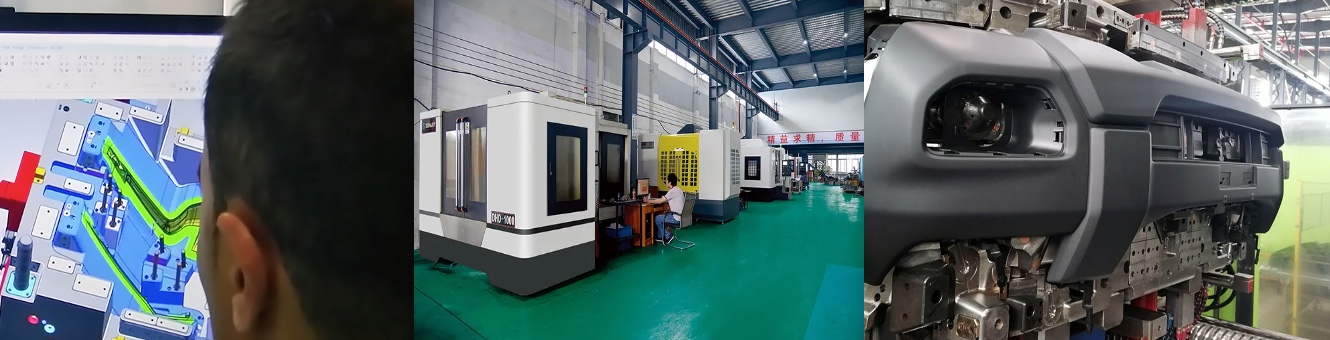
At FMS, we act as an extension of your own engineering team. We protect your interests at every stage of the manufacturing process through two flexible engagement models:
• FMS-Designed Tooling Solutions: When our internal team handles your mold designs, we bring deep technical familiarity to the production floor. We seamlessly bridge the gap between design and manufacturing, ensuring every technical requirement is executed flawlessly by our certified production partners.
• Client-Supplied Design Integration: If you prefer to provide your own mold designs, our engineering team conducts a rigorous review to align perfectly with your standards. We maintain real-time, transparent communication with your designers to proactively resolve complexities before manufacturing begins.
The FMS Core Promise: We don’t just manage production; we stand firmly in your corner, maximizing your efficiency and safeguarding your bottom line.
FMS Mold Engineering Solutions: Your On-the-Ground Partner in China
Upon receiving your mold manufacturing orders and thoroughly analyzing your design and technical requirements, the FMS team immediately takes charge of your local supply chain. We vet and select top-tier, compliant mold manufacturers in China through rigorous on-site audits and technical alignments before negotiating competitive quotes.
Once commercial terms are approved, FMS acts as your full legal and technical representative on-site. We manage contract execution and embed our senior engineers directly onto the shop floor to oversee production. You will receive transparent, comprehensive weekly progress reports, while our team proactively mitigates potential risks in real time.
From initial sampling and scientific trial evaluations to final pre-shipment inspections, we enforce strict quality standards. We deliver detailed engineering modification reports and final quality audits, ensuring every mold is delivered on time and fully compliant with your exact specifications.
Why Strategic Mold Outsourcing is the Right Move for Your Business
1. Focus on Your Core Competencies
If your primary expertise is product assembly and market distribution, managing a high-precision, in-house tooling shop can drain valuable resources. Outsourcing allows you to leverage specialized engineering expertise without the heavy overhead, keeping your team focused on what drives your revenue.
2. Fill Capability Gaps Instantly
Even established mold makers encounter specialized designs or complex geometries that fall outside their usual expertise. Instead of turning down lucrative contracts, outsourcing allows you to seamlessly take on these complex projects by partnering with niche manufacturing experts.
3. Scale Effortlessly Beyond Capacity Limits
When high-volume orders rush in, you shouldn’t have to choose between turning away business or buying expensive new machinery. Strategic outsourcing acts as an elastic extension of your factory floor, allowing you to scale up production instantly without the capital risk.
4. Gain Instant Access to World-Class Technology and Talent
By outsourcing your mold projects, you immediately integrate a robust, fully vetted ecosystem into your supply chain, including:
• State-of-the-Art Automation: High-efficiency, automated plastic injection molding equipment.
• Elite Technical Talent: Dedicated teams of specialized design, tooling, and processing engineers.
• Proactive Risk Management: Meticulous preventive equipment maintenance for guaranteed uptime.
• Flexible Staffing: A highly scalable production-support team ready to handle any surge.
Why cheap injection molds cost more than you think—and how to fix it
Over the past 40 years, China’s mold manufacturing industry has evolved from a low-cost alternative into a global hub of high-precision engineering, rivaling European and US standards. Yet, many Western buyers still struggle to source high-quality molds.
The reason? The “race to the bottom” on price. Sourcing based solely on the lowest quote inevitably triggers shortcuts in steel grade, hot runner selection, and tolerance control. You save on the purchase price, but lose heavily on downtime, maintenance, and delayed product launches.
To get a mold that matches Western engineering standards at competitive Chinese manufacturing rates, you need a local partner who speaks your language. FMS Team bridges the gap. We ensure your exact technical specifications are met without compromising your budget.
The creation of the mold is the initial step in injection molding. Most molds are finely machined from metal, usually aluminium or steel, to suit the aspects of the product they will manufacture.
The material for the part is injected into a heated barrel and combined using a helical curved screw after the mold has been made by the mold maker. The substance in the barrel is melted by heating bands, and the liquid metal or plastic is then injected into the mold cavity, where it chills and solidifies to match the mold’s structure.
The use of chilling lines that disseminate water or oil from an exterior temperature controller helps shorten the cooling period. Mold tools are installed on plate molds, which separate once the substance has solidified and remove the item from the mold using ejector pins.
A two-shot mold is a type of injection molding that allows different materials to be blended into one component. This method can be used to provide plastic items with a softer feel, to colour a part, or to create objects with varied performance capabilities.
Single-cavity or multiple-cavity molds are available. Each cavity of a multiple cavity mold might have similar pieces or be distinct to generate parts with diverse geometry. Owing to the injection and clamping forces, aluminium molds are not recommended for high volume manufacturing or products with tight dimensional forbearance since they have poor mechanical qualities and are vulnerable to wear, distortion, and breakage. Steel molds are more robust than aluminium molds, but they are also more costly.
The structure and characteristics of the component, the materials for the component and the mold, and the attributes of the injection molding machine all demand careful design in the injection molding procedure.
The steps involved in starting a plastic injection mold engineering business are straightforward and irreversible.
Researching the market. Find out if industries around you or people in your locality need the service that you are about to offer. Know the exact products that they need and don’t forget to look out for the competition around you.
Assessing the demand for industrial goods and their costs. Medical and fitting line products are currently in high demand, with minimal need for agricultural-based products. It’s important to keep in mind that demand varies from place to place and throughout time.
Selecting the Right Injection Moulding Machine (you can explore directly on the net there are plenty of dealers which can help u in finding the right machine for you).
Selecting a reputable mold maker. A local mold maker will build a mold for a low price, but it may begin to flash in particular strokes. Professional mold manufacturers will cost nearly twice as much as local mold makers. Make sure your plastic mold makers use adequate and quality materials when creating the mold. If the mold has faults, it will harm the clamping unit of the machine, reducing its life.
Locating your provider of raw materials. If you are using higher tonnage machines that consume a large amount of plastic, a reliable raw material supply is required. The demand for these products will be high across the country. Also, keep in mind that these products are difficult and expensive to transport in large quantities.
Assigning the appropriate industrial area.
Assembling the compressor, as well as the injection molding machine. In addition to the injection molding machine, the first startup requires a water chiller, dryer, air compressor, grinder, loader, conveyor, packaging robot, and other items, depending on your product and machine.
The detailed schedule for a project needs to be able to be managed efficiently and effectively. A well-oiled machine will have a visual schedule that can be read easily to know what is on schedule, what is behind, and what lies ahead to the end of the project. A Gantt chart is one way to manage the schedule, but it’s not the only way. Expect that a good tool production facility will be managed with detailed organization.
Injection molding is part of the project. Secondary services may be what you need to have a world-class product assembled, packaged and delivered to your customers. A tool facility just makes tools, but what if you need assembly, extra processing, quality testing and inspection for your product? Having a one-stop-shop that will take the stress of a new project off your hands is an important consideration. Choose the right manufacturing facility for your project from beginning to end.
Last, but not least is the overall quality of workmanship. The actual tool is only a portion of the experience in building an injection molding tool. You should be able to ask questions, have open discussions on timing and budget, and feel comfortable at each step of the process. If you leave a discussion feeling uneasy, maybe it’s time to keep looking for a new partner. Successful partnerships are based on trust.
Injection molds come in different shapes, sizes, and designs. It is important so that plastic products can be unique depending on the manufacturer. These designs are innovated by injection designers and executed by engineers. The engineers in plastic injection molds play a vital role in inspecting the designs before building to ensure that the molds are manufacturable. Thus, the engineers need to be experts in this field to avoid any errors and defects that may arise during mold manufacturing.
Building molds and operating the injection molding machines is not an easy task as some may assume. It requires a lot of expertise, critical thinking, and creativity. Before hiring designers and engineers at your company, you need to be sure that they are capable of completing different projects, moreover, are able to handle themselves under pressure.
Before you can manufacture a plastic part you need to have a solid design in place. Once done, you can build an injection mold to meet the product specifications.
The role of the Design Engineer is critical in this process. They assess the part design and make modifications and recommendations based on key product requirements including product usage and function. The engineer will need to know:
How will the part be used? Is it a standalone product or a component of a larger assembly?
What are the dimensional and tensile requirements?
Does the part need to withstand elements, pressure, chemicals?
A plastic injection mold design is built with these criteria in mind. Mold cavities, vents and gate placement will vary based not only on the part design but the type of resin as well. Taking all of these manufacturing factors into account is a challenging task and one that requires a strong knowledge base, not only of mold design but the injection molding process as well.
The allure of injection molding for manufacturing parts is due in large part to the versatility, speed, and quality of the finished molded parts. From the outside, these qualities appear to be inherent parts of the injection molding process, and because injection molding seems fairly straight-forward, many manufacturers consider scaling to bring the process in-house for their needs. But to maximize the benefits of the injection molding process, it requires a sizeable team of knowledgeable technicians and engineers operating high-end, large-scale equipment — a structure and process more easily found in a dedicated plastic injection molding manufacturer. Which is why, for manufacturers looking to get the best quality parts for their money, outsourcing injection molding needs makes the most financial sense.
GUARANTEED INFRASTRUCTURE AND ECONOMICS OF SCALE
As mentioned, the equipment necessary for injection plastic molding is both technically complex and physically imposing. Put simply, it’s costly. But investing in equipment alone only scratches the surface of what it financially requires to produce injection molded parts.
For instance, while the equipment is usually partially automated, only a dedicated team trained and experienced with the technology will be able to get it up-and-running on the near-constant cycles necessary to produce injection molded parts at scale. Those same cycles require a massive amount of power, as well as material and time, to run — all costs that will come out of a business’s bottom line. Additionally, considering the strain the molding machinery is under, a guaranteed amount of maintenance and down-time is be expected, meaning more dedicated service hours from specialized individuals to get the machinery up and running again.
All of these factors are built in to the business model of a dedicated plastic injection molding manufacturer, and the costs for any of them are negligible for their customers, because the injection molding manufacturer is able to spread them out over a larger swath of time, and a greater breadth of customer work.
Additionally, because the molding manufacturers’ operation is specifically injection molding, they are better equipped to reinvest and hone in on their core competency in the injection molding process, allowing for higher-quality products to be produced faster and more accurately, allowing for customer orders to be fulfilled with quicker delivery times and shorter times-to-market.
HIGHER QUALITY
Staying competitive in the plastic injection molding world requires dedication to quality production, produced at speed and scale. A respected outsourced injection molding manufacturer will have a team that is trained and certified, with years of expertise in the craft, as well as robust production support functionality to operate as an additional layer of insurance for the work they are producing.
Plastic injection molding providers are able to build out these additional functionalities because their resources stay focused on their core competencies. Supporting design, engineering, concepting, production, QA, and fulfillment allows the plastic injection molding manufacturers to work more closely with customers to fully realize the parts they are producing, without pulling focus from other areas of their business. This allows manufacturers to be involved at every step in the process, answering questions, providing guidance, and streamlining the process to save money, time, and re-work costs during the actual production runs.
Outsourcing injection molding capabilities is about more than saving money — it’s about maximizing the investment into making the best possible version of a product with efficiency, control, and quality results.
What’s the best mold-making technique for a given application? It depends on a couple of important factors, including the desired end-part material, the intended manufacturing process, the geometry of the model, and the production volume.
A simplified, step-by-step approach to choosing the best technique for your manufacturing project is covered in stages below:
1. Outline the Development Criteria for Your Project
A manufacturing master plan can help create clear-cut details of what is to be expected from a project, its development timeline, and the available budget. Whether you’re planning to create custom parts or mass-produce thousands of the same item will define what options to pick in the next steps. The development criteria might vary depending on the project, but generally include the design of the part, size, material, quality, required tolerances, timeline, required production volume, cost constraints, etc.
In product development, the initial document that answers many of these questions is often the product requirements document (PRD), while the bill of materials (BOM) is the comprehensive list of parts, items, assemblies, and other materials required to create a product.
2. Select the Manufacturing Process
The right manufacturing process for a certain part is largely dependent on the development criteria. In some cases, multiple production processes can be used to create any given design. As a rule of thumb, choose the process that can produce the given part with the required quality, at the lowest costs, while fulfilling the rest of the development criteria. The material choice and manufacturing volume are likely the most important factors driving your decision.
For plastic parts, you can read our guide to manufacturing processes for plastics.
3. Select the Mold-Making Technique
Once you settle on the right manufacturing process, the type of mold for the process is also largely defined by the development criteria. While the exact factors are dependent on the manufacturing process, here are some of the most important considerations when choosing a mold-making technique:
Design of the part: Try to simplify the design as much as possible and align it with the design rules of the given manufacturing process to be able to choose the technique that can achieve the lowest costs. Simple designs might only require molds that can be created with manual techniques, while complex designs often require multi-part molds and digital manufacturing tools like 3D printers or CNC machining to create.
Production volume: Large-volume production runs require durable molds that can accurately replicate models without wearing out after a few uses. However, fabricating such tools comes with high costs and lead times. For one-off parts and lower volume batches, it might be more efficient to choose cheaper molds that can be created faster, such as sacrificial molds or soft molds that can be discarded when they begin to show signs of irreparable wear.
Quality: Tighter tolerances require more precise molds and tools to create, such as digital manufacturing tools, and need to be more durable to ensure consistent part quality over multiple cycles.
Timeline: Producing complex metal molds often takes months through a service provider. If you’re working on a shorter timeline, try to look for alternatives that can shorten the lead time, such as 3D printed rapid tooling.
Material: Materials that have a higher melting point or are more abrasive will require molds that are more durable and can create the required volume of parts without degradation.
After reading this article, I want to share 10 important best practices in doing mold engineering.
1) Material choice: Producing high quality, consistent plastic injected modeled parts relies heavily on the chosen material. you can browse materials by name, type, performance, and characteristics. Another option is go directly to material manufacturers. Consider mixing materials. With today’s injection molding processes, you have the option to mix materials or include additives. Additives can be a way to enhance materials to meet your needs. One additive to consider is glass. Another is carbon fiber, which will add strength and static dissipation.
2?Appropriate wall thickness. Next to your material selection, maintaining a uniform wall thickness throughout your part is critical.
Wall thickness will often determine mechanical performance, cosmetic appearance, ease of molding the part, and the cost of the part.
3?Achieving an optimal wall thickness is a balance between strength and weight. A 10% increase in wall thickness provides about a 33% increase in stiffness with most materials. But avoid changing wall thicknesses within a design, going from thick to thin or from thin to thick over sections.
This will be mentioned later, but ribs and curves can provide strength to a part without resorting to increased wall thickness.
4?Draft. Draft is the angle designed into your part that aids part removal from the mold. Include draft in a design to prevent sticking an ejector pin push into your parts, especially on a cavity or show surface.
Draft, annuals, and tapers all ease a part out of mold during ejection. Less draft will sometimes damage parts during ejection, a condition known as drag, especially at the parting line.
A minimum recommended draft angle is a half a degree. A preferred draft angle is one and a half to two degrees, especially if you’re going to be adding textures.
5) Runners and gates should be designed and incorporated into a mold to ensure the consistent flow of material to fill the mold at the right pressure. A gate is the connection between the runner system and the molded part. The location and size of the gate is integral to the molding process.
Appropriate tolerances. A part with too tight of a tolerance can lead to loss of performance or even part failure. A team skilled on advanced manufacturing technologies can advise on the best ways to safely and effectively reach exact specifications.
Many factors come into play with tolerance, including materials, part complexity, tooling, and of course the injection molding process. A tight tolerance part for injection molding is plus or minus two thousandth of an inch. Starting with a good part design will ensure your tight tolerances.
If you have a tight tolerance chart, look at using low shrink rate materials such as ABS and polycarbonate materials, which have a low shrink rate. Thicker walls produce different shrink rates depending on the material, making repeatability difficult.
Higher shrink rate materials are going to be materials like nylons, unfilled nylons, polyethylenes, and polypropylenes.
Avoid tight tolerance areas around the alignment of mold halves, the parting line, or in moving mold components such as slides. If you have two parts coming together, such as in a housing, you may want to do a beauty reveal, where you can get away with hiding the mismatch.
6) Ribs. Ribs are often used for structural reinforcement. They allow for greater strength and stiffness in parts without the need to increase wall thickness.
As a general rule, design ribs as approximately 60% of your nominal wall, or whatever the wall that the rib is joining, to minimize risk of sink. Glossy materials require a thinner rib, typically about 40% of the wall thickness. Thin ribs may be more difficult to fill in, especially once you start adding draft to them.
A proper rib design involves five parameters:
–Thickness, this affects cooling rate and degree of shrinkage, which may cause warp.
–The height of the ribs should not exceed three times the rib base thickness.
–Location. Ribs added to uncritical areas can actually reduce impact resistance.
–Quantity. It’s easier to add ribs than move them, so they should be used sparingly and as needed.
— Moldability. Thin ribs can be difficult to fill. A good check is to request a mold flow and a manufacturability analysis through your injection molding provider.
7) Bosses are used for locating, mounting, and assembly. Wall thickness and height are the biggest factors to consider. Wall thickness around a boss design feature should be 60% of the nominal thickness, similar to ribbing.
If a nominal part thickness is greater than one-eighth, the boss wall thickness should be around 40% the nominal wall. The height of the boss will also have a role. As a general rule, the boss height should be no more than two and a half times the diameter of the hole on the boss.
8) Reduce undercuts. An undercut is any indentation or protrusion that prohibits the ejection of a part from a mold. Most commonly, it’s called an undercut, internal, external, or inaction. Undercuts typically increase mold complexity and can lead to higher mold construction costs. Use creativity and design them in a way where actions won’t be needed.
9) Corners and transitions tie into wall thickness. Any sharp corners can cause molded in stress, just from the resin flow.
Minimize the stress by using rounded corners, adding rads on inside corners, outside corners, and trying to maintain a consistent wall thickness.
10) Thick and thin transitions. Design these as smoothly as possible. Try to avoid steps; use a ramp to improve the flow of material through your part.
Follow these best practices in the following order to ensure an easy, cost effective molded part: materials, wall thickness, tolerances, draft, ribs, bosses, undercuts and corners, and transitions.
Successful plastic mold building often requires multiple iterations of part design and mold modification to reach a successful outcome. Our engineers review your 3-D drawings carefully for accuracy and correct any design issues before we start. This essential first step helps us determine what’s required to achieve molding success.
We also use computer simulations of the mold making process to identify unforeseen technical roadblocks to successful molding. Finding these issues right away reduces the number of iterations required to reach satisfactory part geometries, thereby reducing the time and cost of manufacturing your products.
The success and precision of a part depends on the quality of its mold, but building a reliable, long-lasting tool can take a considerable amount of time — and requires a great deal of accuracy. Also, molds are often one the largest capital investments in a project, so it’s critical that tooling is built right the first time around. This is particularly important in high-volume injection molding projects, where molds can be extremely complex.
Below are some important parameters to keep in mind when building a mold to ensure optimal quality and reliability.
What Makes a Good Mold?
A high-quality, precision-engineered mold that is built to last can be an excellent investment for your company. The best plastic injection molds feature all of the following characteristics:
Good design and engineering
High-quality stainless steel mold bases and cavities for optimal performance and durability
Manufactured on modern equipment with the capability for precise machining
Accurately crafted with attention to high standards and tight tolerances
To create a mold, we reverse engineer a design from a supplied part or create a mold based on the customer’s drawing or CAD file. To craft the tool, then utilizes EDM equipment, CNC mills, lathes, and grinding machinery. Many mold designers started out as toolmakers, so they fully understand the intricacies of the process, from start to finish.