
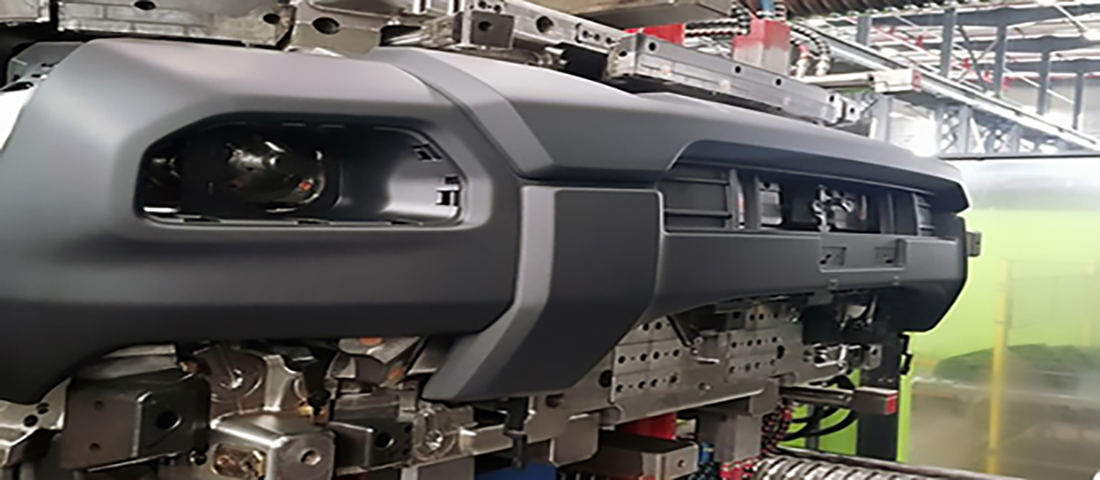
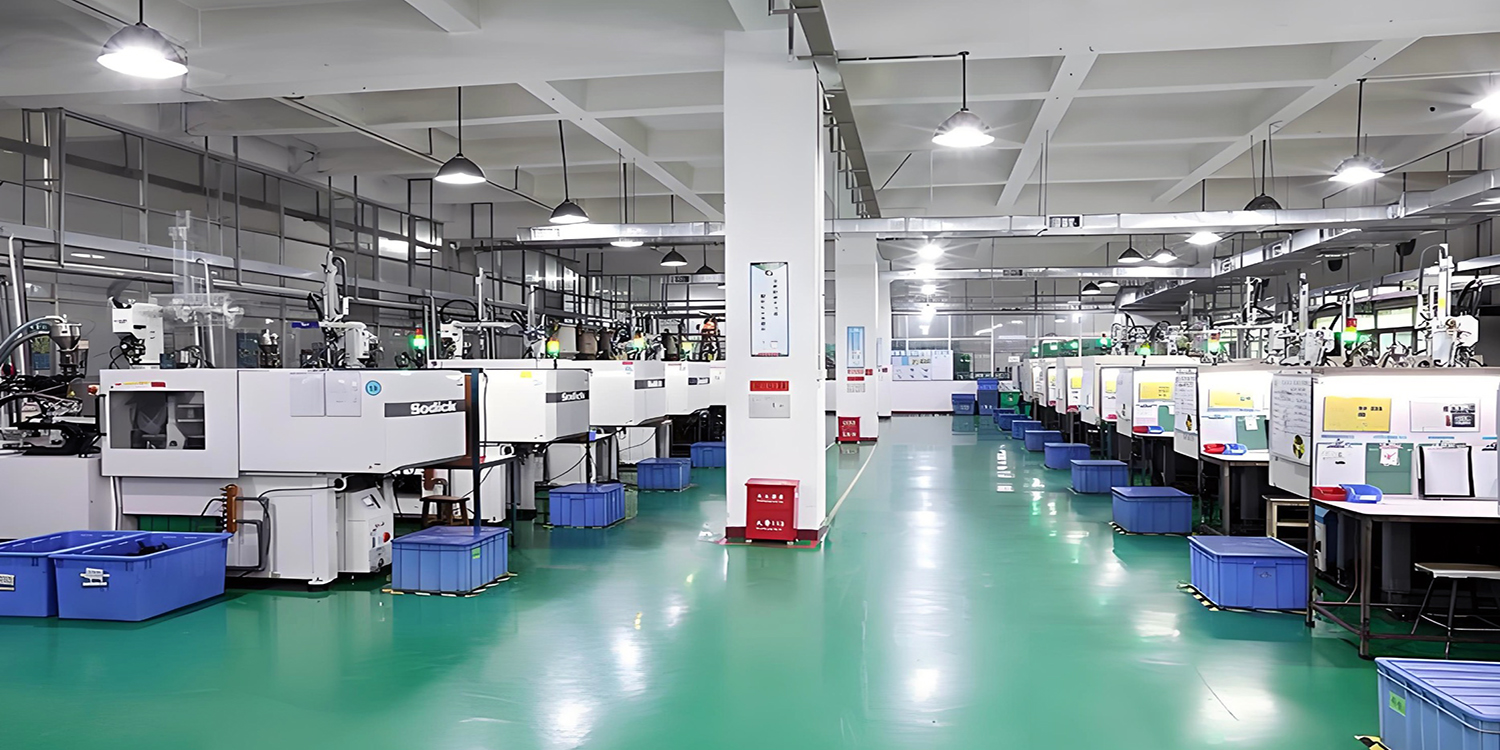
injection molding shop
FMS Molding Team Is Your Trusted Partner for Precision Mold & Injection Molding Since 2009
For nearly two decades, FMS has delivered world-class tooling and turnkey injection molding solutions to a global clientele. We specialize in custom plastic injection molding across highly demanding industries, including Medical, Automotive, Electronics, Packaging, Food & Beverage, and Outdoor Sports/Hunting.
Why Global Brands Choose FMS:
• Advanced Automation & Speed: 100% of our injection molding machines are integrated with high-speed robotics, ensuring consistent high quality, flawless precision, and minimized cycle times.
• High-Capacity 24/5 Operations: Operating on a 3-shift, 5-day schedule (with scalable weekend overtime), our workshop ensures your mass production deadlines are always met, no matter the volume.
• Engineering Excellence: Our veteran mold and design engineers bring deep cross-industry expertise, helping you optimize complex geometries for manufacturability (DFM) and cost efficiency.
• End-to-End Control: From initial tool design and steel/aluminum mold machining to final parts production, every step is managed entirely in-house by the FMS team for strict quality assurance.
Partner with FMS today to transform your complex designs into high-quality, cost-effective realities.
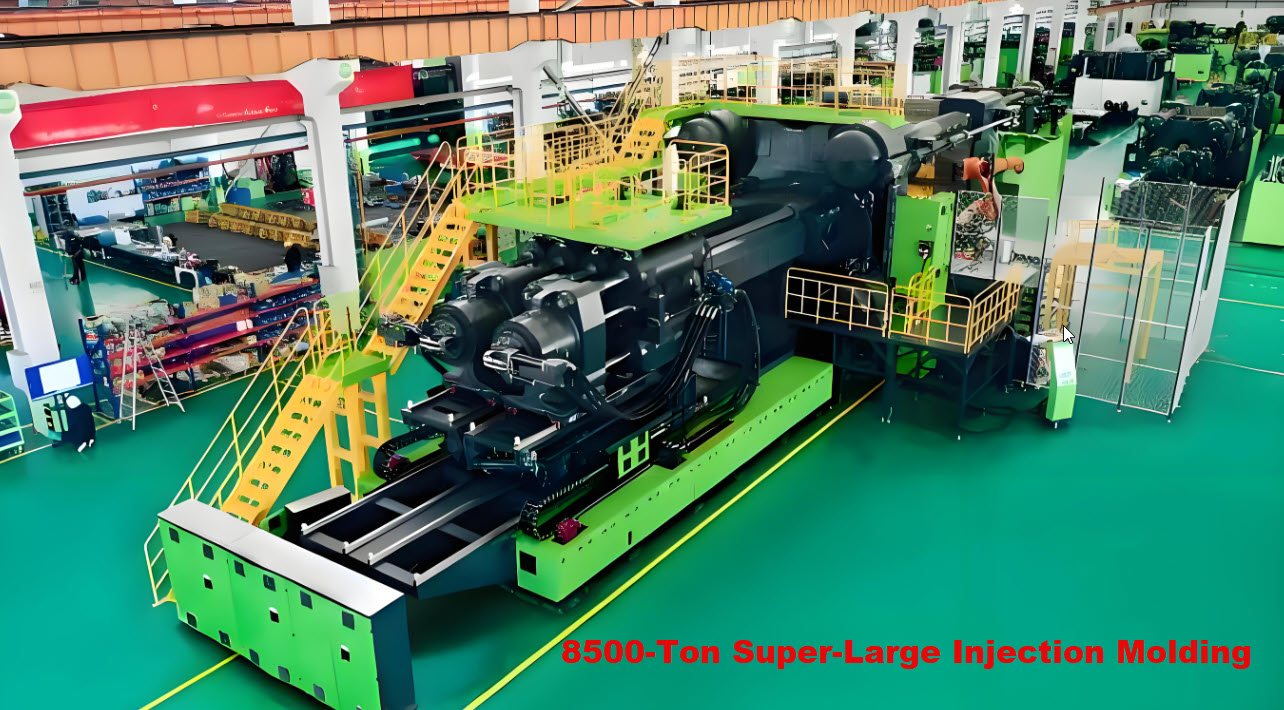
8500-Ton Super-Large Injection Molding Machine
How Does Injection Molding Work?
A special-purpose injection molding machine carries out injection molding. The manufacturing process is divided into the various steps listed below:
Step 1 – Creation of the Mold
The first step in injection molding is mold creation. The mold for the part to be manufactured is designed according to the specifications of the part’s 3D model, using computer-aided design, following several injection molding guidelines. It is then manufactured in two parts, usually using CNC machining. Molds are made from metals (mainly steel or aluminium).
Step 2 – Injection
The separate halves of the mold are placed in and held together tightly by the clamping unit of the injection molding machine. In the form of granules or pellets, the raw material is introduced into a barrel where it is heated at a high temperature and pressure till it melts. Now in molten form, the material is immediately injected into the mold cavity, filling the entire space in the mold. It then cools down and solidifies, forming the shape of the mold.
Step 3 – Ejection and Finishing
After the material has completely cooled and solidified, the mold is opened by the clamping unit and the solidified finished part is ejected. The finished part is subjected to some post-processing operations. These operations include removing excessive material and support structure, surface finishing, and, if required, painting, electroplating, heat treatment, etc.
Other Injection Molding Processes:
Over Molding
Over molding is an injection molding process that allows a part to be created from two different materials. The first material is molded and, before cooling down, the overmolding material is introduced, creating strong bonds between the substrate and the overmolding material. This technique is used to create multi-material objects with improved aesthetics and functionality, while eliminating the need for secondary operations.
Insert Molding
Insert molding is similar to over molding. In this injection molding technique a preformed object is inserted into the mold before the molten material is poured. With the point being to have the preformed material inserted into the molded object. An application of insert molding is inserting metal screw holes into plastic parts.
Metal Injection Molding
In this process, finely powdered metal is combined with wax, polypropylene binders, or other polymers to form a feedstock mix. It is then injected into the mold and left to cool. Once it solidifies, a portion of the blinder is removed using methods such as the catalytic process and the use of solvents.
Die Casting
The die casting process, also known as high-pressure die casting, is the forcing of molten metal under high pressure into a mold cavity. The process is as follows:
First is the preparation of the dies (molds), which entails the lubricating of the mold cavity to facilitate the easy removal of the casting and to control the temperature.
After that, the cast is closed and injected with molten metals under relatively high pressure between 1500 psi and 25400 psi.
Die casting products are made from nonferrous metals such as copper, zinc, aluminium, and lead.
Thin-wall Injection
This injection molding process is used to create plastic parts with very thin walls such as food packaging, parts of equipment, and lab apparatus. The sizes of these parts are larger than their thickness. This process of creating thin walls is more difficult than other processes.
Micro Injection Molding
Just as the name implies, “micro injection molding” is a molding process used to produce tiny plastic parts with weights of about 1 to 0.1 grams. This facilitates the manufacture of micro parts of various complicated geometries with maximum precision and accuracy.
Gas-assisted Injection Molding
In the production of thick plastic parts with injection molding, there’s the risk of distorted parts caused during the cooling process of the molten plastic. This is prevented from happening in gas-assisted injection. As the molten plastics solidifies, gas is introduced into the mold by gas channels, producing smooth surfaces.
The Future of Plastic Injection Molding
The future is bright for the plastic injection molding industry, with several new technologies showing a great degree of promise.
Internet of Things (IoT) technologies like sensors and automation solutions, for instance, allow for increased connectivity across the entire production system. This provides better visibility into the status of the injection molding process while also better positioning manufacturers to produce higher-quality parts at reduced costs. Automated solutions like robotic unloaders that can stack and unstack parts more efficiently can use programmable setups, sensors, and other IoT features to help shorten production timelines without sacrificing part quality.
Micro-injection molding is another emerging process that applies the mechanisms of injection molding at a microscopic scale. This is especially of interest in medical device manufacturing circles, where the technology could allow product teams to design smaller device assemblies capable of performing potentially life-saving procedures using less-invasive methods and tools.
Eco-friendly injection molding materials are increasingly in demand. While most thermoplastics can be reclaimed and reused simply by melting and re-integrating them, sustainability advocates are pushing for more ambitious goals. Out-of-the-box thinking is leading manufacturers to develop and use materials with less or no thermoplastic content, including next-generation, plant-based materials like corn- and flax-based plastics.
The Development and Emergence of Plastic Manufacturing. The history of plastic injection molding begins in 1868 when inventor John W. Hyatt patented the process of creating celluloid, a material originally intended to replace the ivory used in billiard balls. In 1872, Hyatt and his brother Isaiah patented the first injection molding machine, which used a simple plunger mechanism to push celluloid through a heated cylinder and into a mold. The device led to the development of a booming manufacturing industry that produced buttons, combs, collar stays, and other items from celluloid.
Soluble forms of cellulose acetate became available in the early 1900s, offering a much less flammable substitute for previous materials. In the lead-up to World War II, many of the thermoplastics commonly used today — including polystyrene and polyvinyl chloride (PVC) — were developed.
The Impact of World War II on Plastics Manufacturing
Developments in warfare technology, including aircraft, marine battleships, tanks, and other forms of weaponry, consumed vast amounts of raw materials during the course of the Second World War. The post-war industrial boom experienced by many developed Western countries coincided with skyrocketing demand for affordable materials that could be used to mass-produce parts. This was due in large part to how the war disrupted global shipping lanes and required the extraction of huge amounts of natural resources to manufacture tanks, ships, and other war-time products, leading to worldwide shortages of rubber and metal.
Thermoplastics presented affordable options capable of filling many of the market gaps created by these material shortages. Injection molding made it possible for manufacturers to quickly and cost-effectively manufacture parts in large volumes. As markets and supply chains worldwide shifted toward plastic, injection molding emerged as a mainstay and fixture for modern manufacturing companies.
In 1946, James Watson Hendry’s extrusion screw injection machine revolutionized the modern plastic injection molding field. The machine’s rotating screw gave the operator better control over the production process, resulting in significant improvements to the quality of the injection-molded parts. Hendry also pioneered the gas-assisted injection molding process, which made it possible to manufacture long and complex hollow parts.
During the latter half of the twentieth century, plastic materials became more advanced and competitive, offering comparable strength to some metals but at a greatly reduced weight.
Plastic production overtook steel production in terms of market share by the 1970s, and the introduction of lightweight aluminum molds in the 1990s offered a faster, more cost-effective substitute to steel tooling in some instances.
Great items from you, man. I have remember your stuff previous
to and you are simply too magnificent. I really like
what you’ve obtained here, really like what you’re
stating and the way by which you are saying it. You are making it enjoyable and you still care for to stay it smart.
I can not wait to read much more from you. This is actually a
great website.
Hello there, I discovered your web site by the use of Google at the same time as searching for a related topic,
your web site came up, it looks great. I’ve bookmarked it in my google bookmarks.
Hello there, simply changed into alert to your blog thru Google, and found that
it’s really informative. I am going to watch out for brussels.
I’ll appreciate when you continue this in future. Numerous other people can be benefited
out of your writing. Cheers!
We are a group of volunteers and opening a new scheme in our community.
Your web site offered us with valuable info to work on. You’ve
done an impressive job and our entire community will be grateful to you.
Hello There. I found your blog using msn. This
is a really well written article. I’ll make sure to bookmark it and return to read more of your useful information. Thanks for the post.
I’ll certainly return.
Woah! I’m really enjoying the template/theme of this website.
It’s simple, yet effective. A lot of times it’s challenging to get that “perfect balance” between user friendliness and visual appeal.
I must say that you’ve done a very good job with this. In addition, the blog loads extremely fast for
me on Internet explorer. Excellent Blog!
Good day! This is my 1st comment here so I just wanted to give
a quick shout out and say I truly enjoy reading through your posts.
Can you suggest any other blogs/websites/forums that go over the same
topics? Thank you so much!
I think if you have any question about those topics., please let us know
I am really impressed with your writing skills as well
as with the layout on your weblog. Is this a paid theme or did
you customize it yourself? Anyway keep up the excellent quality writing, it is rare to see a nice blog like
this one nowadays.
Beneficial information shared. I am very happy to read this
article. many thanks for giving us good info. appreciate
this post.
whoah this blog is magnificent i like studying your articles.
Stay up the great work! You already know, lots of persons
are searching round for this info, you could aid them greatly.
It’s an remarkable paragraph designed for all the web people; they will get advantage from
it I am sure.